
Perhaps the biggest conundrum at the heart of Golden Age detective fiction fandom is precisely when the Golden Age was. Some people say it started in 1913 with Trent’s Last Case (1913) by E.C. Bentley, but I’d argue that the relative paucity of titles between then and 1920, another suggest starting point, renders that book an outlier.
For the purposes of this list, then, I have John Curran’d it, and gone for a strict 1920-45 framing. A great many books were written in that time, however, and I thought it might be interesting to see which career beginnings were the most notable to me in my reading of the genre. So, chronologically, here are my Ten Favourite Debut Novels Published During the Golden Age* (* — excluding authors called Carr or Christie, as well as anyone who wrote only a single novel).
1. The Cask (1920) by Freeman Wills Crofts
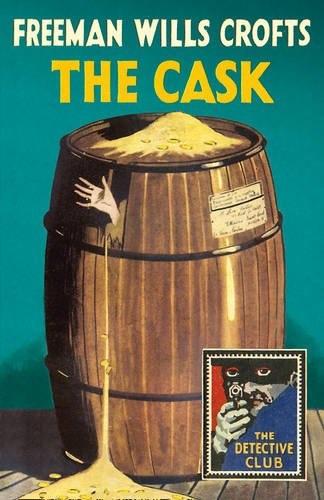
We could be including The Cask (1920) purely because it’s one of the foundational texts for the genre, but it’s honestly just a great, complex, and hugely rewarding read in its own right. The body of a woman found in a barrel with several gold coins after being unloaded from a ship ends up having much shenanigans involved in its solution, but given that Crofts was merely writing what he could think to add complications and still came up with a byzantine plot that satisfies and makes plenty of sense is even more impressive. You can feel certain genre staples being welded in place as it progresses, and if Crofts himself lamented writing the final section, hell, I still think it’s superb. [My review]
2. The Layton Court Mystery (1925) by Anthony Berkeley
In rereading much Berkeley for this blog, I’ve come to appreciate just how genre-aware the guy was, and just how much work he did in establishing and working within the conceits of the emerging GAD firmament. Like The Cask, The Layton Court Mystery (1925) invents much that the genre would hold fast to — in essence, it reimagines the Country House Party in a way that would serve as a template for about four decades — but is also a zestful and exciting read. It’s best appreciated with a fair amount of the genre under your belt, and the fact that Berkeley was able to anticipate so much of what was about to happen is even more impressive. Wonderful, deserves a reprint over just about anything else you can name. [My review]
3. The Benson Murder Case (1926) by S.S. van Dine

I went in to The Benson Murder Case (1926) anticipating that Philo Vance, the dilettante detective therein, would vex me and that author Van Dine’s footnotes would break my spirit. Instead, this book, while not exactly replicating the tenets that I look for in detective fiction (it doesn’t play fair, for one) charmed me with its clever investigations and the bantering attitude of the central character — and Vance is playing a character, the realisation of which is at least halfway towards getting as much as possible out of this fast-moving, intelligent little story. Should be marked down for inspiring the infinitely more tedious The Roman Hat Mystery (1929), but let’s be reason’ble, what? [My review]
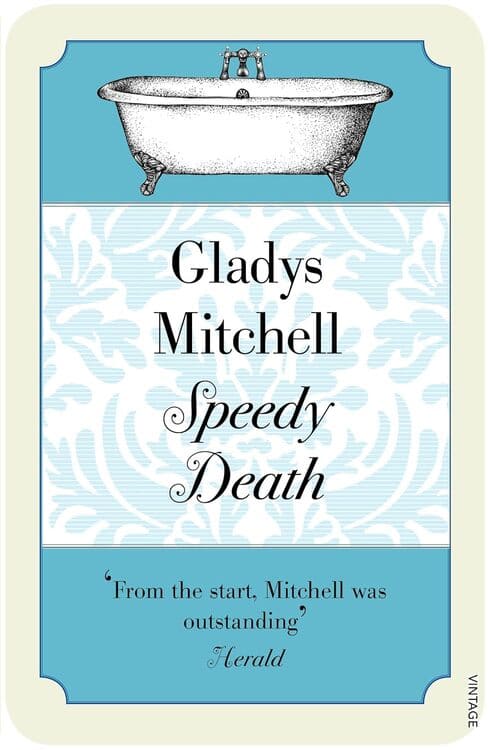
4. Speedy Death (1929) by Gladys Mitchell
Of all the books on this list, Speedy Death (1929) by Gladys Mitchell is perhaps the most frustrating because I’ve found practically everything else by the author so hard to like. Perhaps I just encountered this first outing for Mrs. Bradley at the right time: her prickly presence working for me amidst all the smooth amateur geniuses I was encountering elsewhere — Mitchell having done something which felt so very different to what I was hip-deep in elsewhere. It’s also the only book on this list not reviewed on the blog, because my impression of Mitchell has changed so much down the years that I’m scared to go back and find I don’t enjoy it now. Once read, never forgotten, and I’m happy to leave it at that for now.
5. The House That Kills (1932) by Noël Vindry

If one thing links these first five books, it’s that they all bring something challenging to the genre, something which disturbed the orderly world of investigation as it was known to that point. In the case of The House That Kills (1932) it’s a superb structural fillip, which sees an impossible crime in the first half solved by the midway point only for the investigator to then be impossibly attacked himself. Vindry’s brilliant French sense of atmosphere — you can imagine knife chords behind most of this — is working overtime, his small setting and tight cast condensing events to maximum pressure . And while there’s no clewing as such it’s just great fun to watch someone play so openly in the toybox (a particular French talent, it must be said, if the works translated to date are anything to go by). [My review]
6. Case for Three Detectives (1936) by Leo Bruce
The incredible thing about Case for Three Detectives (1936) is not just how confidently Leo Bruce skewers the genre itself — Anthony Berkeley and others had done this before — but also how well he plots and counter-plots on the way to a genuinely delightful series of terminal surprises. I remember reading this and thinking it pretty much the apogee of impossible crime writing: setting up something which can’t be done and then explaining it four different ways. Add in great characters, a firm sense of place, and an undeniably playful mien that keeps everything clear while indulging fully in the genre’s tropes in the best and most puzzling of ways, and what’s not to like? This had a huge influence on me in both my reading and writing, and remains a firm favourite. [My review]

7. Murder on Safari (1938) by Elspeth Huxley
Part of the joy of the classic novel of detection is how adaptable the tropes that betoken the genre can be. The work of Arthur Upfield displayed this well when investigating in the expanses within the Australian outback, and Elspeth Huxley applies some of these ideas magnificently in Murder on Safari (1938). If proof were needed that the country house mystery need not take place in the untouched amber of the Home Counties as Berkeley first demonstrated above, Huxley provides it in spades here, using the environment brilliantly and mixing in clever detection with the local fauna. An under-discussed book, in part I can’t help but feel because the other two she wrote in the genre didn’t come close to the standard of this one. [My review]
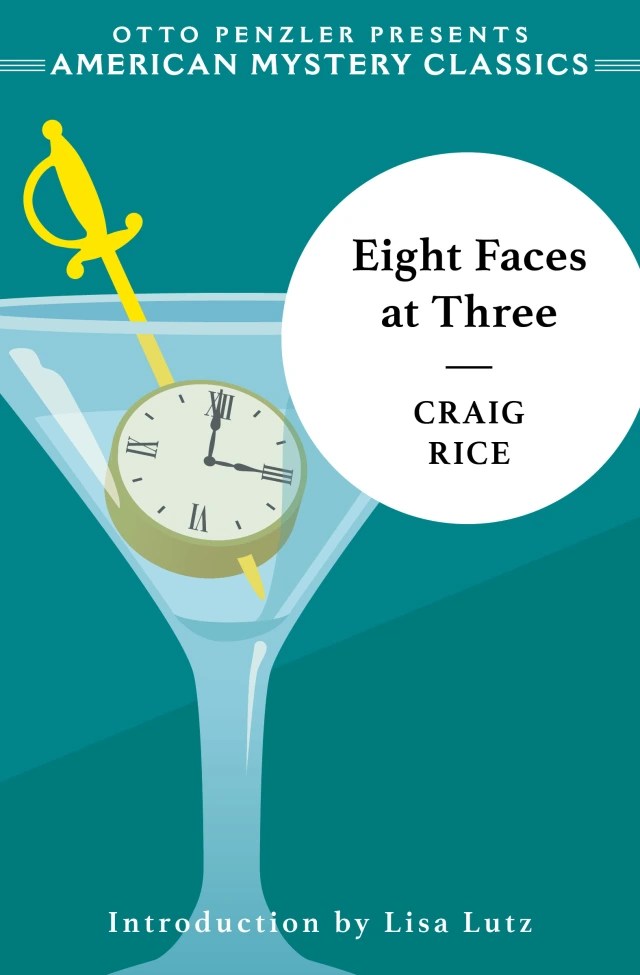
8. Eight Faces at Three (1939) by Craig Rice
I avoided Rice for years, in part due her unavailability and in part due to her reputation for screwball antics. In truth, I think Rice was a fine farceur of the genre who had a keen eye on the contortions of the puzzle plot and recognised that nothing quite justifies the leaps and actions the characters must undertake like a slight sense of unreality. In her first few books this is achieved through the characters’ drinking, but as she grew in confidence and stature as a writer her wonderful characters took on a life of their own. Eight Faces at Three (1939) is an apprentice work to some superb later writing, but the worldview she espouses here is so clean and clear and expertly maintained that it would take a hard heart not to get swept up in the untrammelled joy of it all. When, oh when are we going to get a proper reprint of her books? [My review]
9. The Bride Wore Black (1939) by Cornell Woolrich
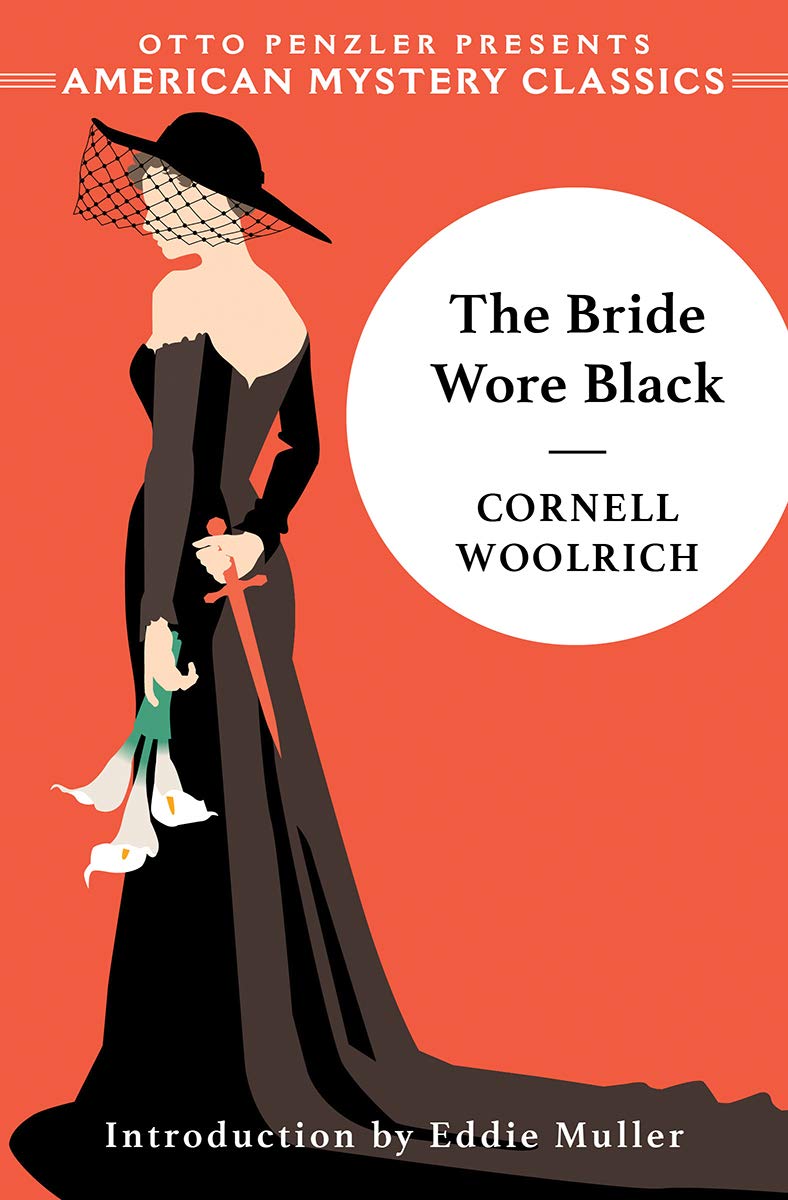
Some of you will cavil that Cornell Woolrich was writing novels outside the genre before this, but I can’t hear you over the sound of just how incredible The Bride Wore Black (1939) is. Even 87 years later this packs the most bracing of punches over and over, with an exquisite structure: murders seen alternately from the bride herself, as she works her way through a list of men who must have wronged her, and the detective following in her wake, baffled. Exquisitely pitched, dark as all Hell, and with an ending that still makes me shiver, I have lived my life since reading this by one simple rule: if the opportunity arises to recommend The Bride Wore Black, I will recommend The Bride Wore Black in no uncertain terms. Get it now. [My review]
10. You’ll Die Laughing (1945) by Bruce Elliott
Bruce Elliott is mainly known for his pulp-adjacent tough guy writing, and that’s a shame, because You’ll Die Laughing (1945) — in which a practical jokester invites people to his house and then suckers them again and again — is a beautifully fast-paced, genre-savvy delight. Arguably it’s even a little too short, which is a rare thing to say, and the addition of a couple of lines (well, maybe a few paragraphs to hide the clewing) could arguably see this grow in reputation. As an expert in close-up magic, it’s to be wondered why Elliott abandoned the puzzle mystery after just one effort, since he doubtless had other tricks he could have applied just as ingeniously, but at least we get this one to remember him by. [My review]

…and a few honourable mentions…
Just missing the cut were The Wrong Letter (1926) by Walter S. Masterman and The Case of the Gilded Fly (1944) by Edmund Crispin. Had ‘One and Done’ authors been allowed on here, it’s likely Death on the Downbeat (1941) by Sebastian Farr would have jostled for position, as would the ridiculously pulpy Into Thin Air (1928) by Horatio Winslow and Leslie Quirk. Extending the dates by a mere 24 hours would have allowed The Honjin Murders (1946) by Seishi Yokomizo to take its place on this list, but blame John Curran for that. And falling far too far outside the remit, but still extremely worthy of your time, are The Voice of the Corpse (1948) by Max Murray and Whistle Up the Devil (1953) by Derek Smith. So you can understand why restrictions were necessary…
~
My Ten Favourite…
- …Literary Detectives
- …’New to Me’ British Library Crime Classics
- …Ramble House Novels
- …Impossible Crimes
- …Locked Room International Titles
- …Golden Age Reprint Covers
- …Orion Crime Masterworks
- …Mysteries of the 1930s
- …Mysteries of the 1940s
- …Paul Halter Translations
- …Juvenile Mysteries
- …Inverted Mysteries
- …In GAD We Trust Episodes
- …Golden Age Debut Novels*


Great list. But …(only kidding 😁) … in all seriousness though, why not include Carr or Christie?
LikeLike
In a way, you highlight the “why not” precisely: you’re not calling me out on excluding authors who only wrote one book, so the expectation is clearly that Carr and Christie should be in there as if by right…and in that case I’m only ‘allowed’ to pick eight titles. It’s a far more interesting exercise if Carr and Christie are just hors concours, and then potentially draws attention to under-exposed titles worthy of more consideration (the Huxley and the Elliott, say — not that they’d necessarily be the ones excluded if Agatha and JDC were in here).
LikeLike
Well, you excluded them from consideration upfront without saying why. So I thought I’d ask why that was. What if it turned out you excluded those writers because they didn’t like custard creams … 😁
LikeLike
Now you point it out, I realise that, yeah, it’s not apparent to the reader why they’re excluded. Land sakes, Jim 🤦
LikeLiked by 1 person
🤣
LikeLike
“Two roads diverged in a yellow wood . . . “ In other woods, you picked Crofts and I picked Christie. I think Styles shows all that promise of Agatha’s prolific career, although it didn’t take her long to better that first effort. I certainly agree on the Bruce and the Woolrich – love them both!! And I’ve never heard of the Elliot, which looks intriguing!!!
You’ve reminded me that I really need to read Helen McCloy’s Dance of Death and that Book Club gets to tackle Kelley Roos’ debut next month!!
LikeLike
So many debuts, so little time…
LikeLiked by 1 person
You seem to have carelessly omitted The Billiard Room Mystery… 😁
LikeLike
🙂
LikeLiked by 1 person
Good heavens! Speedy Death by Gladys Mitchell. In return, I like Crofts about as much as you like Mitchell – but, yes, The Cask is a genuine classic. Absorbing and well constructed.
Ones that would be on my list of top 10 débuts –
Whose Body? (Sayers)
The Case of the Gilded Fly (Crispin)
Death at the President’s Lodging (Innes)
A Question of Proof (Blake)
Cyril Hare’s Tenant for Death is clever, even if humdrum. McCloy’s Dance of Death is worthy. I liked The Brooklyn Murders (G.D.H. and M. Cole) when I was 16 – but I’m not sure how it would stand up; Barzun & Taylor didn’t like it, and I don’t think Curt Evans does either?
I don’t much like The Layton Court Mystery: clever ending, but, like its model, Milne’s Red House Mystery, our time is spent with the sleuths and not with the suspects. It also took me more than a week to get through.
And, yes, Case for Three Detectives is clever – far and away the best thing Bruce ever wrote.
A lot of first novels, even by major writers, are misfires, though: Allingham’s Black Dudley (gangsters besiege country house party, Campion is enigmatic antihero) and Marsh’s A Man Lay Dead (about 15 years behind its time), for instance.
One point: Murder on Safari is excellent – but it’s Huxley’s second novel; her mystery début was Murder at Government House. She wrote four: Govt House, Safari, Aryan, Merry Hippo.
LikeLike
Thank-you for the correction re: Huxley — not sure where I got the idea this was her first of three from, but I’ll leave it in as a testament to not doing my research 🙂
Sorry to say that I don’t think Mitchell and I will ever be friends. I tried Death at the Opera recently (you may remember recommending it a loooong while back) and I…just couldn’t get into it. I’m hoping that I’ll discover some joy in her, Innes, Blake, Hare, and others in my dotage and thus have plenty of GAD to still enjoy as I shuffle to the end of my mortal coil.
The Case of the Gilded Fly nearly made it on here, and would probably be the 11th title. So close!
LikeLike
I wrote a version of this last week and it got deleted, so here’s my try again:
LikeLike
Great thoughts, all, and I can’t disagree with most of them (The Cask is a masterpiece through and through, with not one wasted word). Still fun to have to pick out ten books inside of restrictions, which is part of why I write these lists — we all want to put on stuff that doesn’t fit the rules, but that’s why we have rules! 🙂
LikeLike