#1467: At Death’s Door (1955) by Leo Bruce


“There were moments when the police felt like giving up their attempt to find among the scores who hated or feared Emily Purvice the one who had killed her”. That sums up At Death’s Door (1955), the first novel to feature crime-solving History teacher Carolus Deene by Leo Bruce, pretty well: Mrs. Purvice has her claws into the finer business of more than a few people in Newminster, and when she’s found beaten over the head in the back room of her shop late one evening, no-one is surprised or especially grieved. But whodunnit? The parson? Her wastrel son? The recently-released borstal boy? The two women running the pet shop next door? The list goes on and on.

Continue reading

#1452: Furious Old Women (1960) by Leo Bruce


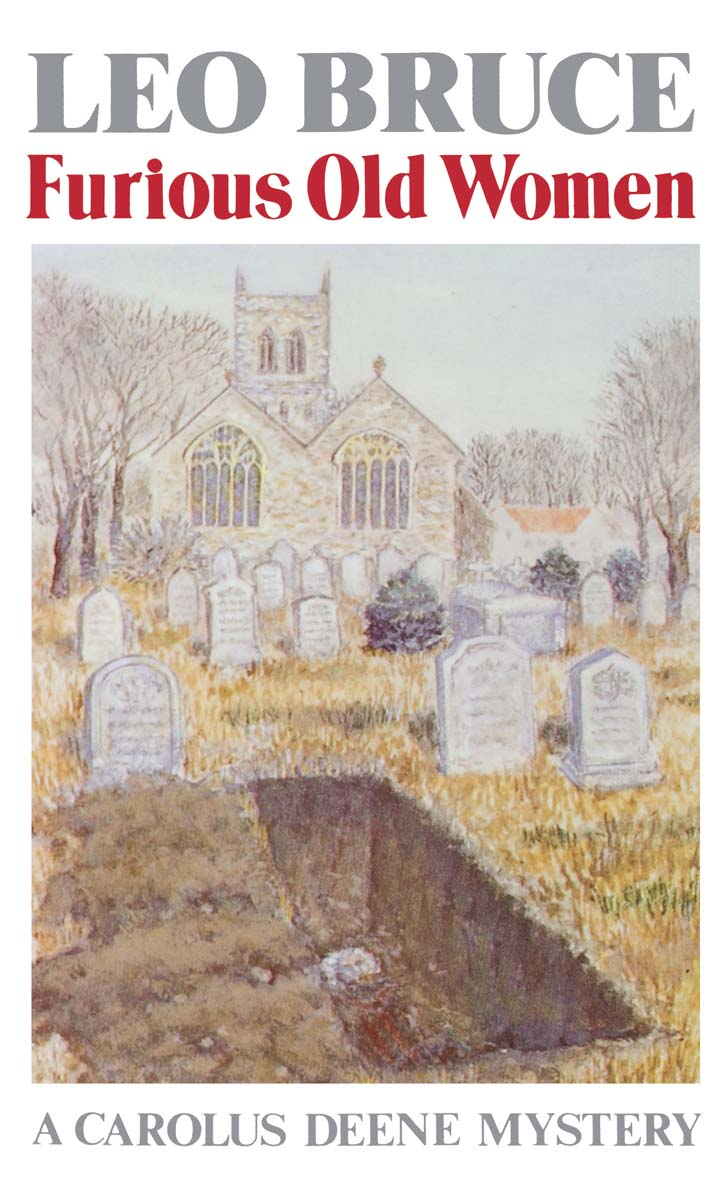
“Milly may have been mean and sanctimonious but she was my sister. To club her to death on her way to church was quite damnable.” So speaks Mrs. Bobbin, the elderly widow who has approached History master Carolus Deene to investigate the murder of her elder sister, Millicent Griggs having been found beaten over the head and hidden in an open grave in the churchyard in the small village of Gladhurst. Since all the police have done in the intervening week is ask “a series of questions even more moronic than [Deene’s],” Mrs. Bobbin wants something more achieved: “I’m livid. So don’t take too long in solving the thing.”

Continue reading

#1440: Jack on the Gallows Tree (1960) by Leo Bruce


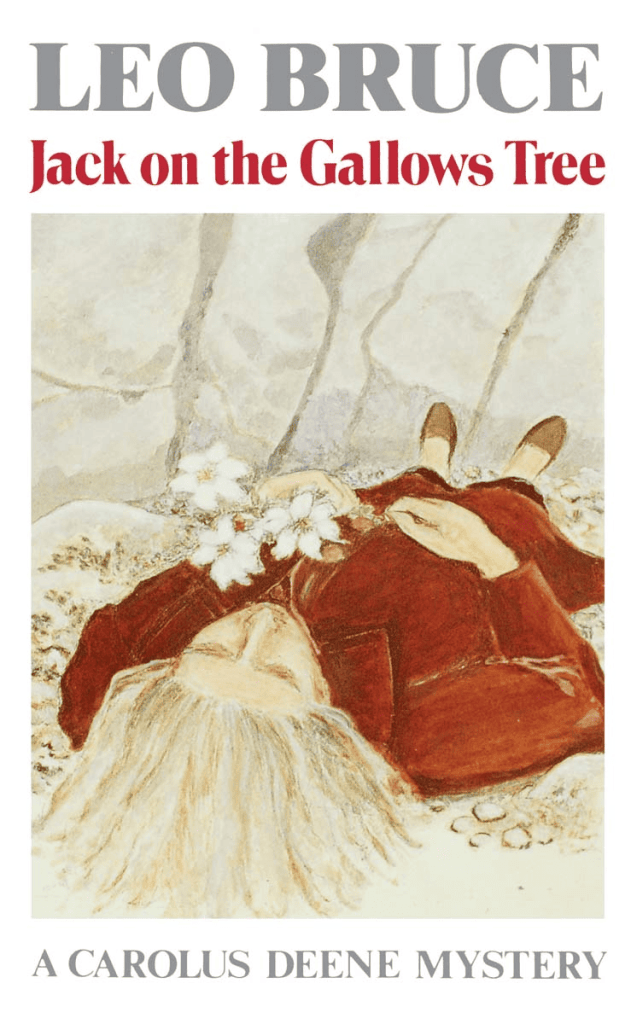
Recovering from a bout of jaundice, History master Carolus Deene is sent by his headmaster to sleepy Buddington, “famous for its population of rich and aged invalids” and the fact that “[t]here, alone in all England, the bath-chair survives as more than a relic”. There it is hoped that Deene will refrain from “jeopardizing the fair name of the Queen’s School by embroiling [him]self in detective work of a nature likely to result in unfortunate publicity”. Alas, immediately prior to his arrival, two elderly women are found strangled to death on the same night, the arrangement of their bodies suggesting some link. And Deene’s reputation precedes him to the point that he finds himself investigating almost against his will.

Continue reading

#1418: Dead Man’s Shoes (1958) by Leo Bruce


Having completed Sergeant Wm. Beef, I turn to the other series of detective novels Rupert Croft-Cooke wrote under his Leo Bruce nom de plume, those featuring schoolmaster Carolus Deene. The books are not easy to find, however, and so I am reliant on the recentish reprints by Academy Chicago Publishers, who neglected the first three in the series and began with fourth title Dead Man’s Shoes (1958). And it’s to be hoped that those earlier books were overlooked due to rights rather than quality issues, because this first encounter with the crime-solving History master leaves me somewhat underwhelmed. This was written by the convention-busting creator of Sergeant Beef? Really?

Continue reading

#1386: Case with No Conclusion (1939) by Leo Bruce


Another man accused of murder, another family member going to an amateur detective to prove his innocence. The classics don’t wear, do they? This time it is Stewart Ferrers accused of murdering local GP Dr. Benson late at night in his own home, and Stewart’s brother Peter who goes to ex-Sergeant Wm. Beef, now set up as a private enquiry agent, in the hope that evidence can be uncovered to cast doubt on the conviction. And along for the ride is Beef’s faithful-if-frustrated chronicler Townsend (now called Lionel despite calling himself Stuart at the end of the previous novel…) who hopes that something interesting might come of this to put him on equal footing with other novelists who relate the cases of their famous detectives.

Continue reading

#1356: Case without a Corpse (1937) by Leo Bruce


I’ll level with you: I’d been kind of dreading having to reread Case without a Corpse (1937), Leo Bruce’s second novel to feature the blunt-but-far-from-dense Sergeant William Beef. Memory told me that the novel was over-long, with a large proportion of it spent on an almost entirely pointless amount of investigation that any sensible reader would know is wasted effort because (rot13 for spoilers, if you’ve never read a book before) boivbhfyl Orrs unf gb or gur bar gb cebivqr gur pbeerpg fbyhgvba ng gur raq. And in rereading it for the first time in about 15 years I’ve discovered that, once again, my memory has been a little unkind, and the book holds up far better than anticipated.

Continue reading

#1314: Cold Blood (1952) by Leo Bruce


Leo Bruce’s eighth and final novel in which Sergeant William Beef sallies forth into polite company to batter them with blunt questions hiding a brilliant mind, Cold Blood (1952) is a strong effort that marks a distinct improvement from preceding title, the over-long and frankly tedious Neck and Neck (1951). It’s the battering to death of a wealthy landowner which concerns us here, with Beef brought in by Cosmo Ducrow’s surviving family to counter the evidence piling up against the dead man’s nephew, Rudolf. But, the more Beef looks, the blacker the case against Rudolf becomes…so is this the final convention-busting solution Bruce has for us at the cap of this series, or is something more subtle going on?

Continue reading

#1253: Neck and Neck (1951) by Leo Bruce

Neck and Neck

star filledstar filledstarsstarsstars
I should have loved Neck and Neck (1951), chronologically the seventh of eight Sergeant Beef novel by Leo Bruce: after all, Kate at Cross-Examining Crime placed it as the sixth-best overall, and we’re nothing if not contrary in our opinions: she has the excellent Case for Sergeant Beef (1947) in seventh place, worse than this — a sure sign this is in fact a superb and under-appreciated gem. Alas, apart from the occasionally adept turn of phrase and a few ideas, this is pretty torpid stuff, in no way justifying the four-year gap between titles in this series…unless it took Bruce that long to write because he kept getting so bored with it himself.

Continue reading

#1221: Case for Sergeant Beef (1947) by Leo Bruce

Case for Sergeant Beef

star filledstar filledstar filledstar filledstars
Ronald Shoulter has been found shot in the appropriately-named Deadman’s Wood, and his sister refuses to believe the police’s easy assumption of suicide.  While “[t]he fashion was for detectives of high social standing and large private incomes”, she “won’t have one of these pansified snobs who are supposed to be brilliant investigators hanging around” and seeks out ex-Sergeant William Beef to get to the bottom of things. And so Lionel Townsend, Beef’s Boswell for four previous cases, finds himself once again, though more unwillingly this time, drawn in to the matter of a devious murder that the earthy Sergeant must untangle.

Continue reading