
While I wasn’t entirely sure what the focus of this blog would be when I started it — I knew there would be impossible crimes, but had no idea otherwise — I’d have been surprised if you told me I’d end up doing so much reading of and writing about mysteries for 9 to 12 year-olds.
Now, sure, my Minor Felonies posts aren’t particularly popular with my readers — or with the bots who comb this site for financial information, depending on where those hits are coming from — but I honestly get a lot of joy out of these mysteries, which often do a great job of hiding in plain sight that which you overlook and so get surprised by come the closing stages. And so, as I recently passed 150 posts tagged Juvenile Mysteries, I’m moved to reflect on the enjoyment I’ve taken from the excellent examples I’ve encountered.
So, here are my ten favourite examples of the form for younger readers, chronologically by first publication.
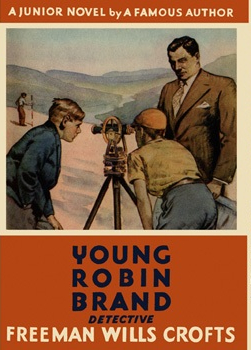
1. Young Robin Brand, Detective (1947) by Freeman Wills Crofts
Not the most thrilling of detectival undertakings, and unlikely to appeal to the Youth of Today, I still find it incredible that someone who had achieved as much in the genre as Freeman Wills Crofts turned his hand to a juvenile mystery. An unsurprising level of detail reveals some clever detection (the correct way to take a cast of a footprint, say), and the ending is pretty hard-edged for a book aimed at the junior market. Gives a clear picture of detection as something that must be worked at, rather than a series of unattainable deductions by a Holmes-like genius who simply knows everything, and that’s an important lesson, too. Will doubtless never be reprinted, so grab it if you ever stumble over a copy. [My review]
2. The Clue of the Phantom Car (1953) by Bruce Campbell
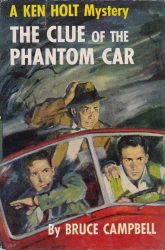
I’ll admit, I’ve cooled a little on the Ken Holt series by husband-and-wife team Sam and Beryl Epstein, in part because they can be expensive to track down. But this first experience remains a distinct highlight, with young Ken Holt unpicking the mystery of a car that was speeding towards another on a narrow stretch of road…and then vanished from existence. Not only is the mystery cleverly and simply explained, the book itself goes on to one of the most intense young-detective-in-peril sequences that I’ve encountered in the form, and manages to tie everything up satisfactorily, intelligently, and without ever speaking down to its intended audience about the peril faced. I wish I could find something else this good in the series. [My review]
3. The Mystery of Tally-Ho Cottage (1954) by Enid Blyton
For my money, the best of Enid Blyton’s Five Find-Outer books represents pretty much the pinnacle of the juvenile mystery, with clever clues, well-reasoned deductions, and inventive methods employed to enable their detection. It’s a tight clustering of quality at the top end of this series, but Tally-Ho Cottage (1954) wins out because of the canny way she shows you so much that you overlook and plays so expertly with your expectations. It came top of my ranking of the whole series, and I maintain that there are ‘serious’ adult detective novelists who are given more credit for their output than Blyton despite applying themselves to the form far less successfully. [My review]

4. The Mystery of the Screaming Clock (1968) by Robert Arthur
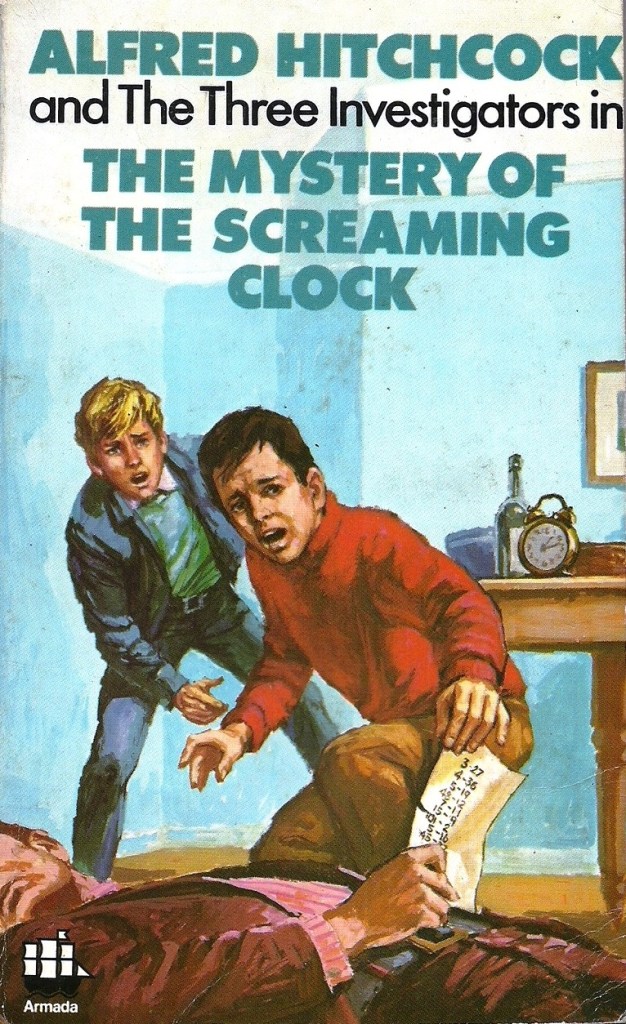
On another day, this might be replaced by The Mystery of the Vanishing Treasure (1966), another of Robert Arthur’s Three Investigators series that displays his cunning and boundless energy when it came to crafting exquisitely-wrangled cases for Jupe, Bob, and Pete to handle. Screaming Clock (1968) wins out today because of how cleverly the title conceit plays into the mystery overall, added to some clever linguistic detection and a more focussed sense of how these boys achieve their aims through intelligent reasoning. It’s fascinating to wonder what these books would have gone on to become had Arthur not died in such an untimely manner, but the best of what he left — both here and in his other writing — was great and deserves a great deal of respect. [My review]
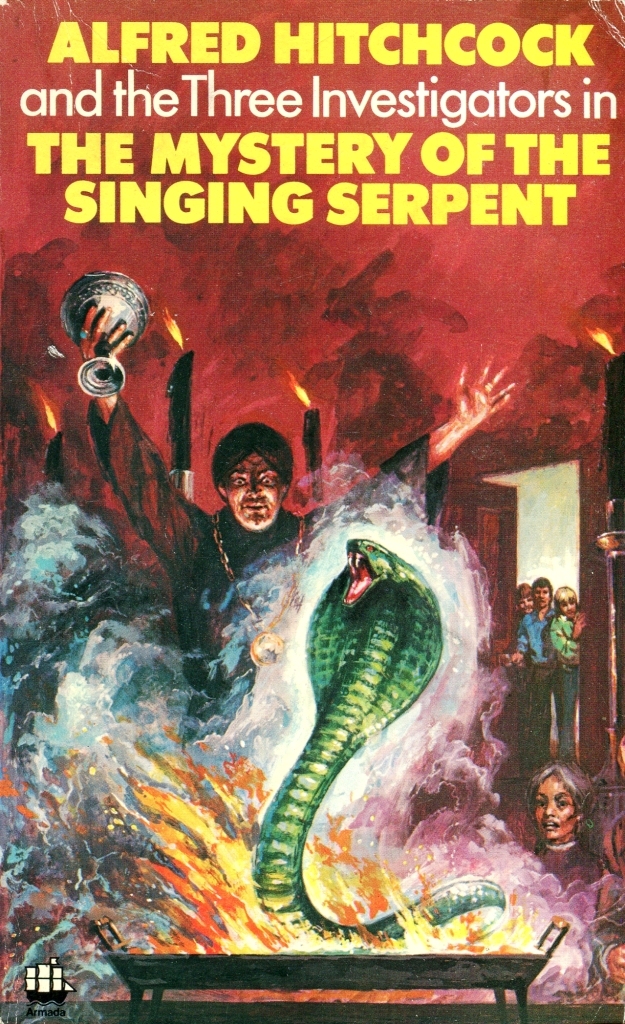
5. The Mystery of the Singing Serpent (1972) by M.V. Carey
I dunno if it’s cheating to include two books in the same series, but I allow myself this because this second Three Investigators entry is written by a different author — with Mary Virginia Carey going on to eventually write more T3I books than any of the other four authors involved in the series. The Mystery of the Singing Serpent (1972) also demonstrates what I mean by the intelligent reasoning involved in these book: where hand-waving away some complex ideas would be potentially more desirable, and certainly easier, Carey knuckles down and does the hard work of explaining things rationally, clearly, and again with full respect for the people she’s writing for. I’m excited to continue to read what else she did in this series, [My review]
6. Death Knell (1990) by Nicholas Wilde
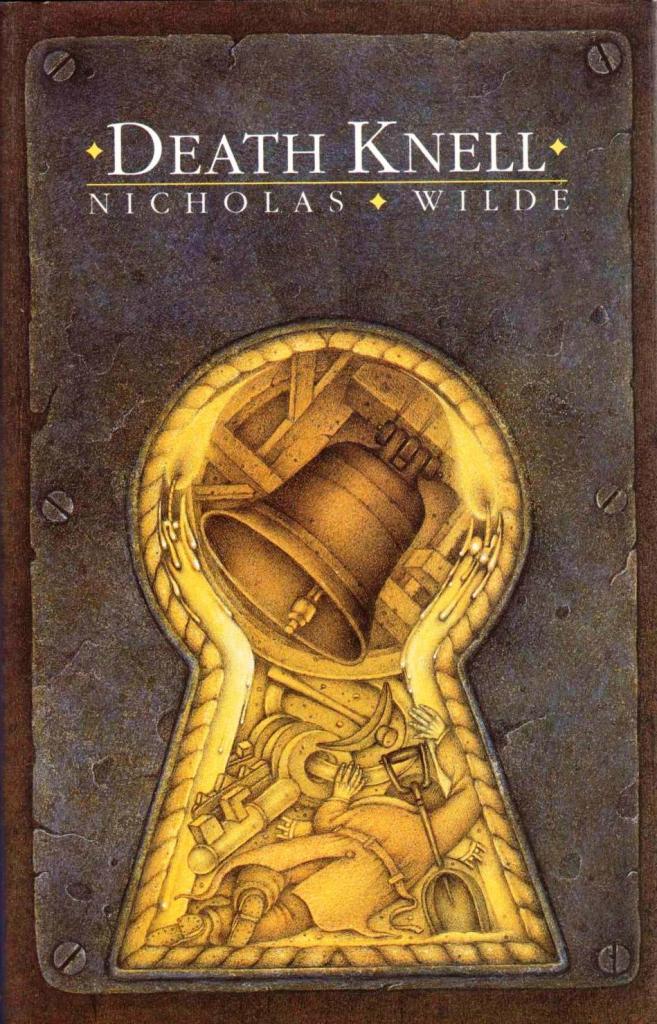
I have TomCat to thank for bringing Death Knell (1990) to my attention, with this snowbound story of a bell that seems to foretell death and a body found in a bolted room with a heavy stone tablet leaning against the door for added complexity. There’s an element of disappointment as to how that impossibility is achieved, but the book compels itself for its eerie scene-setting and the steady way Wilde builds tension in the small community as the murderous bell signals more doom. Great to see someone taking the time to build suspense with their setting in this way, and the inclusion of an impossible crime in an era when really very few people cared about impossible crimes is simply a bonus. [My review]
7. First Class Murder (2015) by Robin Stevens
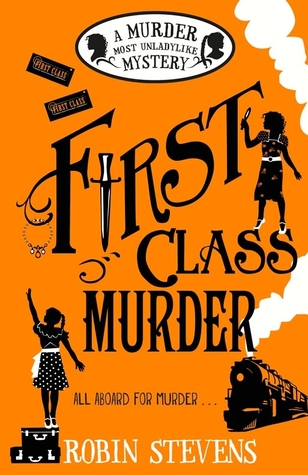
The book that started it all! Had my fixation with impossible crimes not been so acute, I doubtless would never have had my curiosity piqued by this, and had this story of a stabbing in a train bedroom whose door was bolted on the inside not been so much fun, well, I can’t believe I would ever have glanced in the direction of the juvenile mystery ever again. So, yes, I have much cause to be grateful to First Class Murder (2015) and Robin Stevens, but the book also stands on its own: cleverly subverting your expectations by leaning into the tropes in the way that only the most confident mystery writers can pull off successfully, it represents for me the pinnacle of a series that I really should return to some day. Man, so many books… [My review]
8. Panda-Monium (2017) by Stuart Gibbs
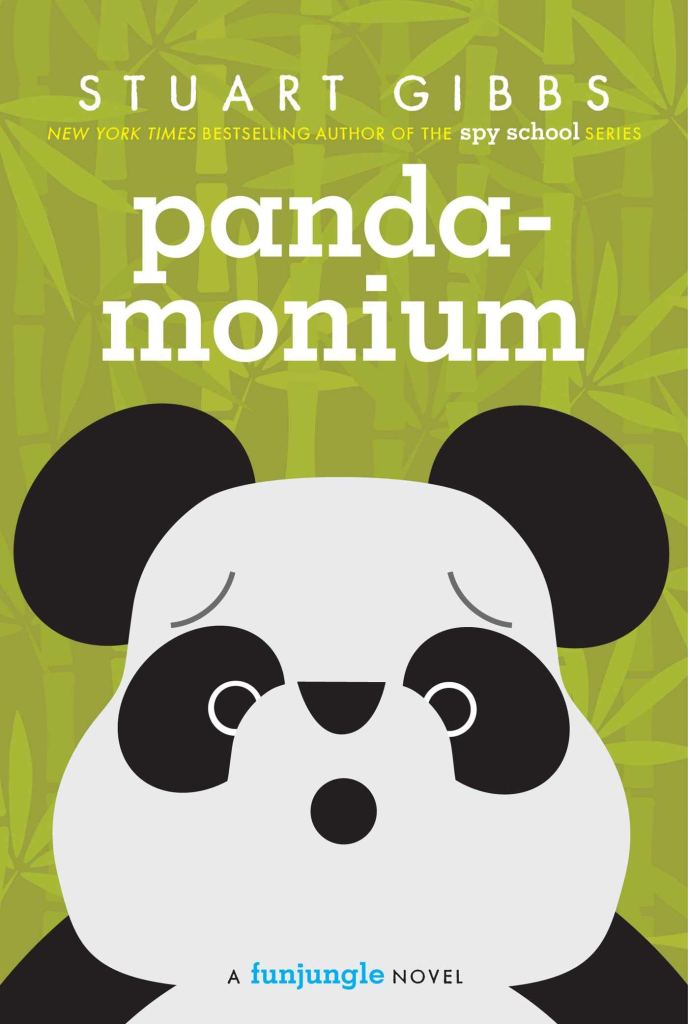
Not only does Stuart Gibbs’ fourth FunJungle book Panda-Monium (2017) contain a great puzzle with a superb piece of in-your-face evidence to untangle the whole skein, it also does something far harder: make it seem sensible that a 13 year-old boy could get to the bottom of the mystery of a vanished panda ahead of the FBI. Gibbs’ keen eye for telling details, his ability to juggle both comedy and threat, his handling of parallel plot strands, and the realistic beats of the world he creates in his books all compel him as an author of extraordinary talent. I rarely play favourites, but if you’re tempted to try only one book on this list — c’mon, surely my opinion on these matters counts for something — I’d probably suggest you make it this one. [My review]
9. High-Rise Mystery (2019) by Sharna Jackson
In a genre dominated, in this day and age, by kids at exclusive boarding schools or Texan super-zoos, Sharna Jackson’s High-Rise Mystery (2019) cannot get credit enough for setting her murder mystery on an East London housing estate, therefore ensuring she is engaging in a far more realistic milieu. The mystery is a good one, too, with sisters Nik and Norva absolute delights as they piece together the answers around a dead body — added impetus coming from the friendship with the victim, and added difficulties added by their personal connection with so many of the suspects. A wonderful book, resonating all the more because Jackson hasn’t resorted to an unimaginable lifestyle to make her story work. [My review]

10. Murder on the Safari Star (2021) by M.G. Leonard and Sam Sedgman
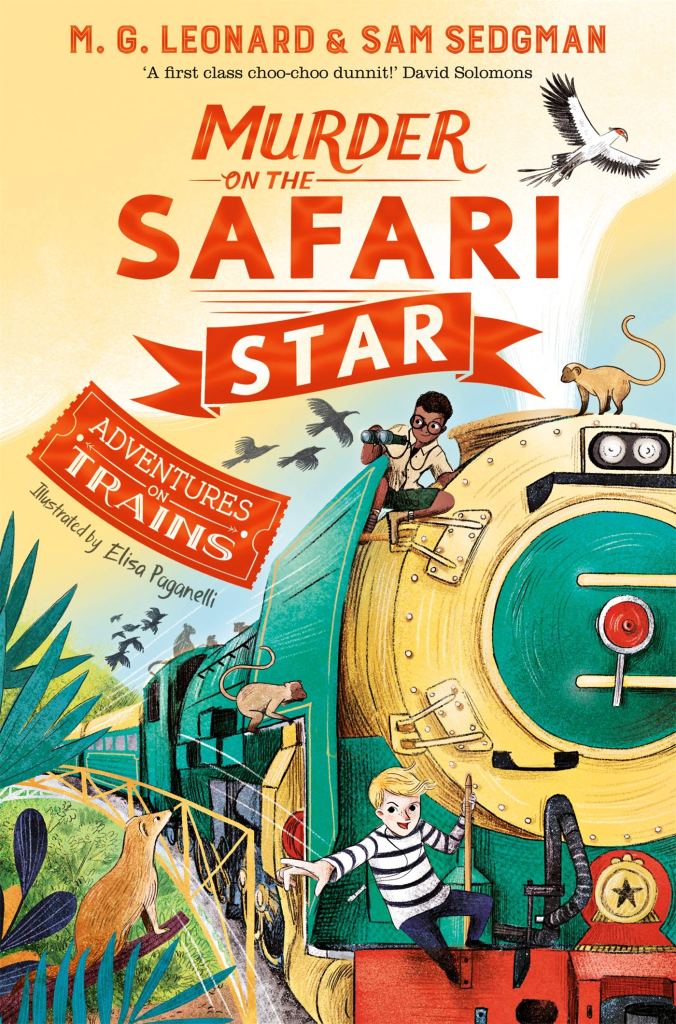
This final pick could be almost any of the too-short Adventures on Trains series, but Murder on the Safari Star (2021), the third entry, was my first encounter with Leonard and Sedgman’s world, and so I retain a slight fondness for it over the others. That it’s an impossible shooting doesn’t hurt, and that the answers are so cleverly achieved is an added bonus, but, really, if you’ve not read these books then start with The Highland Falcon Thief (2020) and watch it develop as you go. Like Stuart Gibbs, these two have crafted an exceptionally clear world with a very keen eye for social and moral responsibility, and they’ve wrapped it up in a superb murder mystery, to boot, so what’s not to love? [My review]
~
Juvenile mysteries will continue to be a frequent feature of The Invisible Event, because I find it heartening to see the principles of mystery fiction deployed so intelligently. Here’s hoping these go on to influence the next generation of deviously brilliant detective fiction authors about 20 years from now.
~
My Ten Favourite…
- …Literary Detectives
- …’New to Me’ British Library Crime Classics
- …Ramble House Novels
- …Impossible Crimes
- …Locked Room International Titles
- …Golden Age Reprint Covers
- …Orion Crime Masterworks
- …Mysteries of the 1930s
- …Mysteries of the 1940s
- …Paul Halter Translations
- …Juvenile Mysteries
- …Inverted Mysteries
 The Invisible Event
Glad you found them so enjoyable. Adding a few to my TBR.
LikeLike
These are some of the blog posts of yours I enjoy the most! But I was a big Blyton fan, and then Nancy Drew and the Three Investigators, and have recently (as an adult in my 40s) read all of the Robin Stevens books. I’ll keep an eye out for the ones you recommend here that I haven’t read, and I’ve got some Three Investigators on my shelf that I’d like to return to. Robin Stevens’s new series, the Ministry of Unladylike Activity, is also great fun and well done – the third book has just come out.
LikeLike
Glad to see you haven’t forgotten about Nicholas Wilde’s Death Knell and agree with everything you said about Bruce Campbell’s The Clue of the Phantom Car. They’re so good, they could have been reprinted by Locked Room International and not feel out of place at all.
I really need to return to this corner of the genre. Maybe I’ll try one of the more recent titles you listed. So thanks for the reminder!
LikeLike