
Image via Facsimile Dust Jackets
Image via Facsimile Dust Jackets



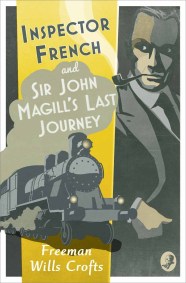 This 2017 HarperCollins reprint — under the title Inspector French and Sir John Magill’s Last Journey — is 309 pages long and took me, almost to the hour, two full weeks to read. Ordinarily this would be the sign of a very bad book indeed, but, with the end of term and then Christmas to negotiate, had it been any less good — honestly, now — I probably wouldn’t have finished it. The fractured, disrupted natured of such a reading experience requires the mind to keep plot details fresh while also contending with the busiest time of a busy year, and the clarity amidst complexity of Crofts’ plotting here is joy unconfined to my puzzle-fixated mind. And with the Nativity headed back into its box, here’s why.
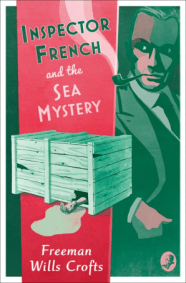 First thing first: yes, I’m aware that the 2017 Collins Crime Club edition of this novel — for which I am eternally grateful, since it has enabled me to read it in the first place — has been reissued with the title Inspector French and the Sea Mystery. What can I say? I’m a stickler for origins, and so am reviewing it under the original title. My delight at having Crofts back in print is undimmed, and if building an MCU-esque awareness through uniformity in titles helps the books gain popularity and leads to even more Crofts back in print, hell, I’m all for it. And, while we’re on the subject of these new editions, the covers are exquisite — simple, direct, clean, beautifully evocative…a great job.
 The reputation for being something of an interminable bore that still dogs Freeman Wills Crofts some 60 years after his death wants for evidence in Antidote to Venom. We’re about halfway through when the murder occurs, by which point you’ve had not only a highly sympathetic portrait of the central man in the affair, but also the convincing use of minor characters to create the situation in a way that relies on coincidence without feeling forced, an allusion to the Sherlock Holmes canon, and two — count ’em — legitimate jokes. It is spry, focussed, beautifully rich in intrigue and heartbreak, and balances its inverted and traditional elements perfectly. And when the investigation starts…oh, boy, are you in for a treat.
 The Invisible Event