Reviews
 You’re writing a detective novel during the most productive and creative period that the genre has ever gone through, so pay attention — the tropes aren’t tropes yet, they’re still ingredients, and the standard mix requires the following: a murder or two, an amateur detective, a closed circle of suspects, an imminent sense of threat for our hero to fret over and be dismissed by the professional police, a love interest who must fall under suspicion before our hero realises she just might be his soul-mate…any questions? Okay, off you go. Keep the dunnage to a minimum, avoid long-winded and namby-pamby descriptions — this is entertainment, remember — and for pity’s sake keep it light.
#127: ‘The Third Bullet’ and Other Stories [ss] (1954) by John Dickson Carr
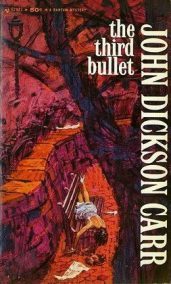 I haven’t reviewed (or read, come to that) a short story collection for a while, and it’s 1954 this month for Crimes of the Century at Past Offences meaning the time is ripe for a long-overdue (har-har) return to John Dickson Carr. I had read a couple of the stories contained herein before, but the majority were new to me, and as ever it’s a delight to see Carr’s imagination wrangle with the shorter form. Given how frequently stories of this ilk fail to conceal their workings and/or killer, it’s also great to see him do both over and over again with consummate ease, as if saying to his contemporaries “C’mon, guys, it’s simple –just do this“. We’ll take them one at a time as is my usual approach with collections — and, yes, most of these were originally published before 1954 and so might be inadmissible. Let’s just get on with it and an independent official enquiry can determine the eligibility of this at a later point.
Continue reading
#124: Invisible Green (1977) by John Sladek
 John Sladek is better known these days as a furiously inventive author of decidedly loopy SF — and I mean that as a compliment — but he did publish two detectives novels in the 1970s that each contained several impossibilities. The first, Black Aura (1974), has two disappearances and a man flying outside a third-storey window (without anything so amateur as wires holding him up, you cynic), and two-thirds of these are explained away superbly — the second disappearance in particular. It is a very good book, if perhaps a little slow in places, and boded well for the next time Sladek opted to dip his toe in our waters. Invisible Green, then, is very much the realisation of this potential, being superior in every single respect, and therefore something of a bittersweet read as we know now that nothing else followed it in the realm of the unachievable provably done.
Continue reading
#123: Not With a Bang by Matt Ingwalson

 “The impulse for this novel,” says Adam Roberts “was a desire to collide together some of the conventions of ‘Golden Age’ science fiction and ‘Golden Age’ detective fiction, with the emphasis more on the latter than the former.” Well, count me in! Sure, the authors he then cites (Margery Allingham, Ngaio Marsh, Dorothy L. Sayers, Michael Innes) don’t all fill me with delight, but this is a collision of my two favourite genres plus impossible crimes — how could I pass it up?! And it would have passed me by entirely had not blog-commenter ravenking81 brought it to my attention, so my most genuine thanks for that; at its best it’s a fascinatingly successful attempt at merging the two genres in a way that recalls both Isaac Asimov and John Dickson Carr, who, y’know, are the two finest authors to have worked in their respective genres. So that’s a good thing. By definition, however, it is not always at its best.
 People hold weird beliefs: that the moon landings have all been faked, for instance, or that the moon is hollow, or that the phases of the moon have anything at all to do with your love life or finances. Some people might even hold weird beliefs not about the moon. Here’s one: I firmly believe that for the remainder of human history there will never again be anyone who writes the detective novel as well as did John Dickson Carr at his peak. When I eventually narrow my ten favourite detective novels of all time down to a list that is actually ten books long, there’s a real chance all ten of them will be by Carr. And, I’ll tell you now, it will definitely feature
 After many years reading, talking about, reviewing, and now blogging on the subject of detective fiction I am presented with a real difficulty here: I honestly don’t know quite what to write about Noel Vindry’s classic The Howling Beast for fear of giving anything away. It is a balancing act of a book that, while probably not completely successful by today’s standards, is hugely enjoyable and absolutely something that those who count themselves as puzzle fans or lay claim to an interest in the emergence and development of detective fiction really should read. And I’m not just being vague here because I don’t want to criticise it — I really enjoyed it, and there’s one key thing it does absolutely brilliantly, and I’m especially keen to preserve that for those of you who should experience this pure. So, with that out of the way, here goes.
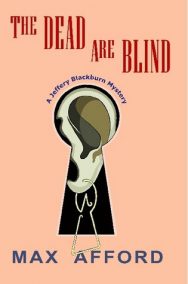 I believe the philosopher John Francis Bongiovi, Jr. said it best: “Keep the faith”. The Dead Are Blind is the third novel by Max Afford I’ve read and, having hugely enjoyed the other two, I found myself struggling to maintain interest through the opening chapters. Certainly from a historical perspective they have plenty to offer – our lead characters are invited to tour a radio studio on its opening night, something of a gala event at the time, and so this is chock-full of fascinating tidbits from Afford’s own experience of working in radio. But the mix of dense description and fixation on minute details that are hugely unlikely to become relevant later puzzled even my will and left me a bit apathetic by the end of chapter two.
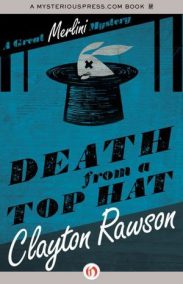 Well, where to start? Locked room murders (plural!), magicians, a hefty dose of self-reference, an extended John Dickson Carr homage-cum-lecture, a sprinkling of magical and mystical esoterica, and some really quite awesomely clever solutions…to be honest this — Rawson’s first novel to feature magician detective The Great Merlini and his Watson, journalist Ross Harte — should be a shoo-in for my favourite book of all time. Something about the conflation of conjuring and seemingly-impossible crimes just gets me all a-giggle with excitement, and Rawson wrote one of my favourite impossible crime short stories of all time (‘Off the Face of the Earth’, since you asked) so has previous with me, but this just comes up a little short to call it the masterpiece it probably should be.
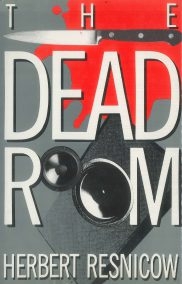 When the unpopular patriarch of a family is found stabbed to death in his locked study, it’s clear that one of the six family members gathered at the ancestral pile must be the murderer (the servants, of course, are excluded immediately). It’s up to our plucky amateur detective team to work out how he was killed and beat the police to the killer before it’s too late while also beginning to realise how they really feel about each other… So far, so Golden Age. Now substitute the following nouns: patriarch/inventor, family/hi-fi company, study/anechoic chamber (sound-testing room, if you will), family members/company executives, ancestral pile/company studio, and servants/technicians. What you have now is the plot of Herbert Resnicow’s The Dead Room. It’s that simple a switch – but for the trappings of its location, this could not be more of a Golden Age detective story, and the entire enterprise is undertaken in the same spirit as those classics.

