Reviews

#20: Policeman’s Evidence (1938) by Rupert Penny
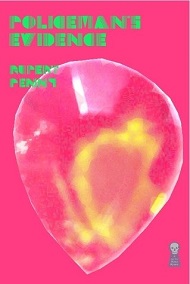 If you’ve never bought a house on the questionable basis of a 300-year-old document implying the miserly, hunchbacked previous owner might possibly have hidden a marvellous treasure trove somewhere thereabouts, well, you must not be independently wealthy. You’ll also, then, have never invited various family and hangers-on down to said house to engage in a search invoking the types of ciphers that would give Dan Brown’s Robert Langdon a damp counterpane and – consequently – never had to deal with the aftermath of a suicide-that’s-probably-murder in a locked, treble-bolted and exitless room.

Thankfully for you, however, all these things happened to Major Francis Adair, and Tony Purdon and Chief-Inspector Edward Beale were on hand to relay it, albeit through the pen of Rupert Penny, the pseudonym of Ernest Basil Charles Thornett (who would go on to publish one book under another nom de plume, Martin Tanner – are you keeping up?). Policeman’s Evidence is the third of Penny’s novels, available thanks to the continued superlative efforts of Fender Tucker’s Ramble House, and it’s probably the most classically-constructed of his books that I’ve read, as involved and well-planned a puzzle as you’ll find from this era. An attack on a member of the household hints that a disgruntled ex-employee might be lurking suspiciously and with harmful intent, plenty of possibly-blameless-but-possibly-significant interactions occur, and everything is laid out with scrupulous fairness in time for the challenge to the reader to solve the puzzle before Beale lays his hand on the perpetrator.
Continue reading
#17: The Hollow Man, a.k.a. The Three Coffins (1935) by John Dickson Carr
 While I technically popped by blog Carr cherry a few weeks ago in recommending Death-Watch, it was at best a passing thumbs-up to the man and his achievements. And, following the disappointment of my intended novel under review, the time is probably ripe to dive in, get the first Carr review up and prop open the floodgates. And why not The Hollow Man (a.k.a. The Three Coffins)? Carr’s most well-known work, an arguable masterpiece of detective and impossible crime fiction, surely the most widely written about impossible crime novel on the internet…why not trot out the usual platitudes, recommend it unreservedly and fill the gap in my schedule?
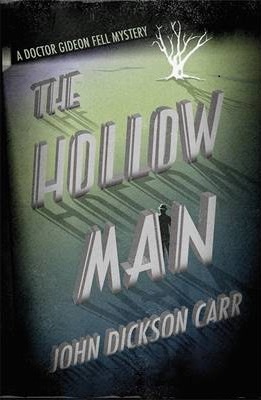
Except, and here’s the different perspective I’m hoping to bring to this, the first time I read The Hollow Man I hated it. I hated it. It was published as part of Orion’s Crime Masterworks series and that alone stimulated sufficient interest for me to give it a go but, being in my nonage of classic crime fiction, I couldn’t really tell you what an ‘impossible crime’ was and so didn’t know what to expect. I somehow knew of Carr vaguely (the internet was not quite so well-informed then as now), had ten or so Agatha Christies to my name – including Murder in Mesopotamia, which I failed to recognise for the impossible crime it is – and figured that alone meant I would be in for a similar kind of experience and knew what I was doing.
Continue reading
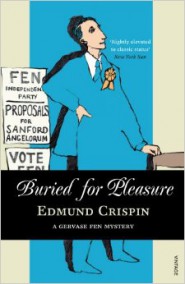
#15: Buried for Pleasure (1948) by Edmund Crispin
 Do anything for long enough – spelunking, chicken farming, marriage, presenting live television – and you’re bound to make some mistakes. Thus, no novelist with more than a few books to their name is going to have a perfect run, even allowing for the subjectivity of readers’ opinions; class being permanent and form being temporary, everyone writes a dud now and then. Which brings us to Buried for Pleasure, the sixth of Edmund Crispin’s nine detective novels based around Gervase Fen, Professor of English Literature at a fictional Oxford college, sometime detective, and springer spaniel in human form. A more likeable, enthusiastic, and chaotic protagonist you are unlikely to find, and here the joys of Don-ship have worn off and so Fen has decided to stand for parliament as an MP for an out-of-the-way country constituency in the upcoming General Election. And then there’s a murder, and then another murder, and our springer spaniel is suddenly up to his bloodhound tricks again…
Continue reading
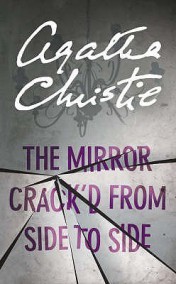
#12: The Mirror Crack’d from Side to Side (1962) by Agatha Christie
 “Write what you know” is the kind of aphorism doled out to aspiring authors like public money at a bank’s board meeting, and aged 72 Agatha Christie – world’s biggest-selling author of crime fiction, with a West End play entering its eleventh consecutive year – knew a lot about being old and a lot about crime. So is it any surprise that this return to crime-solving elderly spinster Miss Jane Marple is so damn good? It’s the first Miss Marple book to actually feature the wily old fox with any regularity since They Do it with Mirrors (1952) as she only really put in a cameo in both A Pocket Full of Rye (1953) and 4:50 from Paddington (1957). Of the 16 books Christie would publish from this until her death six of them would feature Marple, composing practically half of the canon, and arguably a familiarity with her subject helped; it’s an impression reinforced by the opening pages of The Mirror Crack’d… wherein the indignities of old age are charmingly laid out from Aunt Jane’s perspective and you can almost see Christie winking at you while she writes.
Continue reading
#10: The Incredible Adventures of Rowland Hern [ss] (1928) by Nicholas Olde (Part 2 of 2)
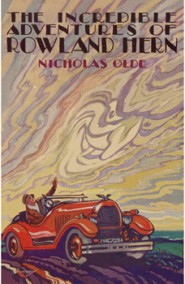
Credit: Facsimile Dust Jackets


 The Invisible Event