-
Subscribe
Subscribed
Already have a WordPress.com account? Log in now.
 There is a branch of Mathematics known as combinatorics which studies the interactions of countably finite discrete sets. Or, in English, it’s the formal study of combining things in all the possible ways they can be combined. It’s a little bit like doing a jigsaw by picking up one piece and then going through the box to try every other piece to find one that fits with that piece, and then going through again to find another piece that fits with those two…and so on until you’ve finished the picture. Approximately a third of the thesis I wrote in my final year of university was based in a combinatorial approach to solving a particular problem (I shall spare you the details), and the formalisation of what sounds like an exceptionally dull way to go about something took on for me a particular beauty in the context of all the mathematics I has studied to that point.
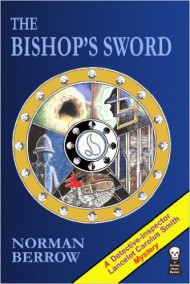 It is due to experiences akin to that of reading The Bishop’s Sword – a euphemism of a title if ever there was one, though here referring to a literal sword once owned by a bishop – that I started this blog in the first place. Picking up a book with very little to go on (a cursory, and then slightly more thorough, search online revealed not a single review of this anywhere) and having it turn out to be an absolute joy is the kind of thing I have to share with someone though, while in no way dismissing the many fine qualities that they do possess, not the kind of thing my friends necessarily share my enthusiasm for. And so I throw this to the interwebs, that you may be a way of enabling me to feel that someone who might be intrigued is going to share in this, and frankly you’re on to a corker if you decide to partake. You are, of course, most welcome. Continue reading
 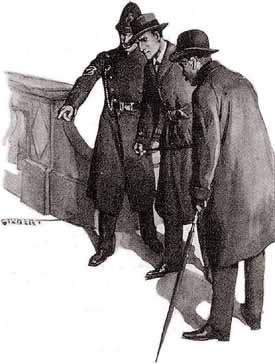 ‘The Problem of Thor Bridge’ gives us the classic impossible crime setup of a body that has been shot in the head but without any sign of a weapon to hand…and then manages to appear not at all impossible by finding the murder weapon hidden in the most likely suspect’s room, also throwing in a note from the suspected murderer arranging to meet the victim at the place of their demise and at around the time they are suspected of being having died. True, there are no footprints anywhere near the body, but – before you get too excited – “The ground was iron-hard, sir. There were no traces at all.” Oh, so that takes care of that, then.
 It is difficult to believe that Arthur Conan Doyle ever intended for his Sherlock Holmes stories to be as influential as they have proven to be. Not only are we still churning out variations on his characters in print and on radio, television and film but such is the fascination with his detective that something published before Conan Doyle even put pen to paper can achieve retrospective interest because of the similarities between the two. And so Locked Room International published this translation of Henry Cauvin’s debut novel The Killing Needle, wherein a skeleton-thin genius master of disguise who shuns social norms, declares “In my case, the brain dominates everything and is continually boiling over. This fire is eating me up and doesn’t leave a moment’s peace. The mind! The mind is a vulture that’s eating me alive” and takes opium (though in this case “to help me get some much-needed sleep”) has his adventures in crime-solving related by a doctor who becomes his confidant after being introduced by a mutual friend …yeah, okay, that’s a lot of overlap right there.
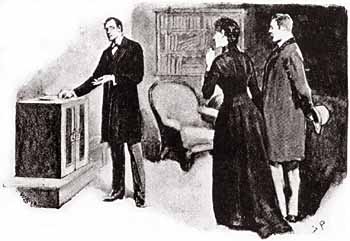 Since I can’t quite go the Full Sherlock – he’s out of my era, after all – I thought I could at least have a look at the three Arthur Conan Doyle-penned short stories that comprise the (official) entirety of his impossible crimes: ‘The Adventure of the Speckled Band’, ‘The Adventure of the Empty House’, and ‘The Problem of Thor Bridge’ (I’m excluding novella The Valley of Fear because it’s not technically an impossible crime, and remains a mystery for all of about six lines). It’s also a lovely excuse to get some of Sidney Paget’s gorgeous illustrations out for airing, too, and I don’t think anyone is going to mind that. So, first up going chronologically, is my least favourite of these three: nonsense-fest ‘The Adventure of the Speckled Band’.
 I wouldn’t call myself die-hard Sherlockian enough to immediately sign
  Some families have all the luck – take the Khardashians, for example, who are universally blessed with charm, intelligence and talent – whereas some miss out altogether. Into this second category would definitely fall the Umezawa clan: not only is patriarch Heikichi found battered to death in his locked art studio, his eldest daughter is then found murdered a few months later and, following that, his six other daughters, step-daughters and nieces all disappear simultaneously and their dismembered bodies are discovered at various intervals buried in different locations around Japan. Then it turns out that Heikichi Umezawa had written a document outlining his intention to do exactly this to these women, with methods of murder and disposal based on their zodiac signs, so the mystery of who could have carried out his nefarious scheme raises its ugly head and remains unsolved for decades…
 The heart of John Dickson Carr’s The Crooked Hinge – previously voted the fourth-best impossible crime of all time – is this: a man standing alone at the edge of a pond surrounded by sand has his throat slit, and the two witnesses who had him in their sight both swear no-one was anywhere near him at the time. It is, of course, impossible. But then the incidence of that which cannot be done is the bailiwick of Dr. Gideon Fell… Something a little different this week, as two venerable gentlemen of the blogosphere – Puzzle Doctor of In Search of the Classic Mystery Novel, and Sergio of Tipping My Fedora – have kindly agreed to allow me to append my thoughts to their own joint review of this title from last year by way of providing some alternative perspectives on what is a hotly-debated topic: just how classic is The Crooked Hinge?
 I’m not really a fan of the adjective ‘cosy’ (actually, being an Americanism, technically it’s ‘cozy’) when applied to classic detective fiction, but I appreciate that it serves a purpose. It paints a picture of a land far from sadistic serial killers and pulse-pounding races against time, a land inhabited by little old ladies and bloodless death where everything is resolved, or at least halted, for scones and cream at 3pm, where the unpleasant never prosper and where thuggery and what little violence is allowed are perpetrated at the severe risk of extradition. A great many classic crime authors couldn’t actually be any further from ‘cosy’ if they tried, hence my opposition to the term, but right now that’s beside the point.
 The Invisible Event