Reviews
#629: Hardly a Man is Now Alive, a.k.a. Murder Now and Then (1950) by Herbert Brean
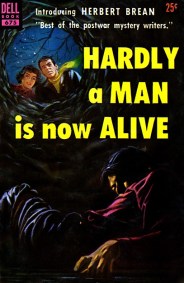

Three books into the seven-strong output of Herbert Brean, I’m going to suggest that he’s one of the most unjustly-neglected writers of the latter-GAD era — that “latter” prefix being key. Brean’s plots are dense enough for the puzzle fiends of the 1930s, and his social milieu more than matches the requirements of the post-GAD 1950s hankering after domestic suspense, but each school will be disappointed by how much of its rival is present. Thus, puzzle fans lazily insisting he’s in the same bracket as John Dickson Carr and realism fans keen to play up his HIBK credentials each sell him as writing sorts of books he never wrote, and everyone ends up disappointed.
Continue reading
#627: A Little Help for My Friends – Finding a Modern Locked Room Mystery for TomCat Attempt #14: The Darker Arts (2019) by Oscar de Muriel

A certain amount of debate continues to rage — “rage” might be too strong a word — over whether the impossible alibi qualifies as a true impossible crime. I suggest that, should it eventually be inducted into future Locked Room Murders supplements, we do so on a ‘one out, one in’ policy and retire the “death by unknown means” to make space.
Continue reading
#626: Laura (1943) by Vera Caspary
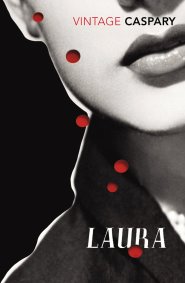

Noir — from the French, er, noir, meaning “black” — is a label adopted by, or possibly foisted upon, the end of the crime fiction genre where things get appropriately murky: we have anti-heroes, moral bankruptcy, dodgy dealings, and possibly criminals getting away with things and the social order not necessarily restored. My Vintage edition of Laura (1943) by Vera Caspary showcases the New Yorker declaring this novel “Noir in a nutshell”…and that feels like a desperate bid to invite a female author into the sausage-fest that the annals of Noir tend to be. Because, honestly, Laura couldn’t be further from that promised noirsette if it tried…and I really do think it’s trying.
Continue reading
#624: Bob’s Yer Uncle – Locked Room Murders Supplement (2019) ed. Brian Skupin
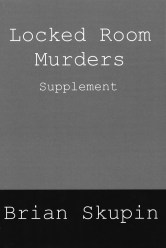
The reprinting of Robert Adey’s Locked Room Murders (2nd ed., 1991) at the end of 2018 was a delightful turn-up for those of us who had been dreaming of owning that reference bible. And once the excitement settled, I’m sure more than a few people started thinking “Hey, they should really do another one of these…”.
Continue reading
#623: Mr. Pottermack’s Oversight (1930) by R. Austin Freeman
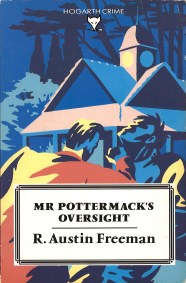
When digging his garden to lay a foundation for a new sundial, quiet, unostentatious bachelor Marcus Pottermack uncovers a previously-unknown well. That same day, he receives yet another demand for money from the man who is blackmailing him, and it’s only a matter of time before one problem is used to solve the other. And when curiosities about the man’s disappearance are raised in passing with Dr. John Thorndyke, it’s only a matter of time before that pillar of truth is on the trail of quiet, unostentatious Marcus Pottermack. And yet, for all its conventional-sounding setup, Mr. Pottermack’s Oversight (1930) is a delightfully unconventional inverted mystery.
Continue reading
#621: The Borrowers Afield in The Mystery of the Moaning Cave (1968) by William Arden
 The Invisible Event