Author: JJ

#248: The Secret Dancer (1936) by Norman Berrow
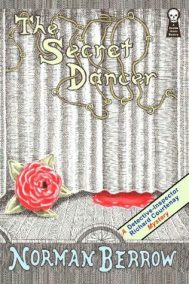 In a week that saw me start and quit three books in a row, it was a relief to open Norman Berrow’s third novel and be put immediately at ease by his nimble capturing of the pre-show backstage goings-on at the latest, most fashionable theatre in London. From the music described as “…a shamelessly stolen conglomeration of Mexican airs, assembled in Tin-Pan Alley, shipped to Europe, and played with astonishing variations” to the beautiful summation of leading lady Lili La Paz as “a miracle to watch; and hell to live with”, it’s the sort of opening salvo that reminds me why I return time and again to Berrow and his slightly disappointing impossibilities (the man does love a secret passage): simply put, he writes glorious prose.
Continue reading
#247: The Sister Ursula Stories of Anthony Boucher (1943-45)
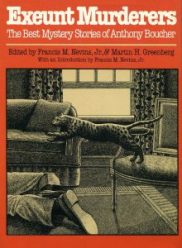
Having worked my way through Anthony Boucher’s short stories featuring the alcoholic yet still razor-sharp ex-cop Nick Noble, I’m now onto the second section of his collected short stories, comprising those featuring crime-solving nun Sister Mary Ursula of the Order of Martha of Bethany from Boucher’s locked room novels Nine Times Nine (1940) and Rocket to the Morgue (1942).
Continue reading
#246: On Failing to Engage with the Imperial Sherlock Holmes – The Chinese Maze Murders (1951) by Robert van Gulik

It must be me and a nationalities thing — wow, maybe I’m some sort of literary xenophobe. I’ve gotten off to a bad start with the first and second Ellery Queen books, and failed to connect with ‘Sweden’s John Dickson Carr‘, and have now been left cold by the opening salvo in Dutchman Robert van Gulik’s long-running and much-loved Ming Dynasty-set mystery series. Is my oft-vaunted love of Paul Halter and huge enjoyment various honkaku texts just a bluff? Who do I even trust any more?
Continue reading
#245: Death Has Many Doors (1951) by Fredric Brown
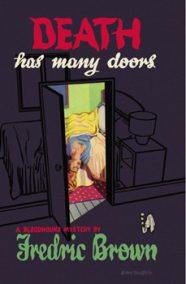 You know the score: a tough-guy PI in a business slump, sitting in his office typing out a letter using one finger (real men don’t type), when in walks a knockout redhead with “everything that should go with red hair”. She needs his help, he’s her last chance. Well of course, sweets, what seems to be the problem? She’s being hunted, y’see, someone wants to kill her. Calm down, baby doll what’s his name? Well, that’s the problem; she’s being hunted by…Martians. It’s a lovely little moment of confounded expectations early on in Brown’s pulpy tale and sets the tone for the number of conventions he refuses to conform to as things progress. And, since he’s far from smug about it, it works very well indeed.
Continue reading
#244: A Little Help for My Friends – Finding a Modern Locked Room Mystery for TomCat Attempt #1: Murder in the Oval Office (1989) by Elliott Roosevelt
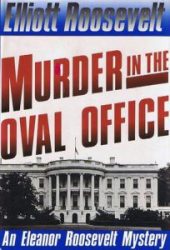
When I first realised that impossible crime fiction was a thing — oh, happy day! — I did an internet search and came up with two priceless resources: this variety of lists on Mystery*File with an excellent introduction by John Pugmire (who went to form Locked Room International) and this list of recommended books from locked room conoisseur TomCat.
Continue reading
#243: The Case of the Surprise Locked Room Mystery – Baudolino (2000) by Umberto Eco [trans. William Weaver 2002]

 After two wonderful shin honkaku novels in The Decagon House Murders by Yukito Ayatsuji and

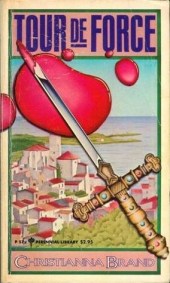 I was pretty much goaded into this, you should know. Ben at The Green Capsule is diversifying his blogging to extend beyond the works of John Dickson Carr, and the first book he chose was

