
Last year my book club picked our favourite 1930s mysteries, and earlier this year we moved on a decade and each selected a top 10 for the 1940s. So, well, here’s mine.
Again, the only restriction I set myself was that any author could appear only once, including noms de plume. And I was surprised to find that a list was much easier to whittle down this time, with the progression marked by the decade perhaps moving the novel of crime and detection into areas that, within a few years, would lift it out of my own sphere of interest.
When it’s good, though, the 1940s is absolutely superb. And so, in chronological order, I picked…
1. The Case of the Baker Street Irregulars (1940) by Anthony Boucher
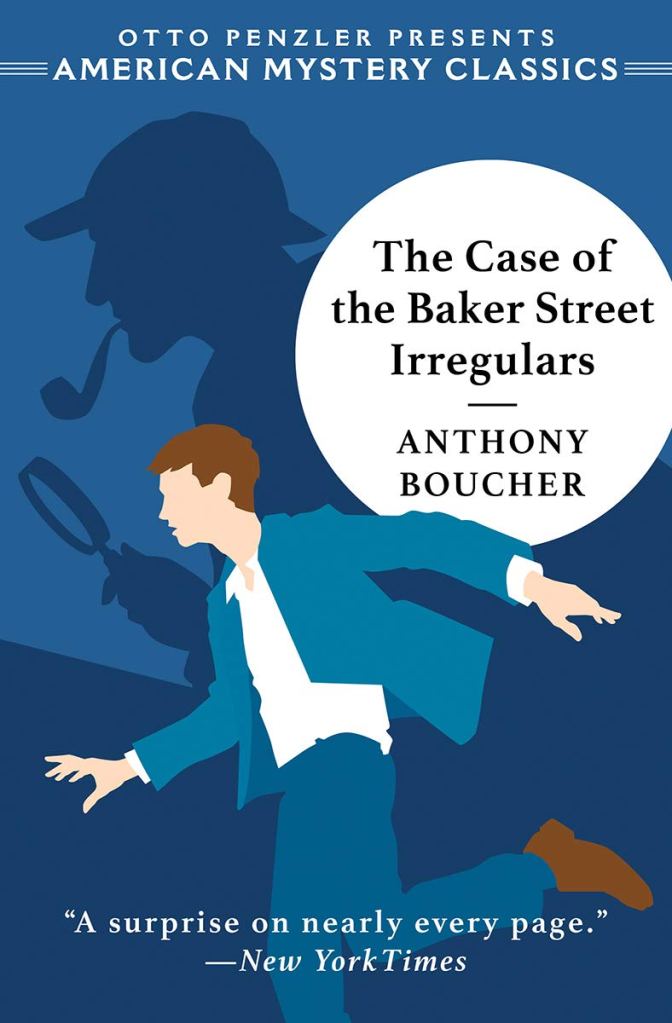
As someone who has been known, at times, to take the whole “books about people getting murdered for complex reasons” a little too seriously, it was lovely to blitz through The Case of the Baker Street Irregulars (1940) and just be swept along on the sheer fun of the thing. Sherlockian conceits abound, and as each character is pulled into stranger and stranger adventures, Anthony Boucher does a wonderful job of displaying his erudition while weaving a magic carpet of a plot that floats effortlessly atop the creativity that positively pours out of him. Difficult not to wish that Boucher had written more, when he’s capable of this level of joy, but I suppose we can just be thankful to have this to remember him by — and it’s back in print, too! [My review]
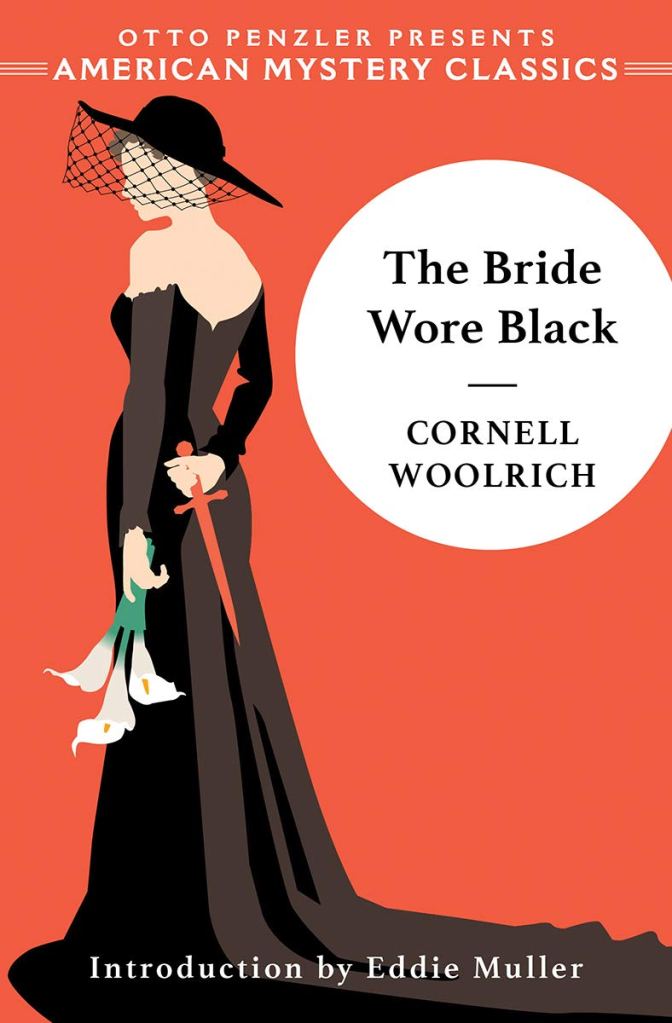
2. The Bride Wore Black (1940) by Cornell Woolrich
I’m not sure it would be possible for me to overstate the respect and love I have for The Bride Wore Black (1940), the debut criminous novel of Cornell Woolrich. It is pacey and savage and inventive and joyful and horrible and heartbreaking and surprising and wonderful on almost every page, as our eponymous mysterious lady tracks down and kills a succession of men for reasons that only become explicit at the end. Were I selecting more than one book by an author, Woolrich’s Phantom Lady (1942) would have made it on here, too, but the high-wire magnificence of this — always posing the risk of overbalancing and ruining the effect, yet always maintaining its inexorable purpose — is one of the most thrilling reading experiences of my life. [My review]
3. The Seat of the Scornful, a.k.a. Death Turns the Tables (1941) by John Dickson Carr
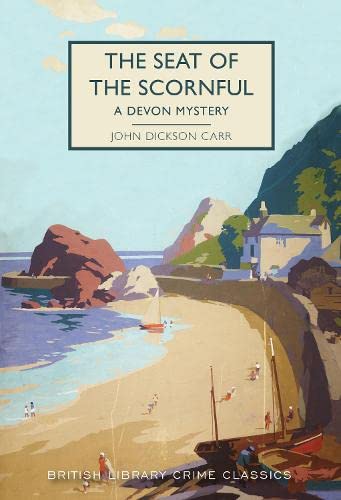
I’m as surprised as anyone not to have Till Death Do Us Part (1944) here, and it took much wrangling to finally settle on The Seat of the Scornful (1941) over that other accepted masterpiece. The reasons? Simply that I love the tightness of every aspect of this, Carr showing a mastery of plot machination and ingenuity and surprise in what should be, after all, a fairly standard tale. This really is one of those books that only Carr Could write, its clever ideas boiled down to their finest elements and then strewn around with a free hand that nevertheless has complete control on every element, every perfectly-judged moment and revelation. I cannot urge you more strongly to read it if it’s somehow passed you by; it’s a wonderful piece of work that deserves more attention. [My review]
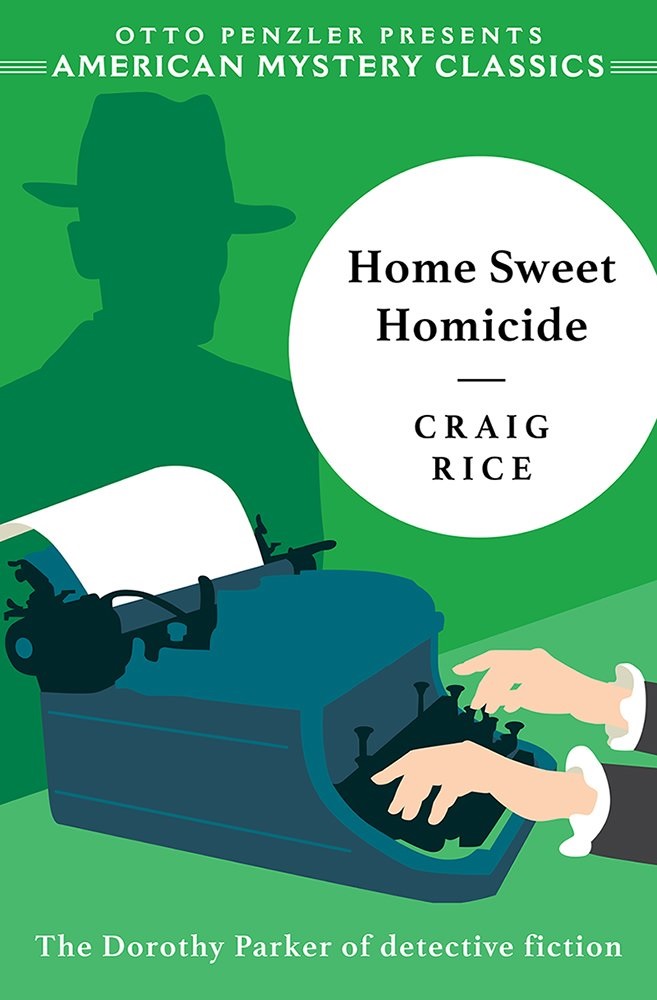
4. Home Sweet Homicide (1944) by Craig Rice
Having had misgivings about Craig Rice for years, based on her reputation for screwball comedies and ribald shenanigans, Home Sweet Homicide (1944) somehow got below my radar — I’m still not sure how or why — and instantly secured a place on my Ten Favourite Golden Age novels list. Three children try to solve the murder next door in order to set up their crime writer mother with the lead detective on the case, and if they don’t warm your heart in the process then, wow, I don’t know how you get through life. Rice juggles so many tones here, and allows horror and fear to rub against lightness and belly-laughs so effortlessly that it should be studied. And Archie Carstairs’s place in the canon of wonderful fictional child characters (“Shambles!”) is assured. A work of genius. [My review]
5. The D.A. Breaks a Seal (1946) by Erle Stanley Gardner
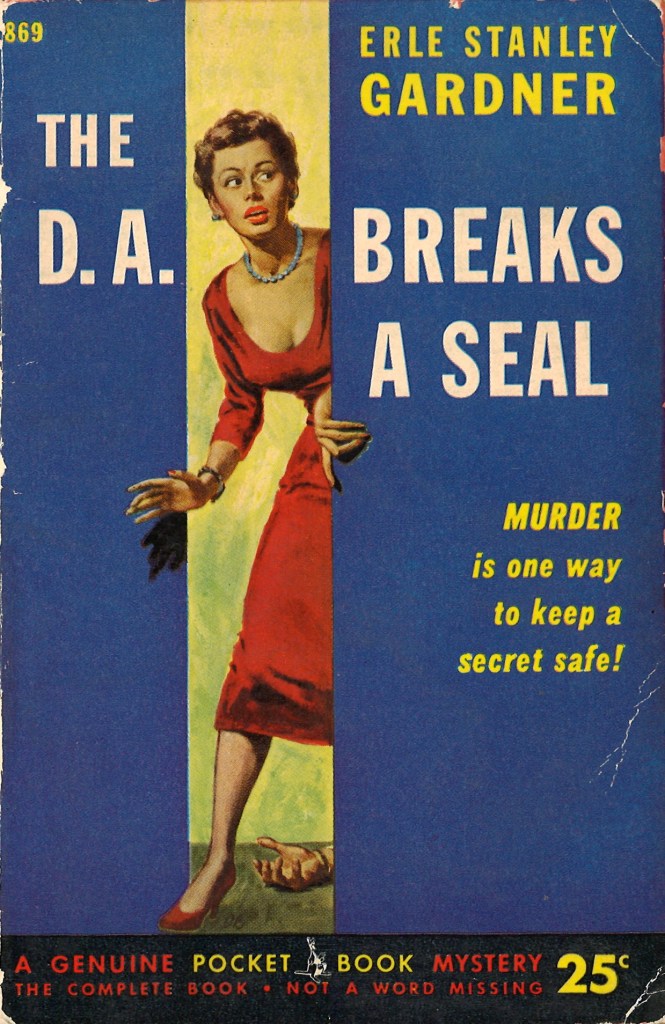
I’m probably on record as saying that the Doug Selby series contains some of the best character work and writing of Erle Stanley Gardner’s long and storied career. And so The D.A. Breaks a Seal (1946) coming out at the peak of that excellent series is a huge compliment, and one I stand by. Not only is the plot serpentine and unpredictable, we’re at the stage in the series where Antagonist-in-Chief Alphonse Baker Carr is at his most slippery, a turn of events that only seems to raise Selby’s estimation of the man. The moral element to their relationship is part of what makes them such a great contrast, and you’ll obviously get the most out of this if reading it in its correct context in the nine-book series. But it’ll just about stand alone, too, if you don’t want to do that. [My review]
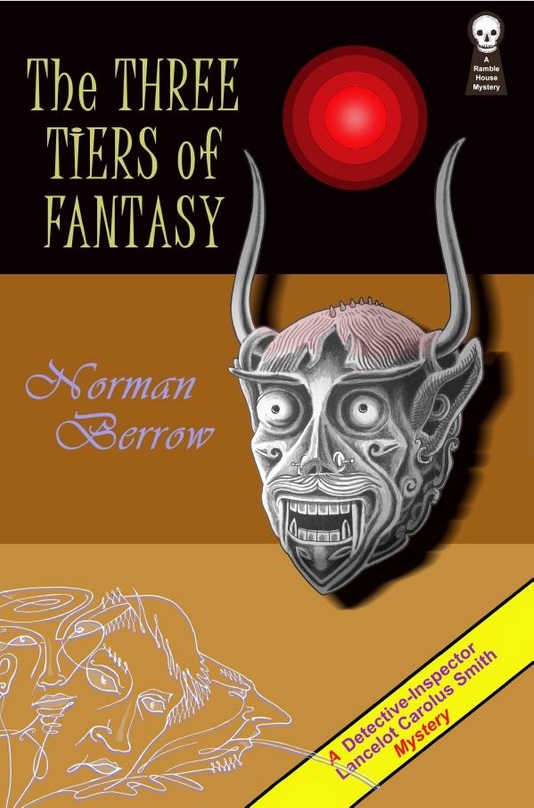
6. The Three Tiers of Fantasy (1947) by Norman Berrow
Berrow’s mysteries aren’t always the hardest to figure out, but the reason The Three Tiers of Fantasy (1947) makes this list is for the playful nature of his triumvirate of interlocking impossibilities and how crucial each one is to understanding the others. One year later he’d have a go at the same sort of thing with The Bishop’s Sword (1948), and that’s also delightful, but the pep and fizz of this, and the way the whole scheme only comes into view in the latter stages, wins out here for me. Also, Lancelot Carolus Smith is one of my very favourite policemen in fiction, stolid and sensible in the face of seemingly endless impossibilities, yet always with a quirk of fun about him as the madness around him deepens and widens. That only five books feature him is a crime in itself. [My review]
7. The Chocolate Cobweb (1948) by Charlotte Armstrong
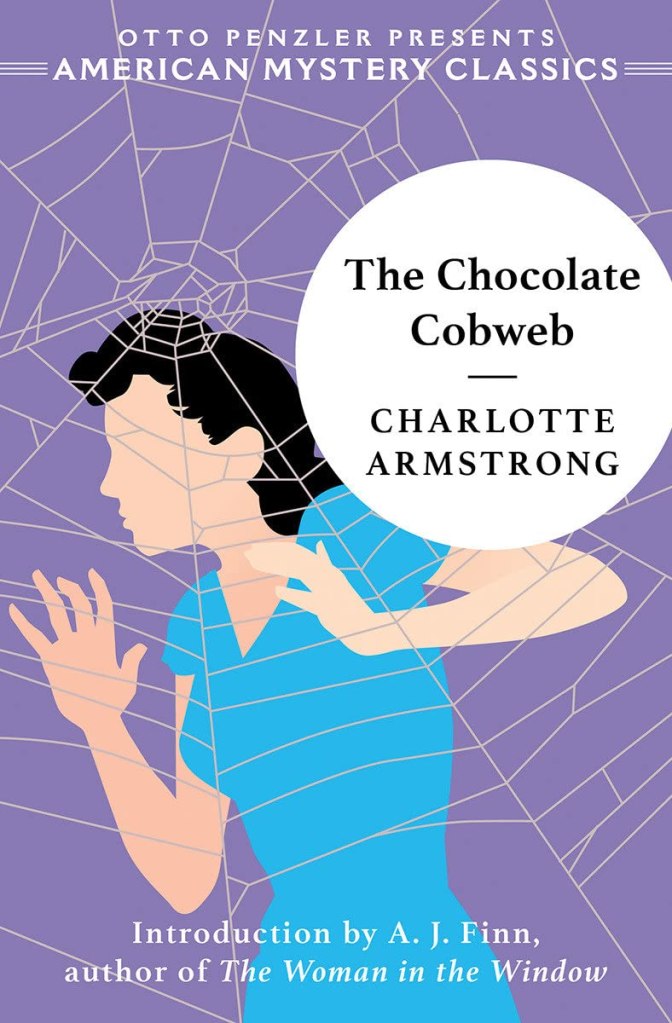
The less you know about The Chocolate Cobweb (1948) going in, the better. It turns out to be an inverted mystery, in which we follow the thoughts and actions of both a criminal and the people they have murderous intentions towards, but even knowing the vengeful party ahead of time would, I’d wager, ruin one of the great many shocks this book has in store. This subgenre of suspense is not my kind of thing at all, but I stormed through this in a day, and my heart climbed ever-closer to my mouth with every chapter. Forgive the terrible title and simply dive into the richness of Armstrong’s characters, the brilliance of her plotting, and the sheer unparalleled view of murderous rage personified. Glorious in every regard. [My review]
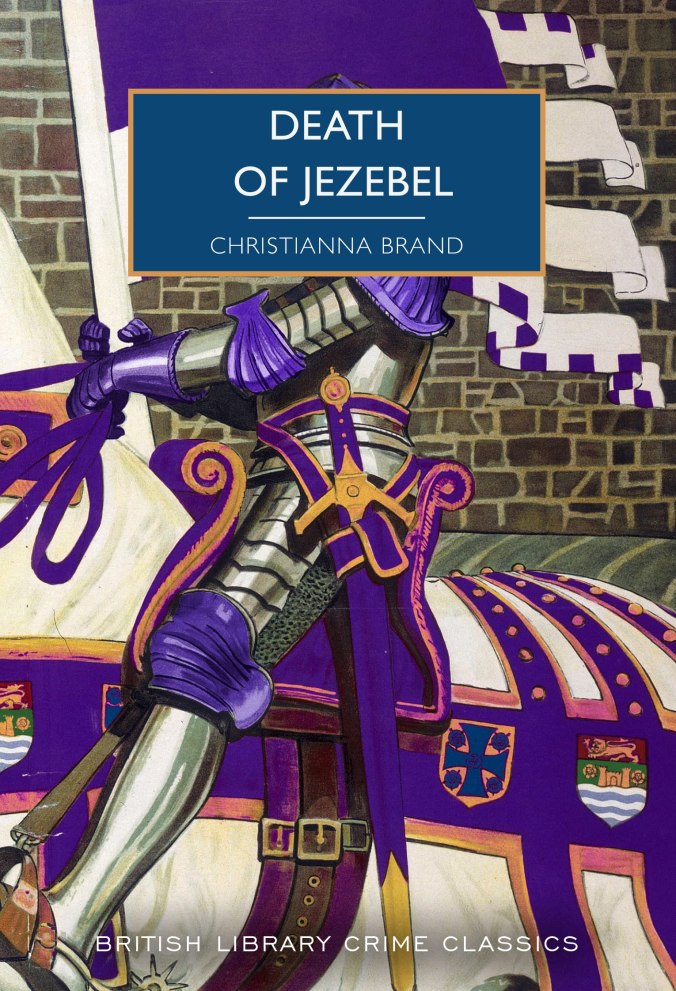
8. Death of Jezebel (1948) by Christianna Brand
Perhaps I should have picked Suddenly at His Residence (1946) for my Brand, but while that’s a better novel I do think Death of Jezebel (1948) leans into the sheer joy of the puzzle plot more fully. The setup is gorgeously simple, and to watch Brand’s panopticon of a mind keep about eight solutions in view while weaving some magnificent misdirection — including what some are calling “the best clue in the Golden Age” — is the sort of heady delight that got me so excited about GAD in the first place. Another magnificent choice by the British Library Crime Classics range, it’s hilarious to me how readily you can just, like, walk into a bookshop and buy this for sensible money now. So go — go quickly! [My review]
9. The Voice of the Corpse (1948) by Max Murray
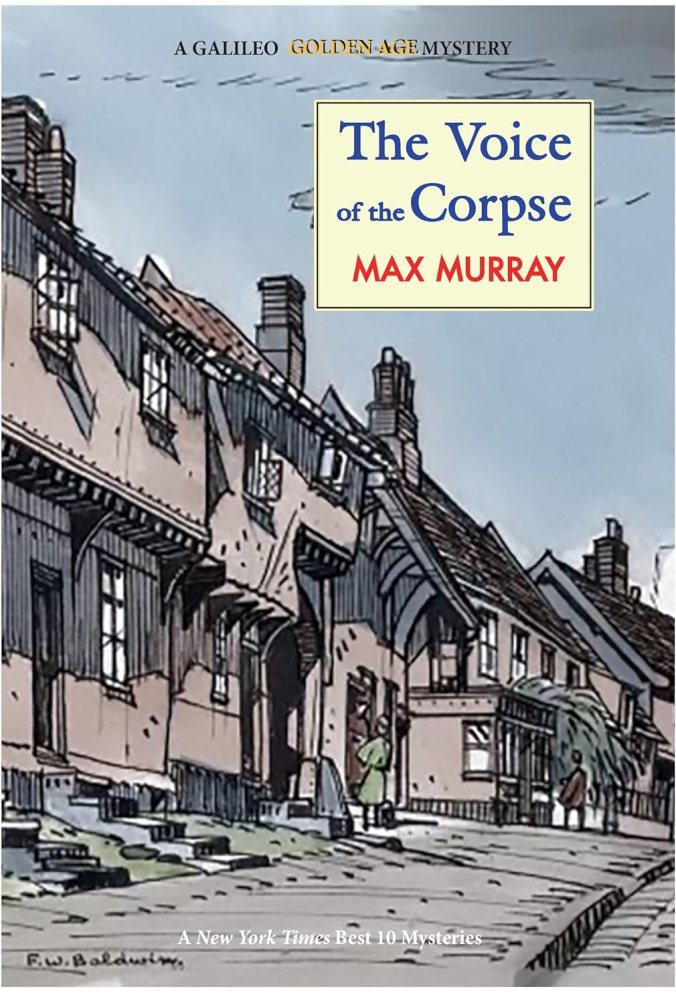
I should not like The Voice of the Corpse (1948). The plot is slow, the detection minimal, and the eventual solution to the question of who killed a village busybody lacking, really, in any surprise. But as an example of the sheer brilliance of getting under the skin of a village and its inhabitants it might be unmatched. This is another example of how the 1940s took the novel of detection and began to morph it into something else, feeding elements of others genres in order to highlight the novel part of that description; and while it wouldn’t work for everything, and while many examples of a similar approach would leave me cold, this is one of those lightning-in-a-bottle moments where everything comes together in sheer, brilliant near-perfection. [My review]
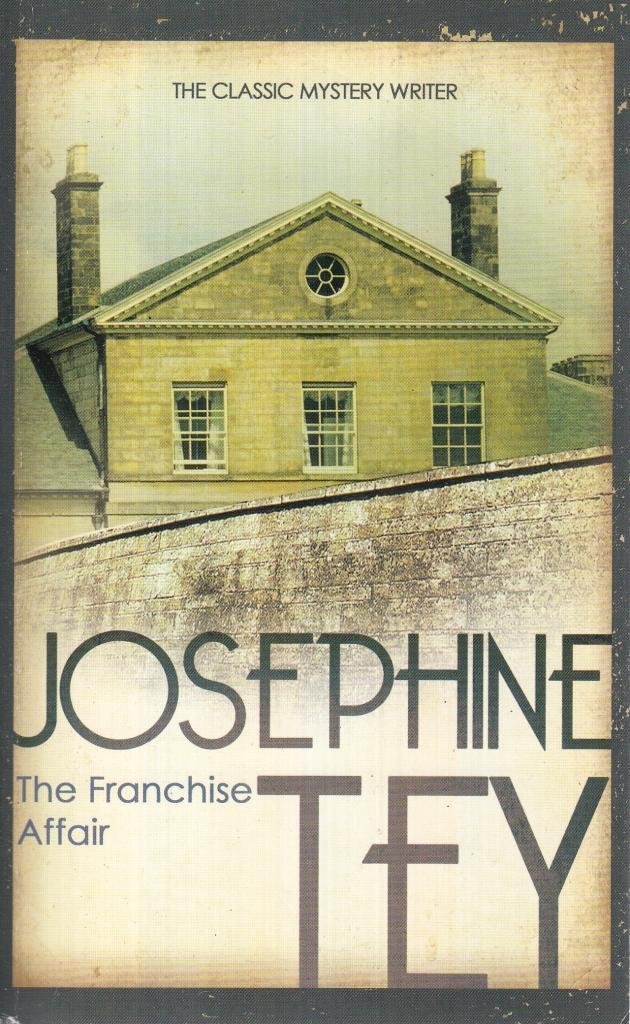
10. The Franchise Affair (1948) by Josephine Tey
Had I read The Franchise Affair (1948) only once, it wouldn’t be on this list — I enjoyed it first time, but couldn’t see too much to get excited about ahead of rereading it for book club. Then I read it a second time, and was blown away by the wit, the minor characters, the sense of place, and the ingenious way the questions at its core are shown to have alternate interpretations. Written 15 years earlier, this would have been a very different book, and possibly someone might have tried to turn Anthony Berkeley’s archness upon its situation. Left to wait, and so be played straight in the latter 1940s, its true power as a commentary on simple-mindedness and the power of the press is left to shine through, and it’s all the more glorious for it. Plus, the best closing sentence of all the books on this list? More than likely. [My review]
~
My Ten Favourite…
- …Literary Detectives
- …’New to Me’ British Library Crime Classics
- …Ramble House Novels
- …Impossible Crimes
- …Locked Room International Titles
- …Golden Age Reprint Covers
- …Orion Crime Masterworks
- …Mysteries of the 1930s
- …Mysteries of the 1940s
- …Paul Halter Translations
- …Juvenile Mysteries
- …Inverted Mysteries
 The Invisible Event
Great list! Reminds me I should pick back up with the Selby series and that I really really need to get around to Home Sweet Homicide.
LikeLike
Thank-you. And, yes, you really should get round to HSH. Everybody should 🙂
LikeLike
There are some fine books on your list. Well done as I cannot debate any of your choices.
After seeing a number of GAD bloggers publish their 1940’s “best of” lists, I created my own. For me, I selected mysteries that not only do I remember the who, how and whydunit, but where I read each and how those made me feel reading them. I now read circa 100 books a year and if I am honest, there are some that I struggle to remember. My “best of” top ten are those that still linger with me years after finishing and where I would not hesitate to re-read those in the future.
I am curious then how you chose your books as saying yes to these ten meant saying no to many other great books?
LikeLike
I selected mine on pretty much the same basis; I found there were comparatively few that I needed to exclude compared to when I was writing my 1930s list.
Have you shared your own list anywhere?
LikeLike
My current list of memorable books:
1940 – Nine Times Nine – Anthony Boucher1942 – Diabolic Candelabra – E.R. Punshon1943 – She Died a Lady – Carter Dickson1943 – The Scarlet Circle – Jonathan Stagge,1944 – Rim of the Pit – Hake Talbot1945 – You’ll Die Laughing – Bruce Elliot1947 – Waltz into Darkness – Cornell Woolrich1948 – The Voice of the Corpse – Max Murray1948 – The Death of Jezebel – Christianna Brand1949 – Crooked House – Agatha Christie
I encourage others who follow your blog to post their favourites. It’s great to learn of books that I might not have read yet.
LikeLike
Great list!
Given how often our tastes seem to overlap, I’m intrigued by your choice of The Scarlet Circle. I’ve never been able to get excited about Stagge/Patrick, but now I’m curious to try that one. Thanks for bringing it to my attention.
Great to see Bruce Elliot in there, too. Such a fun book, a real shame he didn’t write more in the genre.
LikeLike
Otto Penzler’s American Mystery Classics is reprinting Stagge’s, “The Scarlet Circle” later this year. For me, this is the best of the Stagge pseudonym books written by Wheeler and Webb.
LikeLike
And completely off topic, I see now that Penzler’s American Mystery Classics also will re-print John Dickson Carr’s, “The Burning Court” later this year. That is a top 5 Carr for me. I know its ending is divisive, but that’s what helps makes it memorable.
LikeLike
Yes, very excited for people to have the chance to rediscover that one; it’s a wonderful book, and thoroughly deserves its reprint.
LikeLike
Ah, wonderful news!
LikeLike
Read Cottage Sinister, Death and the Maiden, and SS Murder by Patrick (best to least). I haven’t enjoyed much of the rest of their output. I do have a long sought after copy of The Scarlet Circle that I need to get around to reading.
A bit of trivia to drop since I’m not doing any reviews at the moment – I’m pretty sure that Murder at Cambridge spoils The Grindle Nightmare, although I haven’t read the latter yet. A character in Murder at Cambridge tells a story that matches details I recall from reviews of The Grindle Nightmare, and states who the murderer was. I know Patrick Quentin was publishing many of the early novels in various short-story / novella forms at the time, and perhaps the solution changed between them.
LikeLike
Yes, this is an interesting and varied list. Not sure what the final form of my list of ten favorite 1940s mysteries would look like, but Rice’s Home Sweet Homicide and Brand’s Death of Jezebel would definitely be part of it. I really need to get around to The Case of the Baker Street Irregulars, which I have been savoring for years. So thanks for the reminder!
LikeLike
I’m hoping that a series of decade-by-decade lists will eventually make it possible to whittle them down to an overall My Ten Favourite GAD Novels list. But there’s still some way to go.
In the meantime, if you’re ever able to get your own list for any decade, I’d love to see it.
LikeLike
Well, I can always use filler material to pad out the blog. 😀
LikeLike
Love that you’ve included Three Tiers of Fantasy! Such a fun book. Still my favourite method of explaining the crimes at the end.
All the ones of this list I haven’t read are now battling out for their position in the TBR. It’s great to be re-sold on a book all over again; sometimes I forget why things end up on the TBR in the first place and a reminder re-ignites my desire to read them!
LikeLike
I was initially a little sceptical about these lists as an undertaking, but it’s been great fun picking back through things and working out what I remain excited about having read even after quite a few years,
Even more pleasing, nine of these ten books have been reprinted recently and should be easy for others to acquire — bonus!
LikeLike
The Bride Wore Black was a big revelation to me
LikeLike
I know, right?
LikeLiked by 1 person
Certainly a very unexpected choice of Carr, though I take your point that only he would have used that ending. I must re-read it sometime. HE WHO WHISPERS and SHE DIED A LADY are more vivid in my memory. TURN OF THE TABLE is the Stagge I always recommended to newbies but not read it in ages. I remain a big fan in general of the books written by Wheeler with and after Webb. Couple on your list I’ve not read so thanks for that 👍
LikeLike
No-one is more surprised than me at the choice of Carr — but once I looked at the options, it was only a two-horse race as far as I was concerned 🙂
Thanks for the Stagge recommendation, too. One of these days I must actually check more of them out, and the upcoming Scarlet Circle reissue might just kick something off for me…
LikeLiked by 1 person
Oooh, this was such a fun list and I’m impressed with myself for how many I’ve read (and I just requested The Seat of the Scornful from the library, so thanks for that! The Doug Selby will have to wait til I’ve managed to read the earlier books).
I absolutely adore Home Sweet Homicide and I’m so glad you (and others, from the comment section) do too! I feel like it is technically possible to be the kind of person who doesn’t appreciate books with precocious kids, but honestly this book is so well done that I defy such a person to still resist it.
Baker Street Irregulars… it has a few pitfalls that I’d also later see in some of Boucher’s other books (a kind of pulpy if cheerfully sexist sensibility to its romances, among other things) but the Sherlock Holmes stuff was so absolutely delightful that I honestly didn’t care. I was mentally giving myself points for every reference I got and it was one of the most fun reading experience I’d ever had.
I thought that The Bride Wore Black was brilliant suspense/crime fiction, but I couldn’t really see it as detective fiction, and while I appreciate what the ending was trying to do it left me cold. The Chocolate Cobweb, though, I can’t even go that far- I was expecting so much from the synopsis but found the way it played out so disappointing. The inverted element was fascinating at the start but I felt it deteriorated into melodrama, especially surrounding the dumb romance elements.
Unfortunately, the only Christianna Brand book I’ve ever uncomplicatedly enjoyed has been Green for Danger, which was probably not coincidentally my first- the first time I read her shtick of ultra-complicated puzzle plots with a dizzying array of different solutions proffered out to you. Death of Jezebel didn’t really do it for me, and that style of ending really got frustrating the second time around. I wanted to like it so much and maybe I do need to give Brand another try.
The Franchise Affair… I remember liking it, but it also didn’t especially stand out to me in any way. I did more recently read Brat Farrar and absolutely LOVED the reading experience of it even if some of the plot stuff doesn’t really stand up to more than ten minutes of mental scrutiny as a mystery (though once I thought of it as more of an Ethel Lina White style suspense novel I appreciated it much more), so maybe I need to reread The Franchise Affair and see if it works if only as something that threads that particular needle.
LikeLike
Do a list! Do a list! Do a list! The public demands it!
LikeLike
Oh man! So with the understanding that, as someone who only started delving into a lot of the classic mystery back catalog a year or two ago, my reading is by no means encyclopedic and is limited by interlibrary loan availability- I’m still working my way through some authors- and with the same rule you had of one book per author, behold my list, in no particular order but with my main rule being (as I perceive it possibly having been for you too) books that gave me the most pure joy, even if not the most technically perfect mysteries. And also… turns out that few of my favorite books were written in the 1940s!
The Moving Finger by Agatha Christie (reviewed here)
The Emperor’s Snuffbox by John Dickson Carr (reviewed here)
Spill the Jackpot by Erle Stanley Gardner/AA Fair (reviewed here)
The Fabulous Clipjoint by Fredric Brown (reviewed here)
Brat Farrar by Josephine Tey (reviewed here)
Black Orchids by Rex Stout (reviewed here)
A Case for Three Detectives by Leo Bruce (reviewed here, though I should note that the ending makes me VERY mad)
In A Lonely Place by Dorothy B Hughes (pretending this is an “inverted mystery” rather than noir, reviewed here)
And of course…
Home Sweet Homicide by Craig Rice (reviewed[ish] here)
and The Case of The Baker Street Irregulars by Anthony Boucher (reviewed here)!
I’m probably forgetting some books that I liked but honestly so few of my favorite authors wrote my favorites of their stuff in the 40s- or wrote then at all (looking at you, Dorothy L Sayers)- that this was shockingly difficult to pull together.
Runners up:
In the “does 1950 count as 40s? If so this goes in the main list” category, Smallbone Deceased by Michael Gilbert
In the “I can only pick one 40s Carr?!” category, The Constant Suicides (also whichever collection has The House In Goblin Wood in it)
In the “I’m mad that I haven’t put HC Bailey on the list” category, Mr Fortune Finds A Pig (which I did like but it pales next to his short stories, sadly only one collection of which, which I have not yet read, was published in the 1940s)
In the “this isn’t a mystery novel but it’s awesome anyway” category, Profile by Gaslight, edited by Edgar W Smith
PS: in looking back at my “reviews” and recalling YOUR list, I realized that I actually read The Chocolate Cobweb, The Case of the Baker Street Irregulars, Home Sweet Homicide, and The Bride Wore Black for the first time a year ago this week and all in one Passover long weekend- and, as I’m sure you can assume, it was an EXCELLENT weekend lol.
LikeLiked by 1 person
Well, for a mere whippersnapper in the fold, you’ve made some great inroads into some interesting areas of the genre pretty quickly.
I share your enthusiasm for The Moving Finger and The Emperor’s Snuffbox, and I’m really looking forward to rereading the latter at some point so I can get some thoughts on record.
Equally, Spill the Jackpot is loadsa fun, though there are a few others in that era (Bats Fly at Dusk, say) which top it for me,
From there…we diverge 🙂 Fabulous Clipjoint I remember getting about three chapters from the end and realising I did not care who and done what and why, so I just stopped reading. I understand Brown wrote some pretty good short stories, so maybe I should try that arm of his work. And Brat Farrar…well, I’ll reserve judgement — after all, I felt pretty meh about The Franchuse Affair until I reread it, so maybe there are depths to Tey that I’ll only appreciate second time around.
Case for Three Detectives, incidentally, isn’t from the 1940s. But, shhh, I don’t think anyone else noticed.
Moderately frustrated to learn that I can’t seem to follow your StoryGraph reviews via the WordPress “Follow this blog” function, because that way I’d be notified of anhy new reviews you post. Technology, it seems, has reached its limit.
And, yes, H.C. Bailey. I’m making some inroads on him, hoping to have at least one short story collection reviewed on here before the end of the year. Thank-you for the reminder.
LikeLike
Hey, I looked it up, Case for Three Detectives is 1947, no?
And yeah… I think I may need to reread Franchise Affair because I remember liking but not loving it and was therefore surprised by how much I liked Brat Farrar, despite it (if I recall Franchise correctly) not being as well done from a mystery POV. I think I just was surprised, after having already heard about the case it’s based on, at the angle that she took, and while it was REALLY obvious where she was going with it I enjoyed the journey a lot. I think I mentioned in the review that I looked at it as more of an Ethel Lina White thriller than a mystery and it made the whole thing go down way better.
But also… based on my current reading, this list would have been 50% Christie and Carr if I’d just done it by favorite book, let’s just say! Tey (and Fredric Brown, who again, I loved that book for the atmosphere and feelings mostly) is mostly there because some of my favorite authors didn’t even write in the 40s (Sayers, Berkeley) or hadn’t yet written any of my faves (Michael Gilbert). And so many of the quirky random books I like were written in the 20s/30s. Like, I was almost so desperate that I put down Cat of Many Tails, which yes I liked but otherwise is not a Top 10 book. Ended up replacing it with Dorothy B Hughes because I’ve decided that technically there are some clues in it.
Part of the issue of course is that there are some authors (like ESG/AA Fair) who I’ve been reading more or less in order, so I’ve only made it so far in the Cool and Lam series and I have my first Doug Selby book waiting for me at the library as I type this so I know I have a lot left to go! I just decided I liked Spill the Jackpot better than any of the Perry Masons that I’ve read from the 40s, again, just because of the delightful road trip bit. It was all about the joy. (But also I’m very much limited by the NYPL’s fifteen ILL request limit…)
And glad that you enjoyed the StoryGraph, as non-rigorous as my reviews tend to be! I add new books every week as I do a lot of weekend reading, for what it’s worth. Basically just old mysteries and nonfiction. It’s mostly a project logging how many books I read in 2025, so it’s missing a lot of previous reading.
LikeLike
Sorry, Three Detectives is 1936; the good news is, you get to replace it with something you were conflicted about dropping.
LikeLike
Aw man, never trust Google apparently! I wonder how that happened. In that case, I guess I WILL go with Cat of Many Tails after all, however weird a book that may have been. The atmosphere is pretty excellent, and I really DON’T have many faves from the 40s apparently…
LikeLike
Not yet, maybe; give it time.
LikeLike
V interesting that you refer to the Carr as a two horse race – my choice was neither, but one that I know you have multiple copies of, namely The Case Of The Constant Suicides. Easily the funniest Fell book. Yes, Till Death, Scornful, She Died A Lady, Nine and Ten are probably better books, but I always pick books for these lists based on how much I enjoy them and would pick them for a re-read.
Which is why I would never, ever, ever include The Franchise Affair… Each to their own.
LikeLike
I had very low expectations when I reread Franchise, but I stand by it as a work of brilliance. This, though, is what makes opinions so interesting: we all read the same words, but we all read very different books 🙂
LikeLike
Well that’s one of the reasons that I picked Cat Of Many Tails for an upcoming book group. I read it coming off of reading most of The Nationality Object Mysteries and expecting it to be a logical masterclass made it seem so lacking (and obvious). Reading it knowing that it’s not that sort of book might well make we reconsider.
LikeLike
I love that you included The Case of the Baker Street Irregulars – what an unexpectedly fun story. Thanks also for the inclusion of Norman Burrow (The Footprints of Satan frustratingly just misses out on the 40s) and Woolrich.
With Carr I’d probably go with Till Death Do Us Part (generic choice these days, I’m sure). I did read Death Turns the Tables as my final Carr late last year. A great novel and a fine one to go out on. I love the playfulness of the title, very similar to The Emperor’s Snuff Box.
Christianna Brand is of course a difficult choice and I see little point in ranking her best.
There’s not much that screams out at me that you didn’t cover, giving your one book per author limitations. Five Little Pigs by Christie being the one to come to mind.
LikeLike
Actually, I do seem to have forgotten The Shade of Time by David Duncan…
LikeLike
Easily done; it’s pretty forgettable 🙂
LikeLike
I skipped Christie entirely, which surprised me. The 1930s is a far better decade for her, in my estimation.
LikeLike