
I’ve written before about the impact the long-defunct Orion Crime Masterworks series had on my discovery of classic-era crime and detective fiction, and a recent pruning of my shelves brought back to me many of the happy memories from those books. So today, I’m going to run through the ten which left, perhaps, the strongest impression on Young Jim.
These aren’t necessarily the books I’d get the most enjoyment from now, but rather favourites from the time of reading — some two-plus decades ago — that impressed me for various reasons at the time. Don’t get me wrong, a few of these are stone cold classics that I still adore to this day, but a few might also surprise you if you have a sense of my current tastes in matters relating to fictitious criminality.
And so, in order of original publication, we have…
1. The Maltese Falcon (1929) by Dashiell Hammett

I’m not a fan of Hammett per se, but I can’t deny that he did some interesting things in his career. Not least of these is the fact that we spend the whole of The Maltese Falcon (1929) with Sam Spade but only ever observe him from the outside: rolling innumerable cigarettes, calling on people left, right, and centre, having conversations and doubtless coming to all sorts of conclusions…but never are we privy to his thoughts, and never — or so I remember it — does he explain how he achieved the conclusions he reaches. I remember becoming aware of this about halfway through, and it had a transformative effect on how I read books. Ask me about my point-of view-agenda one of these days, and I’ll go on for hours…all fuelled by the experience of reading this.
2. The Hollow Man (1935) by John Dickson Carr
My first experience with Carr, I abominated The Hollow Man, a.k.a. The Three Coffins (1935) at first exposure. It was so dense and foggy and gloomy and atmospheric, and so completely unlike the modern stuff I typically read at that age. So I put it down and, lured in by promises of its brilliance on the cover, came back to it with some sense of what I was getting…and, well, my reading life has never been the same. If I hadn’t read this, it might have been another 20 years before I got to Carr — he was pretty damn unavailable back then, remember — and just think of the impossible delights that his career and writing spurred me on to discovering which I would have otherwise missed. Crazy, the influence this book had on me.

3. Double Indemnity (1936) by James M. Cain

Swift, savage, amoral, and magnificently bleak, this story of two lovers conspiring to kill her husband and make a new life together treads ground that was already pretty well-worn even at the time of writing, but it feels like the blueprint of everything that followed in this vein. For my money, only Jim Thompson walked this path even half as well, with Cain himself improving on the essential themes of his earlier The Postman Always Rings Twice (1934). I have little doubt that positively swathes of noir and crime writing was born when its authors first read this, and it was the desire to reread this which prompted this list in the first place, so expect a reevaluation to turn up on the blog before too long.
4. Rogue Male (1939) by Geoffrey Household
The quintessential thriller, with our nameless, stiff-upper-lipped English hero failing in an attempt to assassinate an unnamed European despot and having to go on the run to avoid capture, torture, and inevitable death. What marks this out, apart from the staggeringly, remarkably off-hand way Household deals with some of the unpleasantness our narrator undergoes, is the magnificent twist it takes in the final third. In becoming so very different a book, it really hit me how malleable the thriller is, and made me come to appreciate the more strictured surprises of detective fiction, which must surprise while playing the game. It’s great here, but also changes the book into something bizarre that not necessarily everyone will find wonderful.

5. The Killer Inside Me (1952) by Jim Thompson

Consider yourselves lucky that this list isn’t simply the ten Jim Thompson books published in this series, because it was here that I first encountered the Dimestore Dostoyevsky, and nothing has been the same since. As a descent into the grip of a brutally unhinged mind, The Killer Inside Me (1952) is pitiless and at times uncomfortable reading…but, holy hell, I could not look away. It also shows the folly of dismissing Thompson as simply a sensation man, too, because the plot Lou Ford puts into action is remarkably convoluted and plays out in complex and surprising ways. Made me realise that you don’t always have to like your protagonist for the book to be compelling, and I still carry the bruises from the experience of reading this to this day.
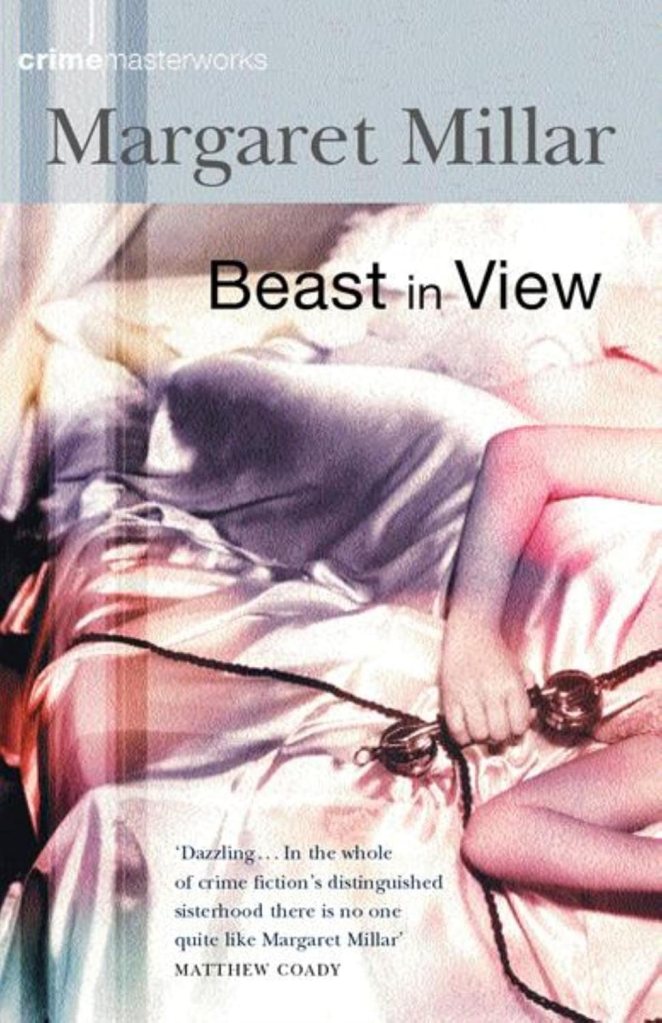
6. Beast in View (1955) by Margaret Millar
I was slightly spoiled in my first experience of pure Suspense writing being Beast in View (1955) by Margaret Millar, because I found little or nothing to match it until I stumbled over Charlotte Armstrong two decades later. A woman receiving oddly taunting phone calls while she hides in a hotel room doesn’t sound promising, and even the callow youth that I was could see where it was going to end up, but Millar’s character work is on point from the very first page (“…this is a very true lie…”) and the economy with which she tells her story should be taught to everyone trying to drag out their Domestic Suspense — or, hell, any genre — past the page count that the characters and situation will support. Magnificently creepy, sad, and economical; read it if you haven’t.
7. The Deep Blue Goodbye (1964) by John D. MacDonald

The contemporary fiction I was reading at the time — Robert Crais, Harlan Coben, Lee Child — was full of wisecracking tough guys who knew they were badasses, but encountering Travis McGee in The Deep Blue Goodbye (1964) was the first time I read a book and thought the main character was actually cool. I’ve tried reading more MacDonald in the years since and, perhaps because I’m now an old and jaded sourpuss, nothing I’ve picked up has quite worked for me, but it was a revelation to not just be told someone was aspirational and to instead decide it on my own. Living on a houseboat and taking on cases from the attractive women who wandered into my orbit never appealed as much as it did in these pages.
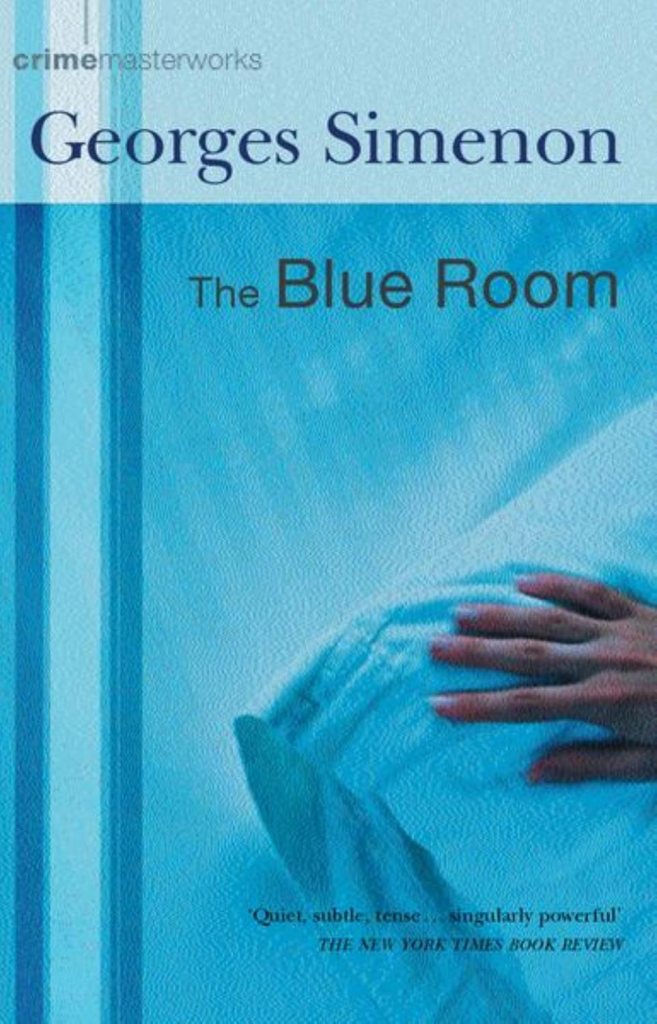
8. The Blue Room (1964) by Georges Simenon
Another tale of doomed lovers, this time from arch Belgian minimalist Georges Simenon and — weird as this is going to sound — this was the first time prose had communicated any amount of sexual attraction to me. Again, I had read a lot of books in which people found Jack Reacher attractive, but I believed it only insofar as that’s what the book told me was happening. Tony and Andree’s relationship in The Blue Room (1964) feels lustful and sensual, and communicates the sense of desire and intoxication that would result in the sort of scheme and payoff that hits here. What I don’t know is whether the translator changed the ending of this as apparently happened with Simenon’s other books, so maybe a revisit is due, provided my glasses don’t steam up while rereading it.
9. Pop. 1280 (1964) by Jim Thompson
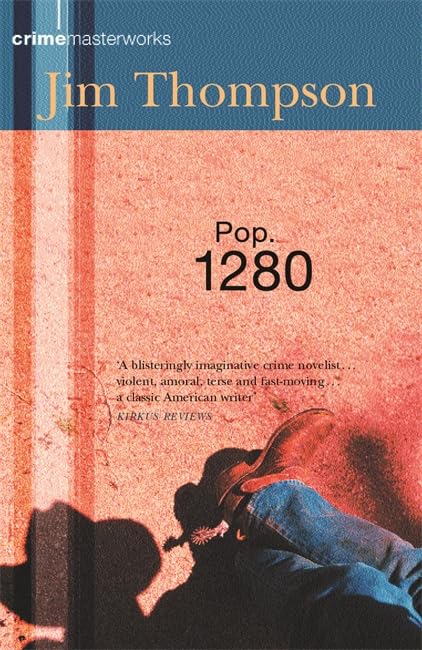
Another Thompson masterpiece, and another unhinged, savage protagonist who pulls you down into the maelstrom and holds your eyes open and forces you to watch everything unfold. It’s the subtlety of Nick Corey’s insanity in Pop. 1280 (1964) which gets me — the aw-shucks nice guy act peeling away like the layers of an onion to reveal the tear-inducing brutality and native intelligence lingering below the surface. I can fault this only in that Thompson has created a world so perfect and a protagonist so complete that he has no idea how to extricate himself from the novel and so the ending sort of drops in on you unexpectedly. That, though, is perhaps also the perfect metaphor for what has unfolded, so maybe I need to reread this, too. Damn, Jim, stop adding to your TBR.
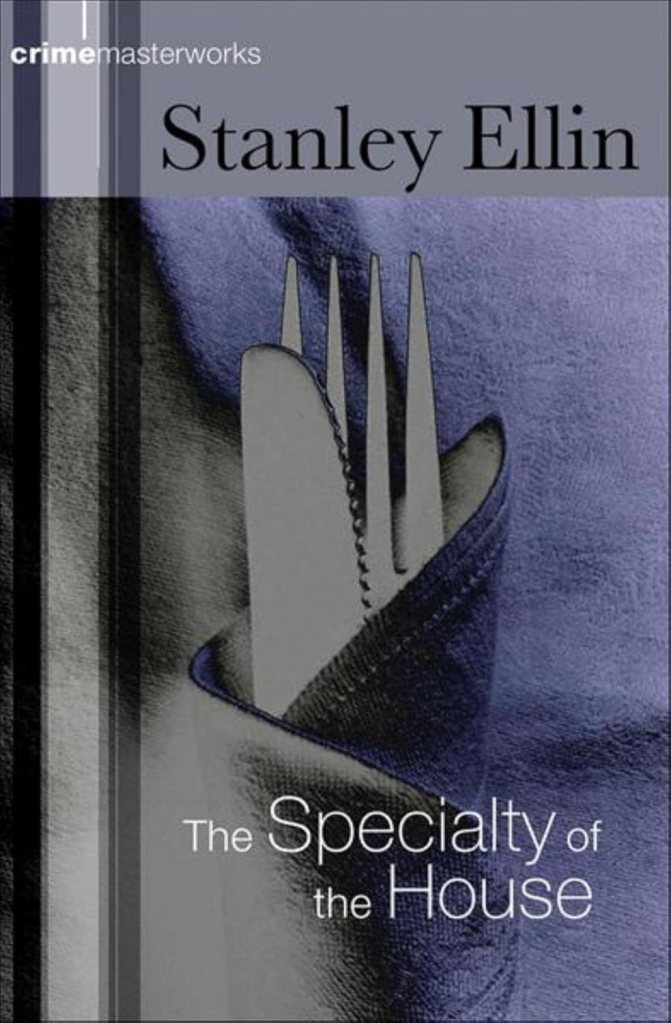
10. The Speciality of the House [ss] (1979) by Stanley Ellin
I was struggling to see the merit of the short story form — simple plots, often obvious in their direction — when I opened The Speciality of the House (1979) and, within about three stories of wildly varying tone, intent, and structure, had my preconceptions of what that short story could do altered forever. Ellin’s genius is that he somehow never wrote the same thing twice and, in seeing all his criminous short fiction packed together, I finally understood how the subtle art of tone and language could do so much in a smaller space. His novels are yet to inspire the same devotion in me, but this collection is an essential text for anyone wanting to study the art form of the short story, regardless of genre.
~
It’s interesting to me how much I learned about the sort of books I wanted to read from this series, in part because of the impact of the above titles, but also because of the style of story therein which didn’t appeal to me. For directing my eye backwards, and consequently getting me to consider the triumphs of an earlier age, however, I will always be grateful to the above and to many of the other books I read under this banner. I’d be cynical about such an undertaking today, but this was a glorious education for which I will only ever feel immense gratitude. Here’s looking forward to the rereads this list has inspired!
~
My Ten Favourite…
- …Literary Detectives
- …’New to Me’ British Library Crime Classics
- …Ramble House Novels
- …Impossible Crimes
- …Locked Room International Titles
- …Golden Age Reprint Covers
- …Orion Crime Masterworks
- …Mysteries of the 1930s
- …Mysteries of the 1940s
- …Paul Halter Translations
- …Juvenile Mysteries
- …Inverted Mysteries
- …In GAD We Trust Episodes
 The Invisible Event
Am about to give John D. McDonald yet another go, despite decades of disappointment – I am nothing if not persistent. The Orion was a very decent series and the rest of these are all great books! I refuse to be baited by your Hammett aversion, however … 😁
LikeLike
Hey, I’ve been eyeing up The Big Knockover for a month or so now, so there’s still hope for me 🙂
LikeLike
NB the stories in that collection were compiled from reprints in EQMM that were shortened from the originals by Fred Dannay. Same goes for THE BIG KNOCKOVER incidentally.
LikeLike
Always worth remembering the reprint series that came before the reprint boom really kicked off, and brought new readers to these classics. Great sample of their output here.
Am I wrong or is the series still going to some extent with the many eBooks of Helen McCloy, some more obscure Carrs, and so on? Or is that a different imprint?
Those cover designs with the vertical stripes do look infuriatingly like a printer fault – I may be alone in being annoyed by that!
LikeLike
Yes, to pre-empt the reprint boom is pretty cool. I hadn’t thought of that.
The imprint of which you speak is The Murder Room — also an Orion undertaking, but, alas, also now defunct, in that nothing new has been added to it for years.
Orion really have played a huge part in my crime fiction reading, because even a bunch of the modern authors that got me into crime in the first place — Robert Crais, Ian Rankin, Michael Connelly, etc. — were in their stable (and, as far as I’m aware, still are).
LikeLiked by 1 person