
I looked at my ten favourite fictional sleuths a little while ago, and so, in honour of today’s Bodies from the Library conference at the British Library, here are my ten favourite novels that the excellent British Library Crime Classics range introduced me to.
The BLCC has done a superb job in mixing long-held genre favourites — The Poisoned Chocolates Case (1929) by Anthony Berkeley, The Black Spectacles (1939) by John Dickson Carr, Death of Jezebel (1948) by Christianna Brand — with unjustly-forgotten gems from the genre’s heyday. And so, rather than just rattle off the usual, predictable panegyric for the above authors and titles, I thought I’d pay credit to the great work done in selecting these less-heralded titles by looking at the books I would have missed out on had the BLCC not republished them.
And so, in order of original publication, we have…
1. Family Matters (1933) by Anthony Rolls
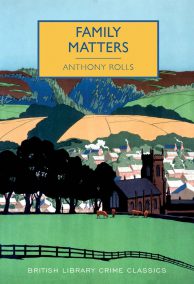
One of the few Anthony Berkeley-esque parodies of the trappings of the Golden Age to actually match Berkeley for content and ingenuity, Family Matters (1933) elevates itself above mere Village Poisoning Case trappings with its sly tone, adroitly-drawn characters, and superb mix of darkness amidst all the straight-faced buffoonery. Having discovered in the years since that I’m not a fan of the sort of accidental-their-way-along comedic crime capers that Richard Hull seems to specialise in, the masterful handling of tone here is what really looms large in the memory: never facetious, never base, never really all that jokey…yet somehow so damn funny that you’re reading it with a smirk even as it gets darker and darker. [My review]
2. The Hog’s Back Mystery (1933) by Freeman Wills Crofts
The first of Crofts’ books I ever read, I have The BLCC and The Hog’s Back Mystery (1933) to thank for setting on the love affair that is the work of Freeman Wills Crofts. I remember being overwhelmed by the sheer denseness of this — detection as an unsubtle art — but also the ingenuity displayed by Inspector Joseph French when tracking down seemingly impossible leads at seemingly overwhelming odds. Had all Crofts’ oeuvre been like this I don’t think I could have coped with reading too much by him, but as a dousing in the possibilities of minutiae it’s a fascinating and thrilling piece of writing that I’m delighted to have encountered so that I could become the fanboy I have all these years later. [My review]
3. Jumping Jenny (1933) by Anthony Berkeley
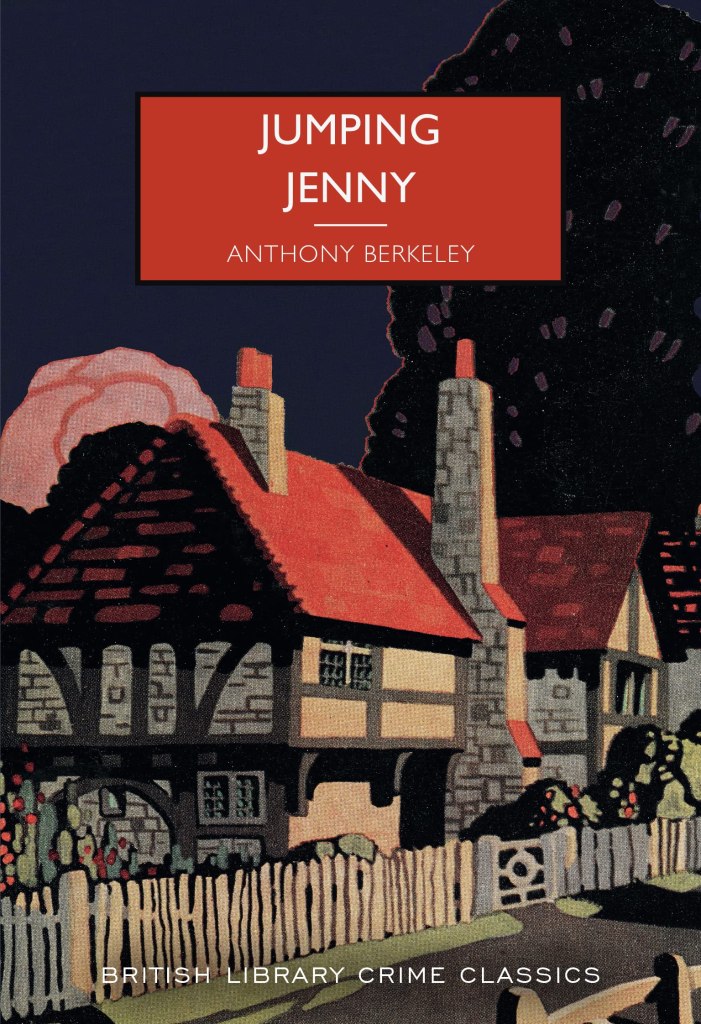
A very, very slight cheat, this, since I read Jumping Jenny (1933) years ago and thought it fine — its republication in this series, however, made me revisit it and realise what a startling piece of genre game-playing it is. Berkeley essentially reverses all the tropes of the classic detective novel so that the book is written almost inside out. How in the hell he kept this straight in his head while writing it I’ll never know. Like all books, it won’t be to everyone’s taste, but if you can get on board with the game the genre’s arch game-player has going on here you’re going to uncover a little masterpiece which is best experienced when you feel there’s nothing new to see from the Golden Age. [My review]
4. Death of an Airman (1934) by Christopher St. John Sprigg
Now almost fully reprinted by Moonstone Press, it’s fair to say that Sprigg was almost completely unknown at the time that Death of an Airman (1934) — a fast-moving and lightly-written story of death, planes, and the world’s most unlikely smuggling ring — came back into print. What I especially enjoyed about this is the scope given to the investigation into the eponymous death; theories abound, with clever detection and intelligent theorising building up an interesting picture where a less capable author might seek to hide something not very mysterious behind needlessly dense characters fumbling around in the dark. Sprigg had more respect for his readers than that, and this more than stands up to scrutiny as a result. [My review]

5. Death in the Tunnel (1936) by Miles Burton
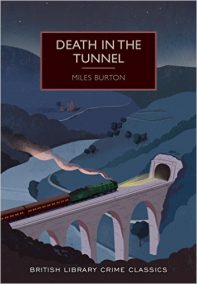
Author of 8,763 novels, Miles Burton/John Rhode can, in my admittedly limited experience, sometimes come up a little short when the relating of his often ingenious murder methods requires more than just one moment of ingenuity. Death in the Tunnel (1936) is not only a very clever book, but the most interestingly-structured of his works I’ve read to date: the first half focussing on the how a man could be killed while alone in a train carriage passing through a tunnel, and the second half focussing on the who. I maintain Burton’s reputation would have aged better if he wrote half as much, and this is one of the cases that shows how damn good the man could be. [My review]
6. Death of Anton (1936) by Alan Melville
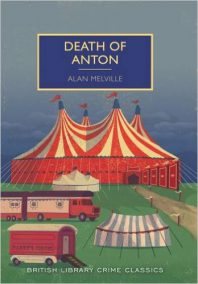
The highest compliment I can pay Death of Anton (1936) is that as a detective story I don’t believe a word of it — witness the scene where the denizens of a circus sit down to a massive dinner, complete with animals at the table — and yet Alan Melville made me want to believe it so fully that I was more than willing to put reality aside while in its pages. Like Christopher St. John Sprigg above, one gets the impression that the BL out this out at a time when no-one was quite sure if the series was going to have legs…so they just found unexpectedly fresh and well-written books purely for the fun of bringing something unheralded back to hint at the richness in the depths of the genre’s history. Any why not? It’s part of what has made this range such a success, and lovely to see it in effect in these early days. [My review]
7. Mystery in White (1937) by J. Jefferson Farjeon
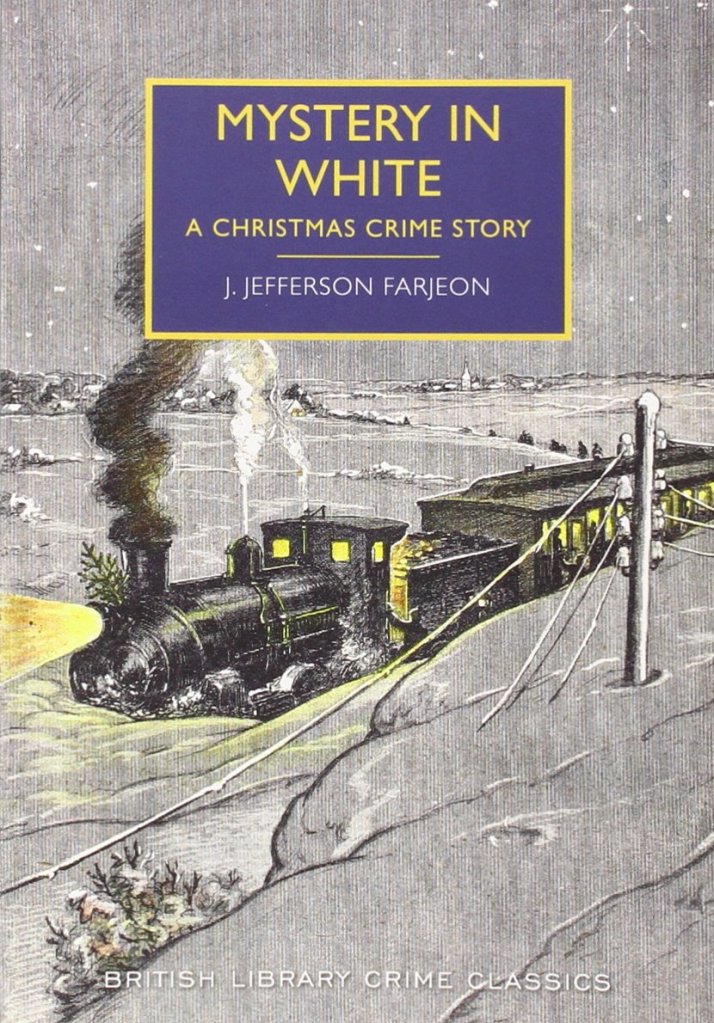
Incredible to believe, but the BLCC range wasn’t always the behemoth it has rightly become, and Mystery in White (1937) is arguably the book that put it on the map by becoming a runaway bestseller at the end of 2014. The popularity of the book is what got a pre-blogging me to buy it, my first toe into the waters of this series, and all these years later…well, here we are. The setup, a train stranded in the snow, is arresting; our sleuth, upon finding an abandoned house to hole up in, asserts his faculties well; the mystery develops at a keen pace. All told, a deserved success, and wonderful to think of the renaissance in Golden Age reprints this helped kick off.
8. Antidote to Venom (1938) by Freeman Wills Crofts
My second-ever Crofts, an ingenious inverted mystery about a zoo owner who wishes to collect some wealth before nature brings it to him in the natural course of things. The crime is cooked up as a result of increasingly desperate straits — I would come to appreciate the sympathy Crofts has for his criminals, never painting them as ravening, swivel-eyed loons when he can humanise them and make their predicament all the more terrible — and when Inspector French comes on board and must explain away the death it’s magnificent to see again how playing out long chances and interrogating every element of an apparently watertight scheme can cause the edifice to crumble so completely. Inspired. [My review]
9. Death on the Down Beat (1941) by Sebastian Farr
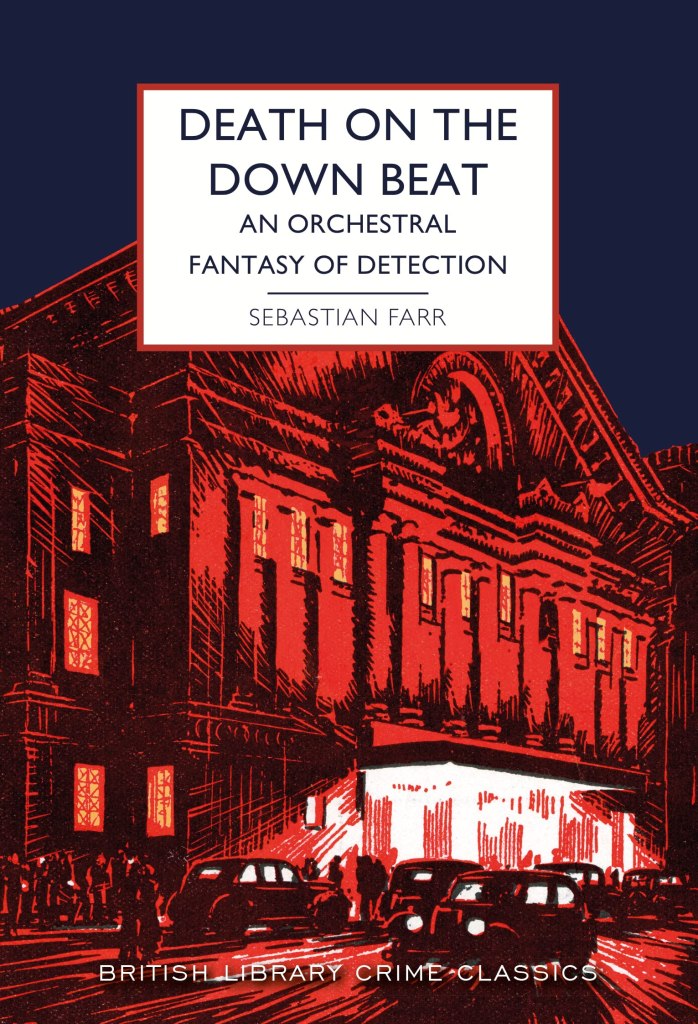
Long-championed by Martin Edwards, this “orchestral fantasy of detection”, in which the shooting of an orchestra’s conductor during a performance, is told via letters sent home by the long-suffering detective. This approach enables fragments of letters, newspaper cuttings, and countless other media to be stirred in to give things an oddly realistic, almost Humdrum, feel, with only a slight anti-climax on account of the sheer number of suspects under consideration — a tighter noose around fewer names could have been done in much the same way and with a stronger final kick. Farr, however, deserves credit for taking on such a big task and writing it so entertainingly, with such a good sense of his musical setting. [My review]
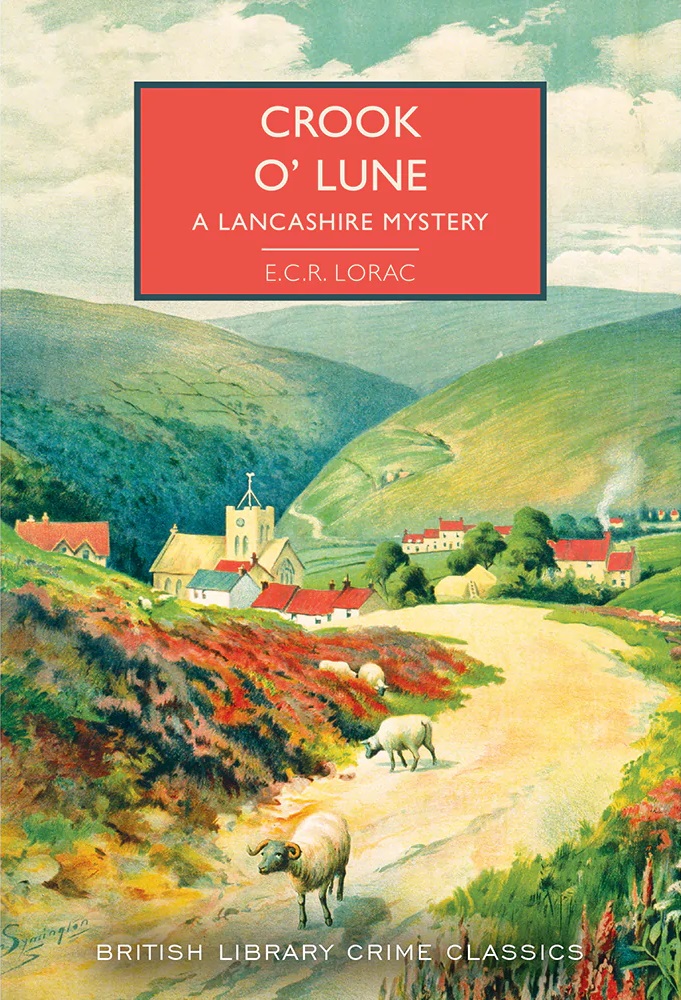
10. Crook o’ Lune (1953) by E.C.R. Lorac
After some decidedly mixed experiences with E.C.R. Lorac, Crook o’ Lune (1953), a wonderful piece of character and location melding that exploits both to explain the theft and murder at its core, was the book which convinced me that she’s an author worth continuing to explore. Her tight focus on well-limned settings and characters carved from her rural backdrop is in full effect here, with prejudices and local customs as much a fabric of the case as standard physical clues. I’m not going to love everything Lorac wrote, but when she’s on this sort of form she deserves to be celebrated. [My review]
~
At some point I might just write a list of my ten favourite BLCC titles without the restriction of whether I had read them before they were published in the series, and it’s not beyond the realms of possibility that a few of these would make that list — testament to the great work done in selecting books for reprinting. Long may this wonderful series reign!
~
My Ten Favourite…
- …Literary Detectives
- …’New to Me’ British Library Crime Classics
- …Ramble House Novels
- …Impossible Crimes
- …Locked Room International Titles
- …Golden Age Reprint Covers
- …Orion Crime Masterworks
- …Mysteries of the 1930s
- …Mysteries of the 1940s
- …Paul Halter Translations
- …Juvenile Mysteries
- …Inverted Mysteries
 The Invisible Event
I always appreciate lists like these as well as the discussion they trigger. I second your advocation for the Farjeon, Burton and Melville titles.
If I were making such a list, it might include Anthony Wynne’s Murder of a Lady (aka The Silver Scale Mystery) as well as Billy Houston’s Twice Around the Clock. The former is a bit dry, but it was one of the first GAD novels I read by an author not named Christie so it made a positive impact. The latter tries to do something different with the format and I enjoyed that.
LikeLike
Yes, I nearly put Twice Round the Clock on this list, because I thoroughly enjoyed it. I think it missed out because, a bit like with you and the Wynne, some of these books hold a place in my heart because they were the first exposure I had to some non-standard names in the genre: not Carr or Christie or Berkeley or Brand or…
If the BL keeps up the excellent standard, it won’t be long before I have enough material for a second list of this type, and Twice Round the Clock will definitely be on that one 🙂
LikeLike
Great idea JJ – and yes, the ten best BL releases would be very welcome. I do have some of these on the TBR pile … Sooner or later I may have to give Jumping Jenny another go as my experience of it, a few decades ago, did not exactly leave me very impressed (and I’d loved Poisoned Chocolate Case).
LikeLike
JJ was such an improved book for me second time around that I almost wonder how dense I must have been not to see its joys at first encounter. But, well, we all live and learn, don’t we?
LikeLike
I’m very grateful for the BLCC releases as I read almost completely via Kindle these days and I would never have encountered some of these authors otherwise. I did recently order the paperback versions of The Black Spectacles and The Poisoned Chocolates Case from Blackwell’s because they aren’t currently available in E-book form here.
LikeLike
It’s one of the successes of this series that they’ve curated such a broad church of styles and authors, so that so many tastes are catered for. And the selection seems to get only more interesting as the series grows; long may it continue!
LikeLiked by 1 person
I also love the covers. It’s tempting to collect them all for aesthetic reasons alone, but that would be a deep rabbit hole.
LikeLike
With the exception of Jumping Jenny, Death on the Downbeat, and Crook o’ Lune, this list is the BLCC books that immediately jump to mind when I think of the series. I own all of them and yet for some reason I never seem to read them. Maybe this is the nudge to get started.
Correct me if I’m wrong, but wasn’t Hog’s Back the first Crofts published as part of this series? As you’re more well read in Crofts, does that strike you as a well selected “first” or more of a random selection?
LikeLike
Hog’s Back was indeed the first Crofts in this series, and my own first foray into his work. I can see why it was selected, because it gives a very concentrated version of everything he does, but with more coverage now — and with extreme gratitude to the BLCC, since it was because of them that I got into him in the first place — I’d’ve probably picked something else to start with: Cheyne Mystery might be an easier read for the masses, or Starvel Hollow for its ingenuity.
Mind you, as I’ve said before, if I was responsible for picking the titles in this series then it probably would have sunk after eight books, so I’m really in no place to criticise 🙂
LikeLike
This is a great take on the usual top 10 list of favorite titles and being well aware of the sheer scope of the genre, I second your call for long wonderful reign of the British Library Crime Classics. There’s still so much out there languishing in undeserved obscurity that sorely needs to be reprinted.
On a somewhat related note… has anyone noticed their reprint edition of Peter Shaffer’s The Woman in the Wardrobe has already slipped out-of-print and removed from the BLCC catalog. And the average asking price for secondhand copies is ridiculous. So that probably diminishes the changes of Withered Murder getting its own BLCC reprint edition anytime soon.
LikeLike
We can all be encouraged by the increasingly-interesting range of authors that the BLCC series seems to be uncovering — it really is leading the way in what’s already shaping up as a real Golden Age of reprints.
And, yes, I’m guessing that Withered Murder is an unlikely title to see reprinted now, eh? You and I will feel that loss especially hard.
LikeLike
It was lovely to meet you at the event yesterday Jim! Your talk was such fun. It’s almost a shame it will be a whole year until the next one.
Talking of the Crime Classics, I was interested to see the Notting Hill Mystery get a mention in it, I don’t think you’ve mentioned it on the blog before! Definitely interested in reading it now. That along with your list here reminds me of how much I still have to read in the genre 😀
LikeLike
Great to meet you yesterday, too — hope you enjoyed the day and return next year. Bodies is a real annual highlight, and I’m not sure how we GAD nerds would cope if it ever vanished from the calendar. Thanks for your kind words about my talk; it’s always an honour to be asked to speak, so people enjoying my take on things is very pleasing.
I read Notting Hill in the gloomy days before the blog; hell, I’m so cool I even read it before the BL reprinted it. It is, in part, what kicked off my ever-growing interest in pre-GAD fiction, because of the trappings it showcases (see also my recent review of The Penguin Book of Gaslight Crime). Expect developments in that direction over the years ahead…not, of course, that I’ll ever abandon the Golden Age completely.
LikeLiked by 1 person
An interesting list of titles I’d expect and ones which I wouldn’t (which is oddly something I still expect, as you do like to keep us guessing). I think three of those would be in my own top 10 or at least on the short list. I might have to have a go at some point at a top 10 of BL titles and see what makes the cut.
LikeLike