![]()
![]()
![]()
![]()
![]()
For as long as he can remember, 16 year-old Hisataro Oba has found himself randomly, several times a month, caught in a time loop he dubs The Trap: waking up on the same day nine times in a row, with only the events of the final day of the loop becoming the canon version of the day for everyone else in existence. Having realised this, and in part as a coping mechanism, he has been able to exploit The Trap — cheat on a test, win a bet, etc. — but now things are different. Because now a murder has been committed and he would like, if possible, to avert it in the ninth and final version so that it does not become the reality for everyone else.
Pushkin Vertigo
#1368: The Bishop Murder Case (1929) by S.S. van Dine
![]()
![]()
![]()
![]()
![]()
Few people are as surprised as me at how much I’ve enjoyed the opening novels of S.S. van Dine’s career. They’re not fair play detection of the sort I’d like, but as an example of rigorous police work alongside an amateur dilettante they’re swiftly-plotted, lightly-written, and a very pleasing way to pass a few hours. And the fourth in the series, The Bishop Murder Case (1929), improves on the previous three in the matter of the killer not being frankly bloody obvious well before the halfway stage. Sure, you have to swallow a few coincidences, but, meh, where would classic detection be without that? Did anyone ever complain that Hercule Poirot or Perry Mason always happened to be on the scene of a murder? Think of what we’d have missed! Kick back and enjoy, that’s what I say.
#1344: The Spiral Staircase, a.k.a. Some Must Watch (1933) by Ethel Lina White
![]()
![]()
![]()
![]()
![]()
Thanks to the ongoing efforts of the wonderful British Library Crime Classics range, I have an improving impression of the work of Ethel Lina White — the excellent ‘Water Running Out’ (1927) was included in the Crimes of Cymru [ss] (2023) collection and The Wheel Spins (1936) was a superb little thriller which did well with its highly appealing setup. All of which saw me snap up a copy of The Spiral Staircase, a.k.a. Some Must Watch (1933) when one drifted into my orbit, and, well, this shows again how effective White can be with a small number of people in a restricted setting…even if, at times, she’d rather have them get together and talk over old ground instead of getting on with the story.
#1213: The Noh Mask Murder (1949) by Akimitsu Takagi [trans. Jesse Kirkwood 2024]

![]()
![]()
![]()
![]()
![]()
With their gloomy house in isolated woodland, overlooking a dreary bay and containing a mask from Japanese Noh theatre that is rumoured to carry a curse, it’s frankly amazing that no-one in the Chizui family — “[r]iven by mutual suspicion, hatred and a sheer failure to understand one another…” — has been found murdered in a locked room before. Thankfully, hard upon the return of Hiroyuki Ishikari to the area, ostensible head of the family Taijiro is found thus slain, and mystery fan Akimitsu Takagi is on hand to help dig to the bottom of the tangled skein that will see yet more of the clan wiped out in the days that follows. Though how much use he’ll be is up for debate.
#1185: How Sleek the Woe Appears – My Ten Favourite Golden Age Reprint Covers
As someone who has never taken the time to foster any artistic talent, I’m amazed at the skill of people who design book covers. I even tried to start a regular feature on this blog celebrating such endeavours, but couldn’t get enough people interested to go beyond two posts.
Continue reading#1180: The Devil’s Flute Murders (1953) by Seishi Yokomizo [trans. Jim Rion 2023]

![]()
![]()
![]()
![]()
![]()
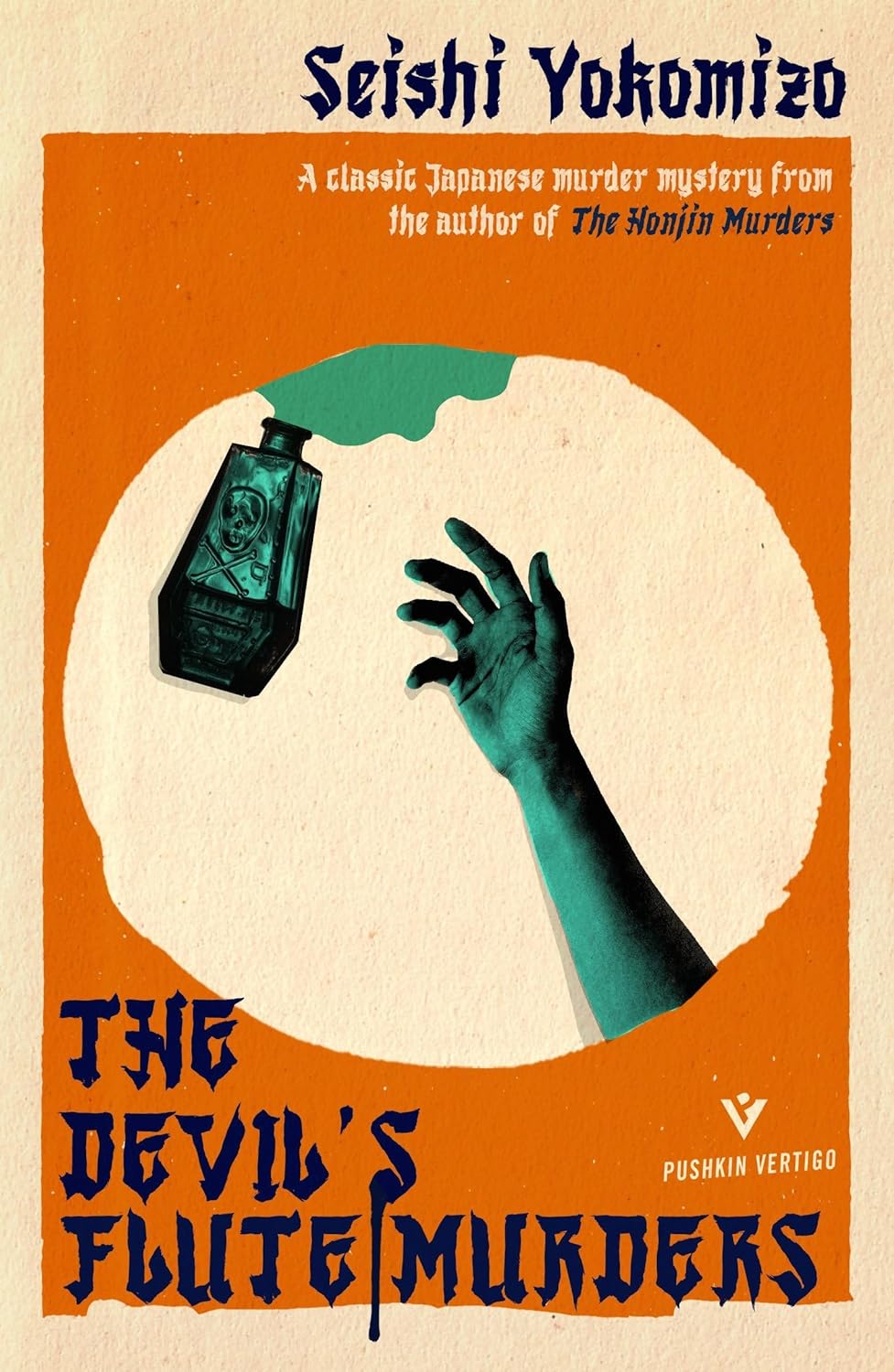
After what felt like a run of fairly light reading, I found myself in the mood for something a little denser, and boy does The Devil’s Flute Murders (1953), the fifth title by Seishi Yokomizo to be published in English by Pushkin Vertigo, deliver on that front. We start with a mass poisoning in a jewellery store, then move onto the disappearance of a member of the nobility who turns up dead…only for his family to doubt his demise and pull amateur genius detective Kosuke Kindaichi into a superbly atmospheric divining ceremony that culminates in a gruesome locked room murder. Yup, the opening third of this book is, pleasingly, something of a whirligig.
#1082: The Mill House Murders (1988) by Yukito Ayatsuji [trans. Ho-Ling Wong 2023]

![]()
![]()
![]()
![]()
![]()
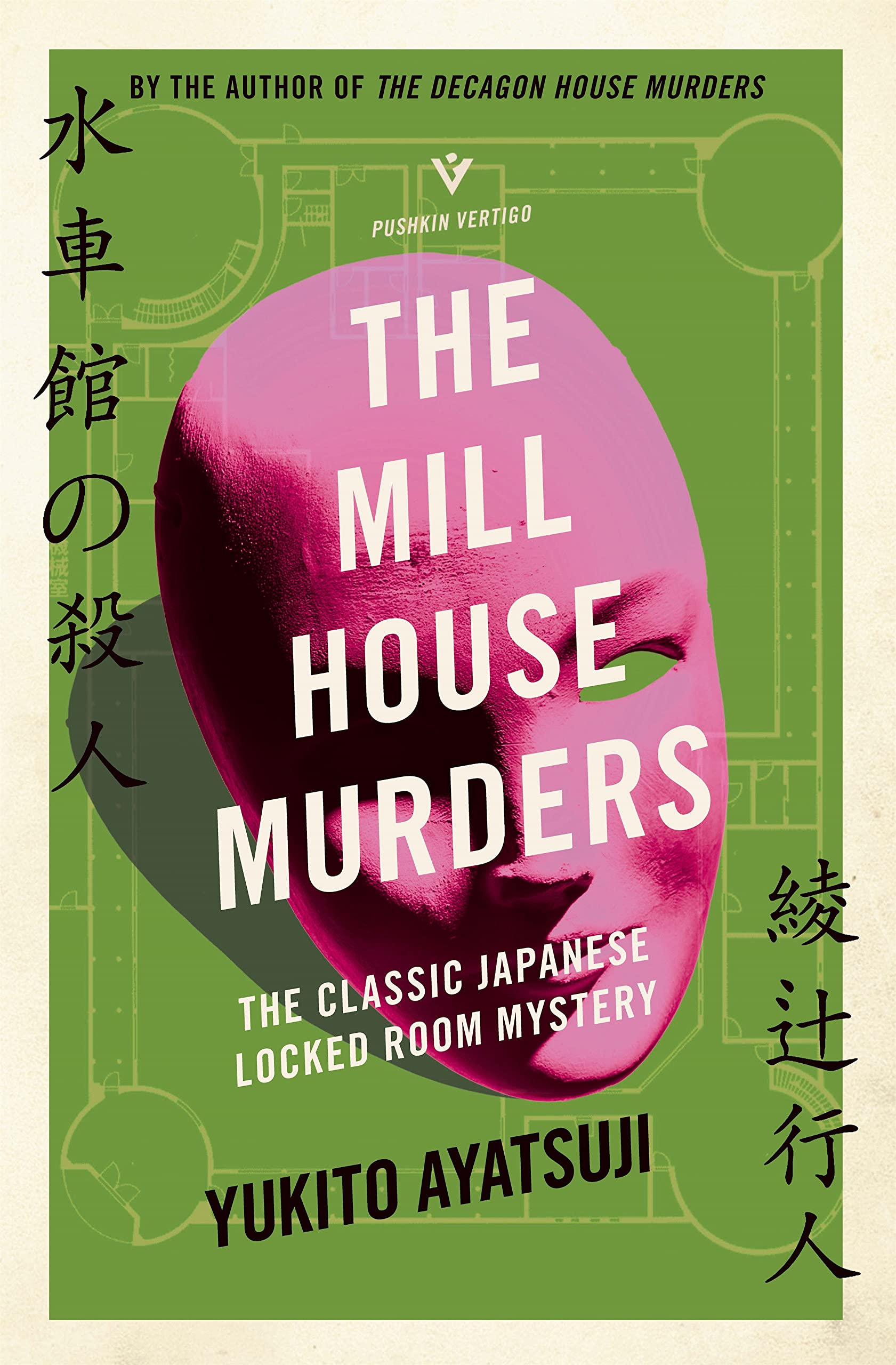
The Decagon House Murders (1987, tr. 2015), the excellent first book in Yukito Ayatsuji’s series featuring the bizarre architecture of Nakamura Seiji, was translated into English so long ago that I hadn’t even started blogging at the time. Follow-up The Mill House Murders (1988, tr. 2023) was, then, much anticipated, and, for this reader at least, doesn’t quite merit the wait. While relatively swift, and enjoyably inventive as we’ve come to expect from shin honkaku, there’s a cleverness lacking in a story whose telling is marred by some unusual writing to the extent that I ripped through this without ever really relaxing into it. Like Soji Shimada, Ayatsuji has written a brilliantly clever debut and then suffered from Difficult Second Novel Syndrome.
#987: Death on Gokumon Island (1948) by Seishi Yokomizo [trans. Louise Heal Kawai 2022]

![]()
![]()
![]()
![]()
![]()
“I don’t want to die. I… I… don’t want to die. I have to get home. My three sisters will be murdered. But… but… I’m done for. Kindaichi-san, please… please go to Gokumon Island in my place…” — thus is Kosuke Kindaichi exhorted by a dying brother in arms as they are demobilised after the end of the Second World War. And so the detective goes to Gokumon Island, meets Chimata Kito’s family, and tries to untangle the maelstrom of violence and confusion that descends upon the island as, sure enough, Chimata’s three sisters Tsukiyo, Yukie, and Hanako are killed one by one. In principle it’s a gripping idea, but in practice it made for me the least interesting of the four Seishi Yokomizo mysteries thus far translated.