#782: Below Suspicion (1949) by John Dickson Carr

Below Suspicion

star filledstar filledstar filledstar filledstar filled
After a year — a year, people — of mind-numbing repetition and drudgery against a background of tragedy, Below Suspicion (1949), John Dickson Carr’s forty-sixth book in twenty years and the 18th to feature Dr. Gideon Fell, was exactly what I needed…for the simple reason that it is so very, very different. Ten years from now I could reread this and be appalled that I ever thought it so great, but right now it is manna from heaven: eerie, baffling, infuriating in many ways, and fascinating given the direction we know Carr’s career took from this point in how it blends the classic detection he had excelled in with the historical mysteries he was about to launch himself into.

Continue reading

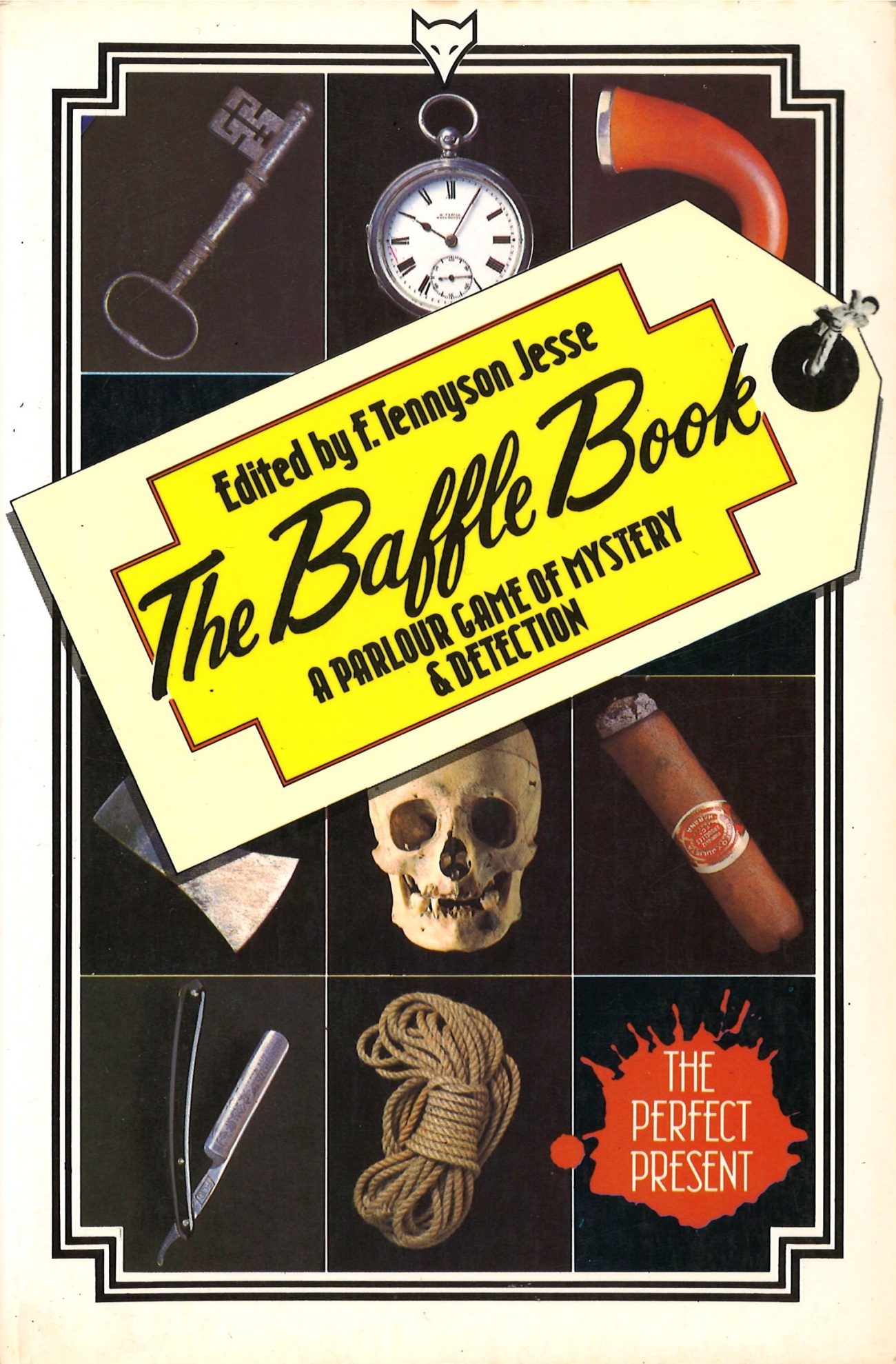
#777: Circumstantial Evidence – The Baffle Book (1930) by Lassiter Wren and Randle McKay [ed. F. Tennyson Jesse] Problems 22 to 28

I struggle to think of the last thing I read that disappointed me as much as F. Tennyson Jesse’s 1930 edit of Lassiter Wren and Randle McKay’s Baffle Book puzzles. From stories where subtle changes in detail make finding the solution impossible (‘The Warfield-Cobham Jewel Robbery’) to those whose insistence of physical evidence is so ignorant as to defy explanation (‘The Wayside Mystery’) it’s been a…not good time.

Continue reading

#761: The Skeleton in the Clock (1948) by Carter Dickson

Skeleton in the Clock

star filledstar filledstar filledstar filledstars
On the afternoon of November 4th 1927, Sir George Fleet stood unaccompanied on the flat roof of Fleet House and was, as several independent witnesses assert, pushed to his death by invisible hands.  Twenty years later, Scotland Yard receive three anonymous postcards marked “Re: Sir George Fleet” exhorting them to “examine the skeleton in the clock” and asking “what was the pink flash on the roof?” because “evidence of murder is still there”. Enter Chief Inspector Humphrey Masters, dragging the Old Man, Sir Henry ‘H.M.’ Merrivale, in his wake…Merrivale himself having just bought a grandfather clock which has a skeleton suspended inside of it.

Continue reading

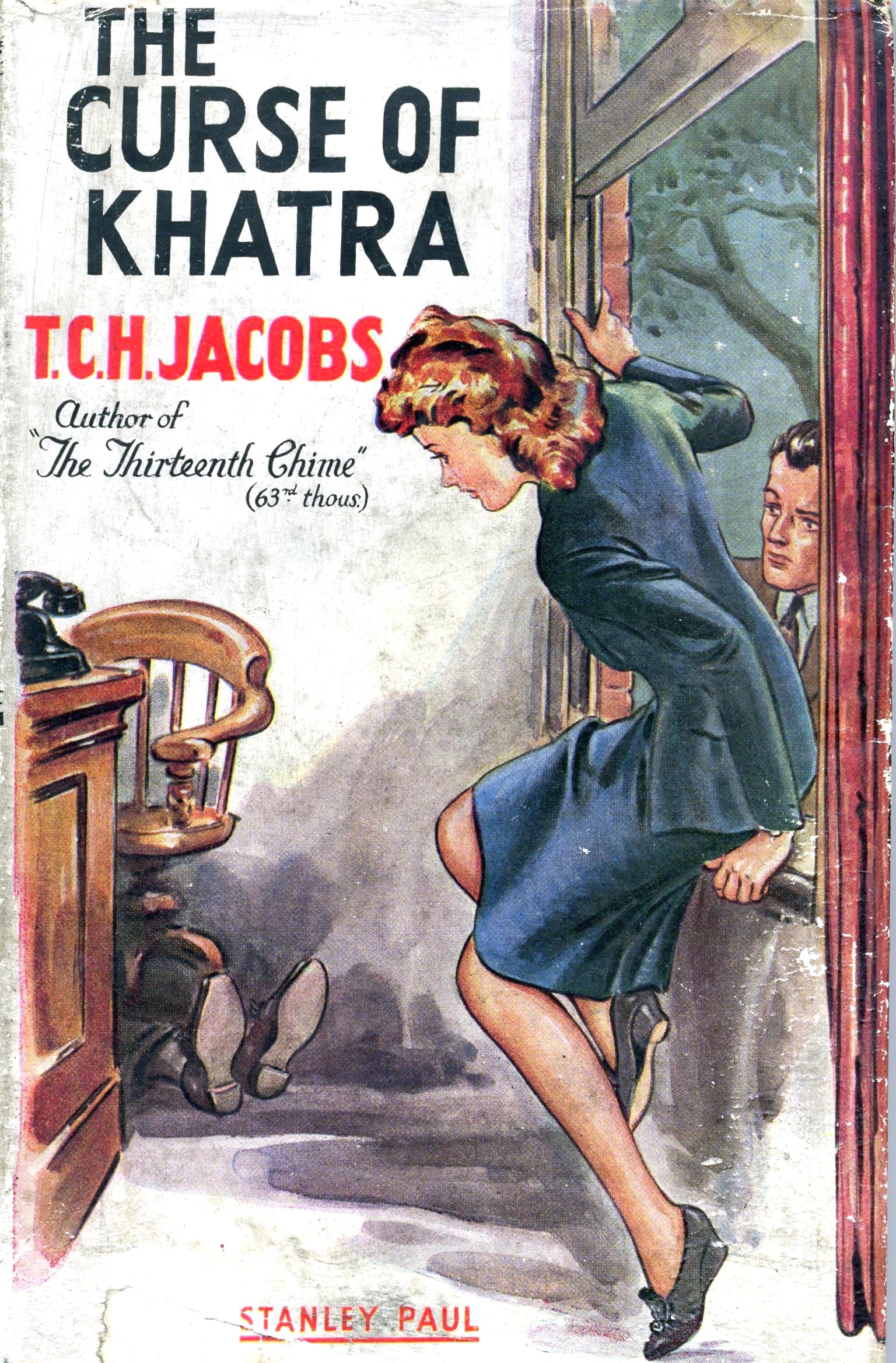
#748: Mining Mount TBR – The Curse of Khatra (1947) by T.C.H. Jacobs

Picture the scene: it is 1946 and T.C.H. Jacobs is discussing his next novel with his agent, lamenting “So many types of detective story have successful during this Golden Age, in what style should I write? Some scientific detection? A police procedural? A pulpy shocker? Should I have an amateur detective? A gentleman detective? A criminal gang?” and his agent leans forwards slowly, steeples his fingers, and says simply, “Yes”.

Continue reading

#740: The Darker the Night (1949) by Herbert Brean

Darker the Night

star filledstar filledstar filledstar filledstars
Man, there is a lot to unpack here. Firstly my love of Herbert Brean — an author brought to my attention by TomCat, and about whose books Ben at The Green Capsule and I frequently try to outdo each other in our enthusiasm. Secondly the need for a mystery to sell you on its central premise — here, hypnotism, about which a neat little treatise halfway through. And thirdly the purpose of a mystery novel — does a compelling plot obviate the need for a good mystery, and does a disappointing mystery necessarily detract from a great plot? All this and more we shall confront today with Brean’s second novel The Darker the Night (1949).

Continue reading

#709: The African Poison Murders, a.k.a. Death of an Aryan (1939) by Elspeth Huxley

African Poison Murders

star filledstar filledstar filledstarsstars
Elspeth Huxley’s Murder on Safari (1938) used its uncommon milieu and the author’s own experiences of life in Kenya as a young girl to enrich what might have otherwise been a ham-handed attempt to introduce some ‘variety’ into the annals of detective fiction. Its reliance on the trappings of safari life, and on the general ignorance of her policeman Superintendent Vachell to introduce the unfamiliar aspects to the reader, worked well with some unusual clues to mark it out as a very accomplished piece of detective fiction…right up until the reveal of the killer, when it all sort of fell apart. And lightning, it seems, has struck twice…

Continue reading

#693: My Late Wives (1946) by Carter Dickson

My Late Wivesstar filledstar filledstar filledstar filledstars
As a reader, there’s a tension to be found at the heart of every writer’s work once it’s a closed set, especially when they’ve scaled the heights that John Dickson Carr did: with nothing else to be added, at what point does The Decline set in?  From Till Death Do Us Part (1944), arguably the pinnacle of his glittering career, it’s a sawtooth diagram of quality all the way to Papa La-Bas (1968), arguably the nadir, but at what point does a downward trajectory become the prevailing trend rather than the occasional, forgivable oversight?  It’s obviously impossible to pick the precise moment — helloooo, subjectivity — which inevitably makes such a moment impossible not to look for.

Continue reading