![]()
![]()
![]()
![]()
![]()
It’s been over two years since I reviewed any Cornell Woolrich, which seems incredible when you consider how completely I loved his work when he first started appearing on The Invisible Event. But, well, behind the scenes I’ve struggled through some of his stuff — the doom-drenched but ooooooverlong The Black Alibi (1942) and the somewhat tedious, Francis Nevins-edited Night and Fear [ss] (2004) collection — and lost the name of action, so to speak. But you can’t keep a good fan down, and so it’s back to the novels and The Black Angel (1943), which interestingly finds a new way to explore themes and approaches that would seem to recur throughout Woolrich’s oeuvre.
Cornell Woolrich
#1282: I Knew So Perfect Yesterday – My Ten Favourite Mysteries of the 1940s
Last year my book club picked our favourite 1930s mysteries, and earlier this year we moved on a decade and each selected a top 10 for the 1940s. So, well, here’s mine.
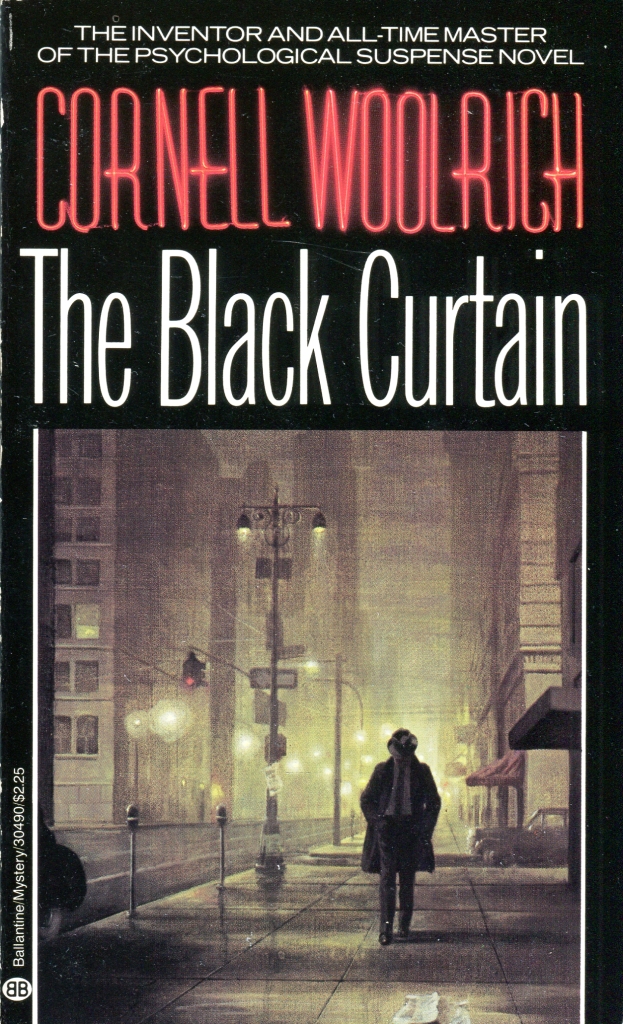
Continue reading#1073: The Black Curtain (1941) by Cornell Woolrich

![]()
![]()
![]()
![]()
![]()
I’m starting to develop the belief that the novelistic output of Cornell Woolrich can be broadly summed up in a single word: ‘Loss’. The six novels of his I’ve read so far all concern the desperate search for — and horror associated with — something either already lost or on the verge of being so, be it love, opportunity, or escape. And The Black Curtain (1941) extends this theme by finding yet another string of loss to add to the great man’s bow in Frank Townsend’s misplacement of perhaps the most crucial of all things: himself. And, this being a work of suspense writing, when he starts to uncover what the eponymous curtain obscures, he’s not necessarily going to be thrilled with what he finds.
#1004: Reprint of the Year – Deadline at Dawn (1944) by Cornell Woolrich [a.p.a. by William Irish]
#1000: A Locked Room Library – One Hundred Recommended Books
In the back of my mind when I started The Invisible Event was the idea that exactly half of what I’d post about would feature impossible crimes, locked room mysteries, and/or miracle problems — and although this proportion started an irreversible slide after the first 500 or so posts, the impossible crime remains my first love.
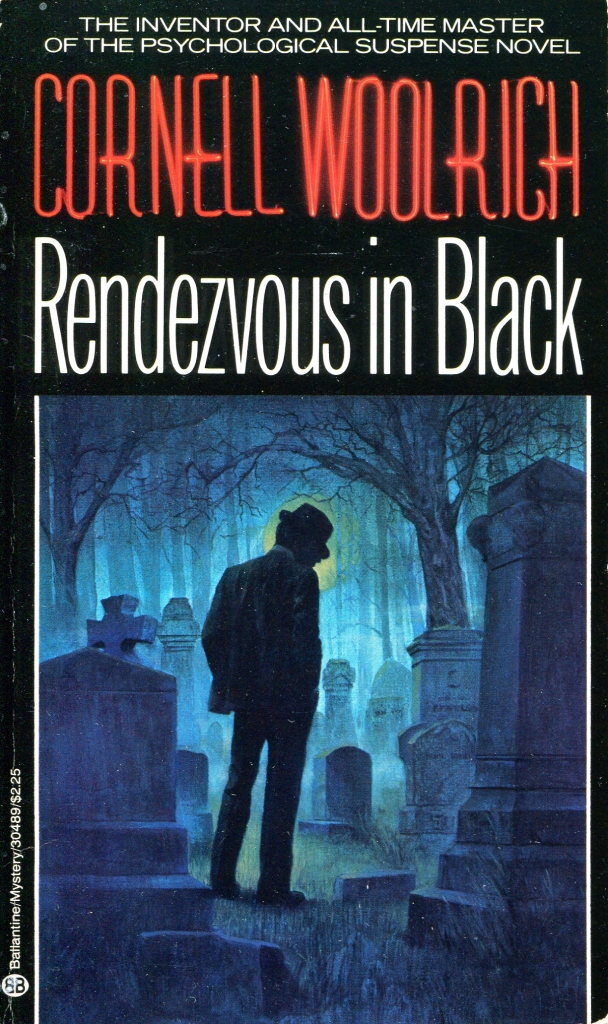
Continue reading#957: Rendezvous in Black (1948) by Cornell Woolrich

![]()
![]()
![]()
![]()
![]()
One of the things that struck me as I got into the works of Freeman Wills Crofts is how, from book to book, he always finds a way to subtly alter the nature of the plot he is writing so that he never covers the exact same ground twice. This was evidently not so much of a concern for Cornell Woolrich, who could so readily imagine so many nightmarish possibilities bristling from any setup that he often had to use the same core idea more than once just to explore the principles that struck him. ‘All At Once, No Alice’ (1937) shares a sizeable chunk of DNA with the novel Phantom Lady (1942), and today’s read Rendezvous in Black (1948) harks back to Woolrich’s criminous debut, The Bride Wore Black (1940).
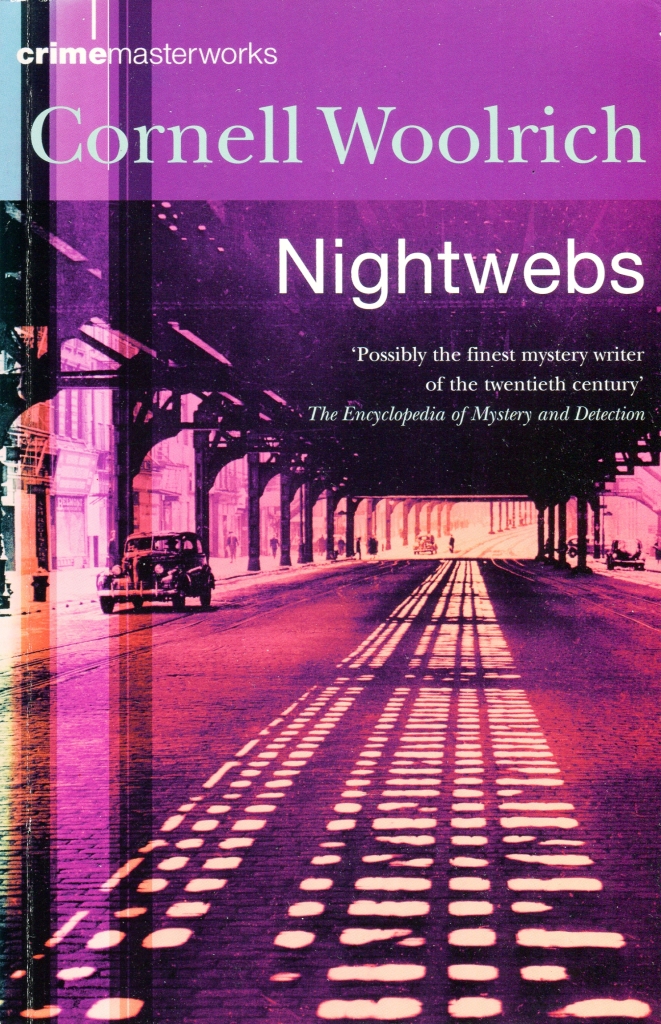
#925: “Everyone has to die sometime.” – Nightwebs [ss] (1971) by Cornell Woolrich
Roughly twenty years ago, the British publisher Orion released a series of reprints under the banner of Crime Masterworks which had something of a transformative effect on the books Younger Me started to look out for. Included in that selection was the short story collection Nightwebs (1971) by Cornell Woolrich.
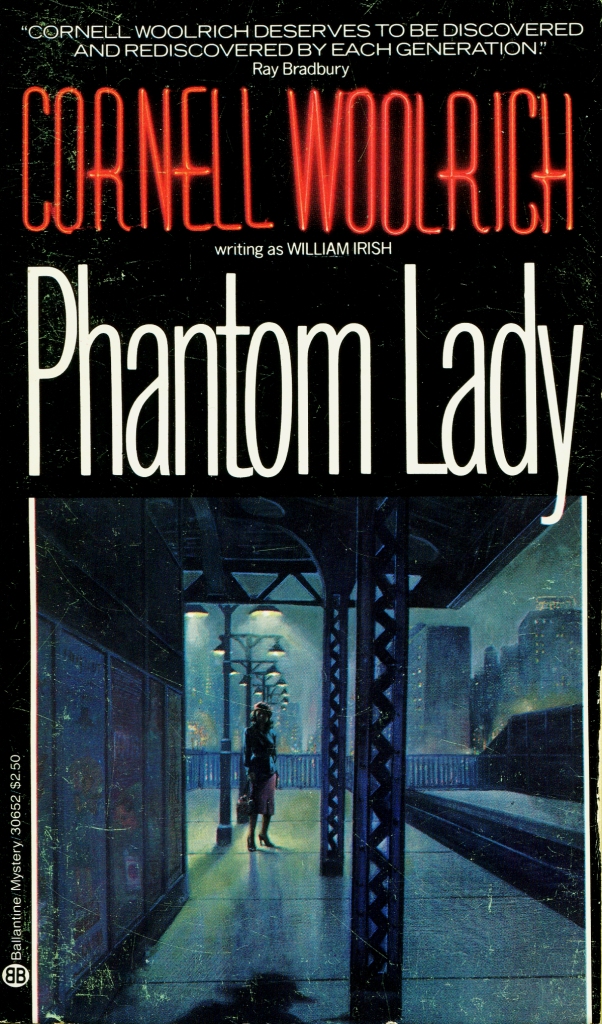
Continue reading#912: Phantom Lady (1942) by Cornell Woolrich [a.p.a. by William Irish]

![]()
![]()
![]()
![]()
![]()
I hadn’t intended Phantom Lady (1942) to be my next Cornell Woolrich read — that was going to be a revisit of the short story collection Nightwebs (1971) which so underwhelmed me and put me off Woolrich for two decades, only for me to fall in love with the man’s work recently — but, after his own glowing review of this title, I don’t think Ben at The Green Capsule would have forgiven me if I’d gone anywhere else. And, honestly, I’m having such a blast with Woolrich’s nightmarescapes that I was probably going to enjoy whatever I read…but, woo, can I ever see why he wanted me to read this one. So, attempting to avoid nudges, winks, and spoilers that might mar your enjoyment, here goes…
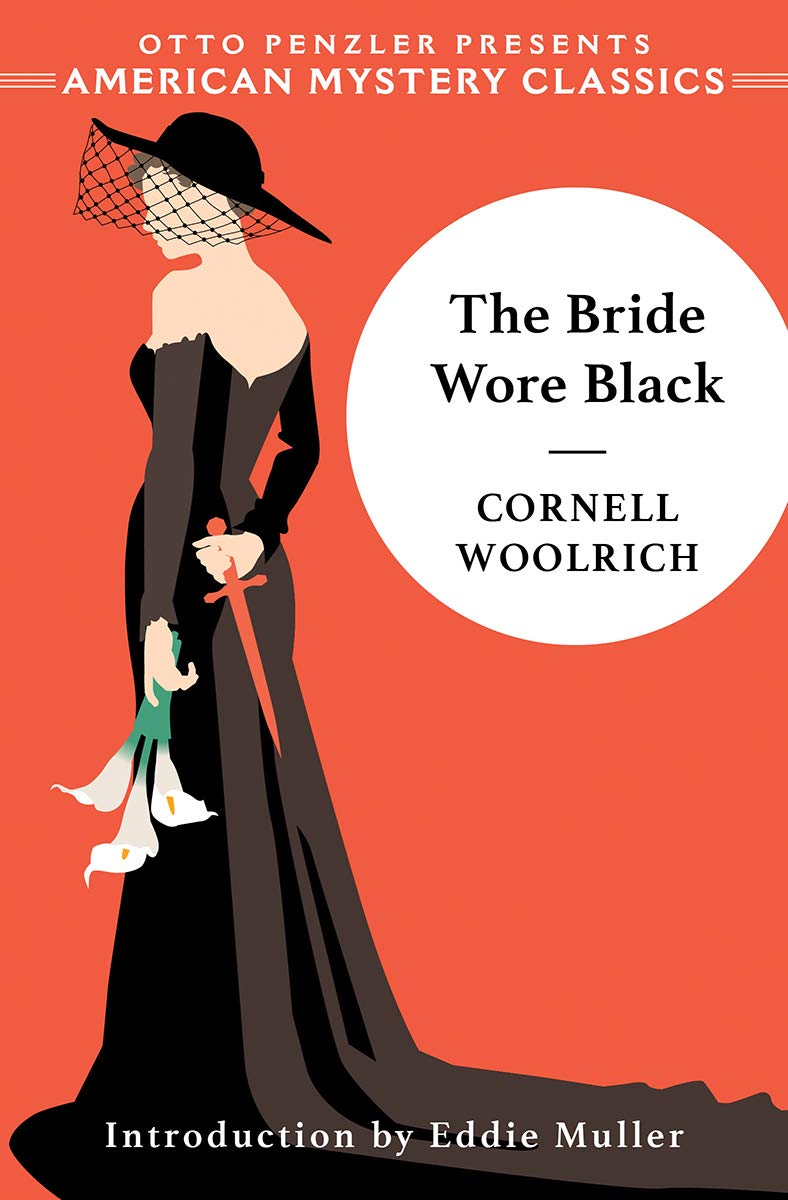
#858: The Bride Wore Black, a.k.a. Beware the Lady (1940) by Cornell Woolrich

![]()
![]()
![]()
![]()
![]()
Past Jim has a lot to answer for — this haircut, for one, or that fact that I cannot forget the embarrassment of 11:48am on 4th June 1997 — but my current frustration with him is how easily and summarily he dismissed the writing of Cornell Woolrich after reading the Nightwebs (1971) collection as part of the Orion Crime Masterworks series. Had Past Jim possessed a little more discernment (or, dare I say it, maturity), I could have been loving Woolrich’s work for the last two decades instead of coming to it so late. Yes, I got here eventually, via some short stories, some novellas, and a couple of American Mystery Classics reissues, but what is life without something to lament?
#818: Waltz into Darkness (1947) by Cornell Woolrich [a.p.a. by William Irish]

![]()
![]()
![]()
![]()
![]()
It’s fair to say that, in the course of writing this blog over the last six years, I have become known as something of a plot fiend. Atmosphere is lovely, memorable characters are preferable, social commentary perfectly acceptable, but what drew me to classic-era detective fiction was the possibilities of plot and plenty of it. On that front, Waltz into Darkness (1947), Cornell Woolrich’s 1880s-set epic of catfishing, revenge, and much more besides should leave me cold — heavy on emotion, laden with dread, fond of repetition to hammer home obvious points…everythng that should send me running. And yet, damn, I wish this probably 120,000-word book was twice as long.