#724: The 12.30 from Croydon, a.k.a. Wilful and Premeditated (1934) by Freeman Wills Crofts

12.30 from Croydon

star filledstar filledstar filledstarsstars
The writing of an inverted mystery must surely bring with it a certain amount of release.  Your typical detective novel, after all, keeps the villain, their motives, their opportunity, and oftentimes their method occluded from the reader whilst ideally also dropping all manner of subtle hints about them, where the inverted mystery — in which we know the criminal and their motivation from the off, see the crime committed, and must then watch the detective figure it out — removes every single one of these difficulties, requiring only the investigation which would have happened in a ‘straight’ novel of detection anyway.

Continue reading

#715: The Woman in the Wardrobe (1951) by Peter Shaffer [a.p.a. by Peter Antony]

Woman in the Wardrobestar filledstar filledstarsstarsstars
The one thing a book cannot guard against is the expectations that build up around it — and the rarer a book proves to be, the more apocryphal its contents, the higher those expectations tend to rise. The Woman in the Wardrobe (1951) by Peter Shaffer has been staggeringly unobtainable for decades now and, with no less an authority than Robert Adey promising “a brilliant new solution” for its locked room murder, had much to live up to. We can’t blame the book for the solution not being new — not even slightly, Bob — but we can blame it for the flaws that disappointingly crop up in several key regards.

Continue reading

#655: Mystery in the Channel, a.k.a. Mystery in the English Channel (1931) by Freeman Wills Crofts

Mystery in the Channelstar filledstar filledstar filledstar filledstars
Since the British Library’s reissues of The Hog’s Back Mystery (1933) and Antidote to Venom (1938) are what got me reading Freeman Wills Crofts in the first place, it was with some excitement that I, now a fully signed-up Croftian reading his work chronologically, approached another of his titles selected for the BL’s Crime Classics range.  Possibly on account of a certain perturbation at current world events, I’ve been really struggling of late to persevere with books I’ve not been enjoying, so I suspect that a dive into some comfort reading is what’s needed.  And Crofts fits that bill like a glove…if you’ll forgive my, er, mixing of metaphors.

Continue reading

#623: Mr. Pottermack’s Oversight (1930) by R. Austin Freeman

Mr Pottermack's Oversightstar filledstar filledstar filledstar filledstars
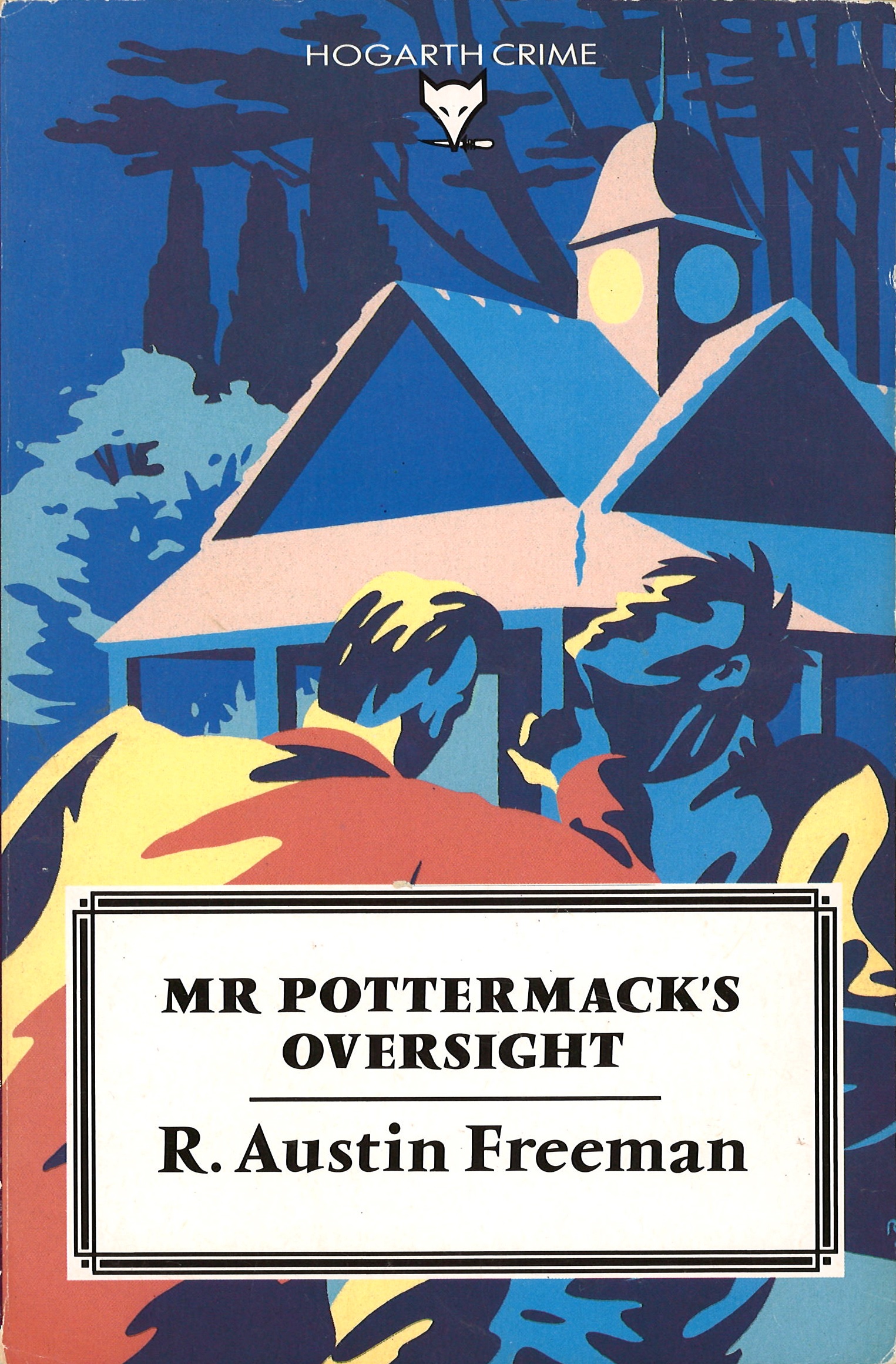
When digging his garden to lay a foundation for a new sundial, quiet, unostentatious bachelor Marcus Pottermack uncovers a previously-unknown well.  That same day, he receives yet another demand for money from the man who is blackmailing him, and it’s only a matter of time before one problem is used to solve the other.  And when curiosities about the man’s disappearance are raised in passing with Dr. John Thorndyke, it’s only a matter of time before that pillar of truth is on the trail of quiet, unostentatious Marcus Pottermack.  And yet, for all its conventional-sounding setup, Mr. Pottermack’s Oversight (1930) is a delightfully unconventional inverted mystery.

Continue reading

#605: Castle Skull (1931) by John Dickson Carr

Castle Skullstar filledstar filledstar filledstarsstars
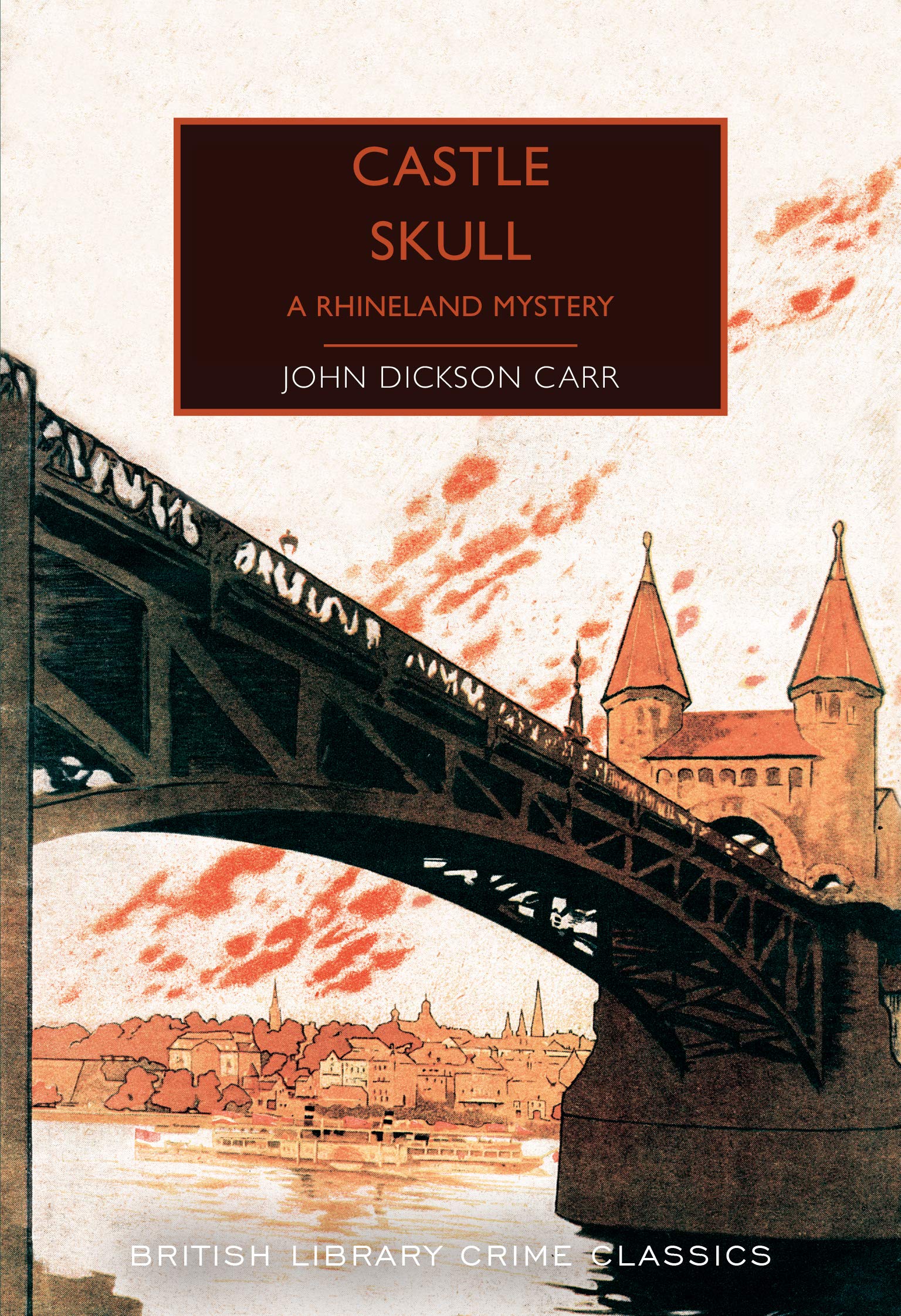
I’m being a bit cheeky here, using what I believe will be the cover for the British Library Crime Classics reissue of this due out early next year when it’s not actually my copy — I’ll show that below — but, c’mon, it’s a thing of beauty.  The skull-shaped castle the title promises and narrative delivers has been somewhat done to death in previous editions, and it’s nice to see someone being a little more liberal in their interpretations.  Though, now I’ve said that, the BL will change the cover ahead of its January release to a castle made entirely of skulls, presided over by a man made of skulls, punching Skeletor with a skull-shaped boxing glove.

Continue reading

#544: Murder by Matchlight (1945) by E.C.R. Lorac

Murder by Matchlightstar filledstarsstarsstarsstars
Back when E.C.R. Lorac was a semi-forgotten also-ran, I snapped up this Dover Press reissue before I figured the book would vanish into oblivion, hoping I’d smartly acquired an obscure gem.  Skip forward a mere couple of years and the British Library Crime Classics series continues its exemplary work in reviving a wide range of authors and texts, and Murder by Matchlight (1945) has been dragged from its dusty and semi-overlooked corner into the full glare of publicity.  Goddamn it, there goes half my retirement plan; oh, well, fingers crossed that the bottom doesn’t fall out of the fidget spinner market any time soon…

Continue reading

#535: The Colour of Murder (1957) by Julian Symons

Colour of Murder, Thestar filledstar filledstar filledstarsstars
John Wilkins has never quite fitted in anywhere: not in his father’s affections, not in the Army, not at his tennis club, not even in his marriage.  Even when he feels as if he acquits himself well at something, there’s still a part of his mind he closes off for fear that he’ll realise “that the whole thing is a daydream and you’re just being stupid”.  And so when a chance encounter with librarian Sheila Morton stirs in Wilkins something he’s not experienced for quite some time — “I’m not attractive to women” he tells us on more than one occasion — it’s also the first step along a road that ends with murder.  The question is, whose murder?

Continue reading

#481: The Seat of the Scornful, a.k.a. Death Turns the Tables (1941) by John Dickson Carr

Seat of the Scornfulstar filledstar filledstar filledstar filledstar filled
It’s cold outside, it’s dark outside — yes, thank-you, The Southern Hemisphere, no-one likes a smartarse — Christmas is over; time to battle through with some beloved authors.  First up, and most beloved of them all despite a recent charge by Freeman Wills Crofts, Mr. John Dickson Carr and Dr. Gideon Fell, here engaged in no showy impossibilities but instead the sort of low-key case for which Carr doesn’t get enough credit.  Where the relative simplicity of this might lead to this being overlooked, I’d argue that its restrained execution and structure are so brilliantly without flaw that the more easily you dismiss it the more you’re falling into the very trap it lays.

Continue reading