#663: Minor Felonies – The Mystery of the Hidden House (1948) by Enid Blyton
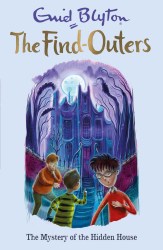
I was recently moved to suggest that The Secret of Hangman’s Inn (1956), the sixth title in the Ken Holt series by husband-and-wife team Bruce Campbell, was the point at which that series found its feet and jumped to life. Today I’m going to promulgate that The Mystery of the Hidden House (1948), the sixth title in the Five Find-Outers series by one-woman publishing sensation Enid Blyton, is the point where this series finds its feet and jumps to life. Coincidence? Yes, undoubtedly.
Continue reading
In GAD We Trust – Episode 3: British Library Crime Classics and Mortmain Hall (2020) by Martin Edwards [w’ Martin Edwards]

Here we go again, podcast time! And this week I’m joined by President of the Detection Club and recent recipient of the Crime Writers’ Association Diamond Dagger, Martin Edwards.
Continue reading
#661: The Mystery of the Yellow Room (1907) by Gaston Leroux [trans. ???? 1909]


Can a book still be a masterpiece if it’s not brilliant? In the case of Gaston Leroux’s debut The Mystery of the Yellow Room (1907) — which plays up to and anticipates so many of the established and forthcoming trappings of detective fiction — I’d say yes. The focus on propelling the plot at a time when even those who were focussed on plot weren’t exactly propulsive is both admirable and impressive, and the creativity Leroux brings to a subgenre that would utilise the secret passage for another 60+ years is staggering. But it would be folly to claim that age has not caught up with it and that this was in the same class as the genre’s genuine masterpieces of the 1930s.
Continue reading
#660: Minor Felonies – Mic Drop (2020) by Sharna Jackson

Aaah, the difficult second novel. Sharna Jackson’s High-Rise Mystery (2019) was a great debut, with a superb setting, wonderful mix of characters, and a neat little mystery at its core. How does this follow-up compare?
Continue reading
#659: Spoiler Warning 14 – The Eye of Osiris, a.k.a. The Vanishing Man (1911) by R. Austin Freeman

Every post could be someone’s first post, so just in case you’re new here: this post today is rich in spoiler-heavy details about the novel The Eye of Osiris, a.k.a. The Vanishing Man (1911) by R. Austin Freeman. Read on only if you don’t mind having plot details discussed. Do not assume I’m going to be vague and mindful of avoiding spoilers.
Continue reading
#658: The Flying Boat Mystery (1935) by Franco Vailati [trans. Igor Longo 2019]

Eleven of the twelve passengers in a boat plane making a trip across Italy watch the twelfth head to the front of the plane and lock himself in the tiny toilet cubicle. Thirty minutes later, when he has not emerged, someone else impatiently bangs on the door and insists the current occupant allows others to avail themselves of the conveniences. No reply is forthcoming. When the door is broken down, having been bolted in the expected manner, there is no sign of the passenger, nor any exit large enough to admit his egress (he was rather too, ahem, corpulent to have slipped through the skylight). So…where is he? And, more to the point, how did he get there?
Continue reading
#657: Minor Felonies – Death Knell (1990) by Nicholas Wilde
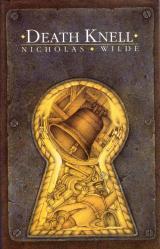
Okay, so how wide of the mark was TomCat when pouring praise upon this one a few weeks ago? Let’s find out…
Continue reading
In GAD We Trust – Episode 2: Inverted Mysteries [w’ Aidan @ Mysteries Ahoy!]