#234: The Baddington Horror (1934) by Walter S. Masterman
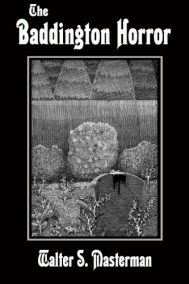 I love a country house mystery, especially those with a body on page one. So when the murder of ex-judge Sir Ernest Ferber in his private garden by man he sentenced harshly and the subsequent suicide of his assailant at the scene is communicated in the opening ten lines of The Baddington Horror, we’re off to a very good start. To my understanding, Walter S. Masterman wrote as many ‘weird tales’ as he did novels of detection, and so it was always a little uncertain what I was going to get here. But the first chapter could not be more Golden Age detection if it tried: murdered aristocrat, retired amateur detective who takes an interest, two big coincidences, and away we go…
Continue reading
#233: Murder on the (Givea)Way!
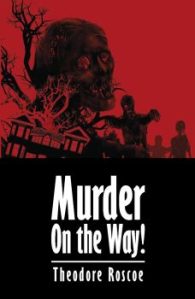
As I may have mentioned before, thanks to the wonderful people at Bold Venture Press I was, ahem, involved in the republication of Theodore Roscoe’s 1935 impossible crime zombie uprising novel Murder on the Way!.
Continue reading
#232: Spoiler Warning – Coming in July: Rim of the Pit (1944) by Hake Talbot

Following on from the spoiler-filled deconstruction of He Who Whispers by John Dickson Carr and Death on the Nile by Agatha Christie, I’m going ahead with another spoiler-filled deconstruction in the next couple of months, this time of Hake Talbot’s impossibility-laden masterpiece Rim of the Pit (1944).
Continue reading
#231: Antidote to Venom (1938) by Freeman Wills Crofts
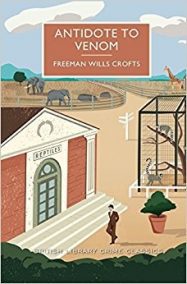 The reputation for being something of an interminable bore that still dogs Freeman Wills Crofts some 60 years after his death wants for evidence in Antidote to Venom. We’re about halfway through when the murder occurs, by which point you’ve had not only a highly sympathetic portrait of the central man in the affair, but also the convincing use of minor characters to create the situation in a way that relies on coincidence without feeling forced, an allusion to the Sherlock Holmes canon, and two — count ’em — legitimate jokes. It is spry, focussed, beautifully rich in intrigue and heartbreak, and balances its inverted and traditional elements perfectly. And when the investigation starts…oh, boy, are you in for a treat.
Continue reading
#230: Detective Fiction is a Joke…
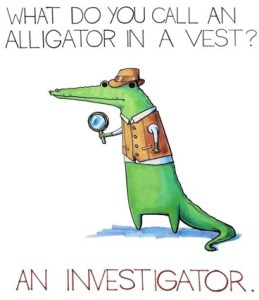
Bear with me here, I want to tell you one of my all-time favourite jokes; remain calm, it is not rude (I’m too much the gentleman for that):
Continue reading
#229: Carr vs. Christie…the Follow-Up

 Identity and location,