#374: Spoiler Warning 6 – Invisible Weapons (1938) by John Rhode
Dearly beloved, we are gathered here today to talk about the 1938 impossible crime novel Invisible Weapons by John Rhode, one of the many noms de plume of Cecil John Charles Street. We — and by “we” I mean myself and Aidan, who blogs at a frankly prodigious rate over at Mysteries Ahoy! — shall be doing this with many and much spoilers, and from this point on will give away, like, everything.
Continue reading
#373: The Sheep and the Wolves (1947) by Max Afford


There is a lot to be said for not letting your heroes grow up. From Jonathan Creek’s middle-aged ennui to the doddery old bastard many authors have tried to tell us Sherlock Holmes became, the majority of attempts to drag these fictional wonders into ‘reality’ typically turn in a strong argument in favour of youthful literary immortality. I already know scores of middle-aged men who regret their life choices; I do not know any impossible crime-solving magician’s assistants who live in windmills — that’s why I seek escape in fiction. If want to watch a man slowly disintegrate under his own self-loathing, there are plenty of mirrors in my house.
Continue reading
#372: The Tuesday Night Bloggers – The Great Detectives – Week 2
Another week, another set of posts from our GAD blogging collective, running down their own personal favourites of the great detectives of fiction.
Continue reading
#371: Lightning Strikes Twice in ‘Z is for Zombie’ (1937) by Theodore Roscoe
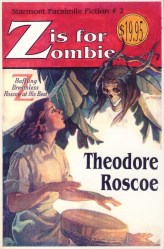
It’s just over a year since Bold Venture Press republished Theodore Roscoe’s Murder on the Way! (1935), in which I was fortunate enough to have a hand. As luck would have it, I recently acquired a copy of Roscoe’s equally zombie-centric and Haiti-set ‘Z is for Zombie’ (1937) and thought the two might bear some comparison.
Continue reading
#370: The Reader is Warned (1939) by Carter Dickson
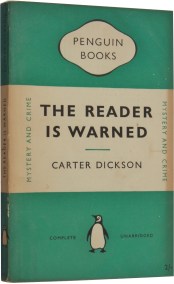
I will admit the chance that I am overrating this book slightly, but, dude, I loved it. The central premise — that Herman Pennik can both read the minds of others and kill people just by thinking about them, using a hitherto-unexplored scientific principle he calls Teleforce — has the absurdity of overwroughtness that distinguishes the Henry Merrivale books under John Dickson Carr’s Carter Dickson nom de plume (see: The Unicorn Murders (1935), The Punch and Judy Murders (1936), etc). But Carr plays it remarkably straight, keeping his phantasmagorical flourishes to a minimum and concentrating on plot and glorious atmosphere.
Continue reading
#369: The Tuesday Night Bloggers – The Great Detectives – Week 1

The Tuesday Night Bloggers — an autonomous collective of GAD bloggers who unite around a common theme — have returned! To tie in with the release of The 100 Greatest Literary Detectives in a few weeks, a compendium to which our very own Kate Jackson has contributed an entry, everyone is picking and writing about their own favourite sleuths this month.
Continue reading
#368: Going Great Gunns – The Greatest Mystery Writer You’ve Never Heard Of: A Guest Post by Ryan O’Neill

Claudia Gunn at ‘Mysteriosa’, December 1908