The Tuesday Night Bloggers

#326: Reflections on Detection – ‘Decline of the English Murder’ (1946) by George Orwell and the End of the Golden Age
George Orwell’s essay ‘Decline of the English Murder’ (1946) is focussed not on the quality of said fictional undertakings but rather the attitudes of a society suffering the “brutalising effects of war” and thus immune to the horror of murder the perspectives of both commission and punishment. Citing the case of the Cleft Chin Murder, in which three people were killed with no meaningful motivation and the opprobrium of the public was vented upon the couple responsible, the sentiment of the final line is easily the most powerful; “crimes as serious as murder should have strong emotions behind them”.
Continue reading
#323: Reflections on Detection – ‘Why Do People Read Detective Stories?’ (1944) and ‘Who Cares Who Killed Roger Ackroyd?’ (1945) by Edmund Wilson [feat. Gladys Mitchell]
In October 1944 and January 1945, the American newspaper columnist, writer, and critic Edmund Wilson published two essays entitled, respectively, ‘Why Do People Read Detective Stories?’ and ‘Who Cares Who Killed Roger Ackroyd?’. The second was in response to the exhortations from readers who, appalled by the first, sent him recommendations to improve his outlook…recommendations which, by all accounts, failed miserably.
Continue reading
#320: Reflections on Detection – The Golden Age of Murder (2015) by Martin Edwards
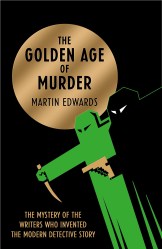
We live in a world where the 80 novels and collections of short stories by Agatha Christie are in no doubt — she wrote them, they were published, and they will doubtless be available in perpetuity. This is equally true of the work of John Dickson Carr, though less readily available, or Miles Burton or Christianna Brand; the work is closed, finished, and while an occasional unknown one may appear at some point, it’s reasonable to assume that there’s nothing meaningful to be added to these bibliographies.
Continue reading
#316: Stand Back, Detective Novelist at Work in The Mystery of the Invisible Thief (1950) by Enid Blyton
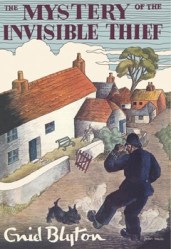
No discussion of children’s literature is complete without at least a passing reference to the 14,762 books Enid Blyton wrote in her career. Somehow I’d heard of this one and its implied impossible disappearance, and it seemed perfect for my Tuesday posts in November on precisely this type of book. Generally you know what to expect from Blyton — a poorly-dated whiff of imperialism, comfortable middle-class adventures, ginger beer — but prepare for a bit of a shock: the rigour of the detection in this is something to behold.
Continue reading
#313: All the Feels and I Just Can’t Even About The Mysterious Disappearance of Leon (I Mean Noel) (1971) by Ellen Raskin
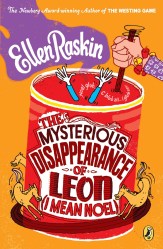
Tuesdays, themed posts, November = mysteries for younger readers, and Ellen Raskin was a name that appeared in the comments a little while ago promising riddles and word games and puzzles and all sorts of other joys…so what to make of this, her debut novel?
Continue reading
#310: An Intriguing Introduction to Impossibilities in Alice Jones: The Impossible Clue (2016) by Sarah Rubin
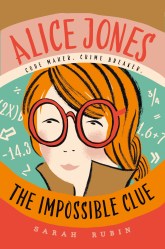
Each month I’m picking a topic or a theme for my Tuesday posts, and for November — inspired by my recent discovery of The Three Investigators, Robin Stevens, and the excellent Mystery & Mayhem collection — it’s going to be detective novels for younger readers. I have what I hope will be four very different books lined up, starting with this impossible disappearance.
Continue reading
#307: The Realm of the Impossible [ss] (2017) eds. John Pugmire and Brian Skupin – Week 5
Here we are at the final week of Locked Room International’s The Realm of the Impossible, with me working through in non-anthologised order to instead group them culture-by-culture.
Continue reading
#306: The Realm of the Impossible [ss] (2017) eds. John Pugmire and Brian Skupin – The Real Life Impossibilities
This coming Tuesday sees the final instalment in my month-long look at Locked Room International’s multi-national impossible crime short story collection, and I thought I’d take this opportunity to address an oversight Puzzle Doctor, TomCat, and I have all been guilty of: the 12 real-life cases also contained within.
Continue reading
#304: The Realm of the Impossible [ss] (2017) eds. John Pugmire and Brian Skupin – Week 4
 The Invisible Event