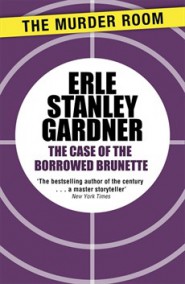
#71: The Case of the Borrowed Brunette (1946) by Erle Stanley Gardner

Borrowed BrunetteThere’s an appealing irony in the assertion that you know an author has hit the big time when everyone remembers the name of their characters over that of the creator themself: Lisbeth Salander, Jack Reacher, Tarzan, Jason Bourne, we erudite types remember them, of course, but the world at large – fuelled no doubt by TV and films – associates more with their representations than their origins.  Erle Stanley Gardner – a King of Crime, lest we forget – is not just less well-known than his character, but also the piece of music that character is himself overshadowed by; all together now…  Frankly, he must be like the biggest-selling author in the world on those terms.  Well, uh, yeah, he kinda is, actually.  And yet, despite my avowed love of the man and his writing, it’s taken me 70 posts to get round to reviewing him here; what gives?

Well, two things.  Firstly, I’d read a lot of Gardner before starting this blog and had sort of lost track of exactly what I had and hadn’t already encountered, and secondly a lot of it was written at high speed and with, er, some quality control issues and so some of what I’ve read since hasn’t exactly covered him in glory.  However, The Case of the Borrowed Brunette is about as classic a Perry Mason – oh, yeah, that’s the famous character, but the way – novel as you’ll get, and showcases a lot of what Gardner did extremely well and also a lot of the flaws in his process.

Continue reading →

#69: Death’s Mannikins, a.k.a. The Dolls of Death (1937) by Max Afford

Death's MannikinsAn isolated ancestral home ruled over by an eccentric patriarch with a keen interest in esoterica and a private museum of medieval weapons, into which an eager young man is brought by an acquaintance only for murder to insinuate its way among the denizens…yup, John Dickson Carr’s The Bowstring Murders (1933) certainly is a classic of the genre.  What’s that you say?  Death’s Mannikins?  Oh, wow, uh, this is awkward.  Okay, let’s start again: an isolated ancestral home ruled over by an eccentric patriarch with a keen interest in esoterica and a private museum of medieval weapons, into which an eager young man is brought by an acquaintance only for murder to insinuate its way among the denizens…yeah, no, there’s no getting away from those similarities.  And, y’know what?  I only bring it up because there’s more than a touch of Carr about this, Afford’s second Jeffery Blackburn novel, and that’s really not a bad thing.

I mean, take the following:

It was as though the second tragedy acted as sudden leaping flames under a simmering pot.  The scalding, seething flux exploded and boiled over, galvanizing each person under that roof into an insane panic that throbbed and hummed and zoomed from cellar to tower with the horrible impotence of a monstrous and unclean bluebottle trapped against a window.

Continue reading →

#66: The Bride of Newgate (1950) by John Dickson Carr

Bride of NewgateExisting somewhere between an early 2000s romantic comedy – probably starring Chris O’Donnell or Matthew McConnaughaghay – and The Count of Monte Cristo, John Dickson Carr’s The Bride of Newgate was his first foray into the historical mysteries that would come to typify his later career.  You never write Carr off – like Christie he waned as he wore on, but there are enough flashes of fire after his peak for everyone to have two or three Later Carr highlights – but these dalliances with the extra detail required show a different side to our man.  Mainly they show that he was a massive history nerd –  detailing not just what people are wearing, say, but also what they would have removed from their outfit to be left with what they’ve got on – and that he was able to fit this into his wonderful brain and stir up something both necessarily of its setting that also fulfilled the expectations raised by his name on the cover.

I’m not going to tell you the plot – the opening four or five chapters are full of schemes, plans, and revelations enough that you should really experience completely pure – and will instead focus on the writing.  Because while he gradually loses his grip on his narrative, his powers of portraiture are sent to their grandest heights with a renewed enthusiasm that is both this book’s chief joy and its main undoing.   In a way it’s like a debut: he gets it wrong, but he tries hard and would improve after a few more attempts.

Continue reading →

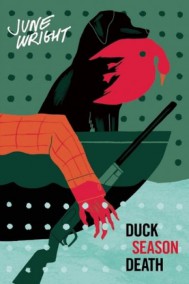
#64: Duck Season Death (c. 1955) by June Wright

Duck Season DeathFull credit for my awareness of Australian author June Wright has to go to Kate over at CrossExaminingCrime, who reviewed Wright’s debut Murder in the Telephone Exchange last year and made it sound fabulous.  Rather than re-evaluate that book, I thought I’d go for one of Wright’s later efforts and so find myself with this, her…well, it’s a little complicated placing this in the timeline.  Derham Groves’ excellent introduction informs us that Wright wrote this after her fourth book – making it, you’re correct, her fifth – but this 2015 imprint is in fact its first publication as it was rejected by two publishers, so therefore it’s her seventh book as it comes after the six she published.  Oh, except she also had another book rejected, too, but the manuscript for that has been lost, so this is…hang on…carry the one…well, work it out for yourselves.  And in the grand tradition of Derek Smith’s Come to Paddington Fair and Hake Talbot’s vanished-from-history unnamed third novel, this joins my collection of “Seriously, this was rejected?” books that make one question precisely what or indeed if anyone was thinking at the time.

Continue reading →

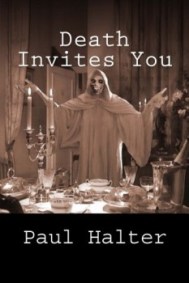
#63: Death Invites You (1988) by Paul Halter [trans. John Pugmire 2015]

Disclosure: I proof-read this book for Locked Room International in October 2015.

Death Invites YouDeath Invites You, the third novel published by Paul Halter – who is swiftly gaining a deserved reputation as a deviser of baffling locked room puzzles – is based around the murder of man found dead in his study with the door bolted from the inside, seated at a table set for a meal.  The victim, Harold Vickers, is an author who has gained a deserved reputation as a deviser of baffling locked room puzzles and whose next novel –  Death Invites You – was due to feature a victim found dead in his study with the door bolted from the inside, seated at a table set for a meal.  It is unfortunately never revealed whether Vickers’ victim was an author of some repute working in the field of locked rooms and whose next novel was due to feature such a crime, but, given the hall of mirrors that you enter at the beginning of any Halter narrative, it frankly wouldn’t surprise me…
Continue reading →

#61: The Footprints of Satan (1950) by Norman Berrow

Footprints of SatanLacking as I do the talent to devise my own fictional impossible crime and solution, I take refuge in those authors who have done it time and again to such success.  The Footprints of Satan, my second Norman Berrow novel after the delightful surprise of The Bishop’s Sword, goes one even better: far from simply devising his own impossibility, he takes an unexplained one from real life, turns it to his own fictional purposes and then explains it away beautifully.  Both the foreword and the plot here make reference to an incident from 1855 and reported in no less august a publication than The Times in which a trail of hoof-marks appeared in the snow as if from a cloven-footed creature walking on its hind legs.

Continue reading →

#58: The Problem of the Green Capsule, a.k.a. The Black Spectacles (1939) by John Dickson Carr

Green CapsuleMarcus Chesney doesn’t have much faith in human observation.  To prove his point, he arranges to put on a short demonstration for three witnesses, after which he will ask them questions about what they saw – secure in the knowledge, he says, that they’ll get the answers wrong.  The demonstration goes ahead, as part of which a disguised figure enters the room…and poisons Chesney in front of everyone before vanishing.  It swiftly becomes apparent that the murderer must not only be responsible for a spate of recent poisonings in the village but must also have somehow been one of only four people.  The only problems are that one of them has a rock-solid alibi and the other three were all watching the performance…

Continue reading →

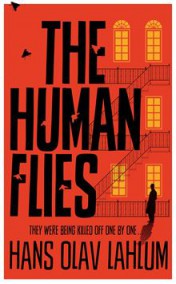
#55: The Human Flies (2010) by Hans Olav Lahlum [trans. Kari Dickson 2014]

Human FliesFor those of you who lament the decline of the modern detective novel – and we are legion, to be sure – I have three words: Hans Olav Lahlum.  The Human Flies, his debut novel, is by no means perfect – it’s in need of a good edit, as there’s a tendency to repeat ad infinitum information gleaned and interpreted elsewhere – but it’s honestly about as close to a classically-motivated, -structured, and -executed novel as I imagine you’ll find in the 21st century.  The fact that it has almost the exact same setup as the likes of The Wooden Overcoat, The Black Shrouds and Our First Murder with a killing in a guest-house (here a small apartment block) of which one of the denizens is undoubtedly guilty certainly helps, but Lahlum is also smart enough to build on this base in very classical ways.  But for a few dates and key events – it is set in 1968 – this could almost have been written in the late 1940s.
To add to the fun, it also starts with an impossible murder: gunshots heard in an apartment, people rush to the scene before the killer would have chance to get away, and upon opening the locked door there’s a dead body but no killer, no weapon, and no other exit.  Cue detective Kolbjørn Kristiansen – that and his being blonde is pretty much all you’re told about him, so the nickname K2 may purely be a result of his initials rather than also his physical size – who swiftly finds himself out of his depth, as everyone in the building seems blameless, even given the victim’s relative celebrity and potential for enemies.  And then he gets a phone call…

Continue reading →

#52: The Picture from the Past (1995) by Paul Halter [trans. John Pugmire 2014]

Picture from the Past largeA man seeing an old photograph of an unremarkable street scene on the cover of a book and being struck by an overpowering reaction of uncertain origin doesn’t sound like a promising start to an impossible crime novel.  However, it turns out that such an opinion is simply a sign of your lack of inventiveness, as Paul Halter can spin one hell of a tale from just that.  Well, okay, not just that, as there’s also the notorious Acid Bath Murderer going around destroying the remains of murder victims by pouring acid on them – and John Braid, our photo-phobic protagonist, is curiously unwilling to tell his young, trusting and rather new wife what he gets up to every day when he leaves the house.  And he’s rather keen on not letting his briefcase out of his sight…

Of course, Halter then complicates things further by throwing in a parallel narrative set some years previously in which the wife of a wealthy resident of a down-at-heel London suburb is murdered, tracing the impact of that murder upon the woman’s husband and children.  Clearly the two stories must be related, but how?  And who is responsible for the deaths in each thread? Continue reading →

#51: Two novellas – The Single Staircase (2012) and WDYG (2013) by Matt Ingwalson

Single Staircase WDYG

“Self-published” is, I’d wager, the phrase most likely to strike fear into the heart of even the most ardent book-lover.   After all, that’s how we had Fifty Shades of Grey inflicted upon us, and the rise of ebooks (a great thing as far as I’m concerned, as look at the number of classic crime titles now available via that medium) has given new scope to the possibilities for getting a book out to an audience without first taking a detour via editors, proof-readers, fact-checkers, or any of the countless bastions of velleity that could previously be taken as read upon picking up a book.

However, just as Patrick Ness has shown us that not everything labelled YA need be treated disdainfully, so self-publishing will produce the odd gem, and Matt Ingwalson’s duo of impossible crime novellas featuring detectives Owl and Raccoon definitely fall into this category.  And, as it’s Christmas and you’re likely to be busy people, I’m flashing them up now as a recommendation for a couple of quick reads to fit in between the chaotic scenes of this festive period (or, y’know, any other time that suits).

Continue reading →