Reviews
 Identity and location,
 #225: Rain Dogs (2015) by Adrian McKinty
 Here’s a poser for you: a woman’s body found in a castle, but the castle was searched before it was locked up for the night and she wasn’t there, and she could not have gotten in afterwards thanks to a combination of the partially-surrounding sea, a two-ton portcullis, and CCTV coverage. If it’s suicide, how did she get in? And if it’s murder, how did the murderer get in and out? No secret passages, no hidden rooms…howdunnit? After some misgivings about Adrian McKinty, I’m proving myself an actual adult by giving this impossible crime of his, set in 1987’s Northern Ireland amidst the sectarian upheaval most commonly referred to as ‘The Troubles’, a go. So, how did we do?
Continue reading
#223: A Study in Contrasts – Case Closed (a.k.a. Detective Conan) Volumes 11 and 12 (1996) by Gosho Aoyama

 High summer, and a resident of an island tourist hotspot is found with the back of his head beaten in. The famous detective Asbjørn Krag is summoned, and as he attempts to solve the mystery of the murder we are taken into his confidence through the eyes of a nameless holiday-maker. Shenanigans, naturally, ensue. In many ways — some of which we’ll get to later — this is an archetypal GAD novel of crime and detection, but since we’re a good decade short of the form’s beginning we’re going to diverge from the expected tropes on more than a few occasions. Think of it as a piece of atmosphere with detective story interruptions for best results.
 What’s in a name? When you’re dealing with GAD authors, quite a lot, which is why I’ve read 71 books by Agatha Christie but have yet to pick up any by Mary Westmacott, or why so much attention is paid to the four books Barnaby Ross published in his two-year career. So when I say this Anthony Berkeley novel would be far better were it by Frances Iles, you will hopefully appreciate my point. I thought it worth looking at the genre’s arch convention-challenger — one of the
  Summoned by a distant relative to a secluded family pile, a young(ish) man finds himself isolated with a fixed cast of closely-related characters as money-hungry relatives, murder, and all other sorts of puzzle plotting chicanery inveigle themself onto the scene. Yes, in many ways No Flowers By Request takes the exact same ingredients as
  Summoned by an elderly relative to their secluded family pile, a young man finds himself isolated with a fixed cast of closely-related characters as murder, missing documents, an escaped lunatic, and all other sorts of puzzle plotting chicanery inveigle themself onto the scene. Yes, in many ways The Search for My Great-Uncle’s Head is a vade mecum for the Golden Age of detective fiction — vast elements of it will appear achingly familiar — and plays perfectly in time with the tattoo of 1937 that Rich has got many of us investigating this month for
 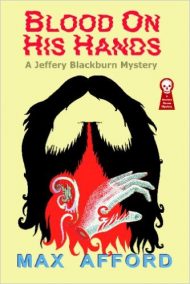 Philo Vance. ‘The Murders in the Rue Morgue’ by Edgar Allan Poe. Raspberry Jam by Carolyn Wells. ‘The Fairy Tale of Father Brown’ by G.K. Chesterton. The Clue of the New Pin by Edgar Wallace. A character who is detective novelist of some repute. Characters in a detective story discussing whether they are behaving like people in a detective story. All these references and more can be found in the opening salvo of Max Afford’s debut novel, following the discovery of a man stabbed in the back in his locked study with the only key to the specially-constructed lock in his possession, the murder weapon missing, and some subtly esoteric clews that give rise to plenty of canny evaluation and then re-evaluation. Aaah, I love the Golden Age.
 I was quite excited
  The Invisible Event