Reviews
 I generally try to do the books I have by an author in chronological order, and so should be writing about
 #206: Death of Anton (1936) by Alan Melville
 If you’ve never read a classic-era novel of crime and detection, what are you waiting for? There’s that Agatha Christine lady who wrote those David Suchet books, and the British Library has been putting out affordable classics for a little while now — go ahead and dig in. Sure, some of them are better than others, but if you want a good introduction to this type of thing then Alan Melville’s circus-set Death of Anton might just be the perfect place to start: it’s very witty, written with the lightest of touches, and wastes no time in maundering on in a wannabe hard-boiled fashion while dealing with the seeming imprecations of a circus where death keeps raising its head…
Continue reading
#203: Oil Under the Window (1936) by Norman Berrow
 Norman Berrow writes great policemen. His other characters are very good — he has Agatha Christie’s ability to give you an archetype plus enough to be quietly, subtly powerful — but his policemen are superb. After reading three later Berrows featuring Inspector Lancelot Carolus Smith and his lackeys, I’m leaping back to Berrow’s second novel here, and well before the halfway point I was lamenting the fact that this seems to be the only case calling on Superintendent Mellish, Inspector Sennet, and the delightfully earnest Constable Ensor. They take a standard Country House Mystery and transform it through their cheek, cleverness, and camaraderie into something that feels like the start of a very promising career indeed. Alas, not to be.
Continue reading
#200: Celebrating 100 Impossible Crimes with Paul Halter’s The Vampire Tree (1996) [trans. John Pugmire 2016]

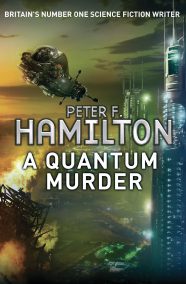 Respected, iconoclastic patriarch of an isolated group found murdered in his bedroom one night when no-one else could have entered the house? Check. All members of the household cleared from complicity in his murder? Check. Amateur detective-cum-paladin called in against his will to investigate? Check. Cantankerous police riled by this effrontery in spite of the obvious specialised knowledge this amateur brings? Check. Honestly, Peter F. Hamilton wrote such a classic detective yarn with A Quantum Murder, it’s almost a surprise to find it on the SF shelves. But when your genius amateur is also a fully-functioning enhanced psychic empath I suppose you’re not really in Agatha Christie territory any more…
 Department D3 of Scotland Yard houses the gargantuan form of Colonel March, investigator of the absurd and apparently impossible whose “mind is so obvious that he hits it every time”. It’s a shame March never got a novel of his own, because he has a lovely and direct way of dealing with the problems brought to him, but then he’s not exactly dissimilar to the Gideon Fell chap about whom Carter Dickson wrote so much under his real name of John Dickson Carr. So, yup, it’s impossibilities ahoy as we go through ten cases of the inexplicable thoroughly laid to rest by Carr’s own brand of chicanery and misdirection; it’s true: life is good to us sometimes, and we just gotta enjoy it when it happens…
 Sometimes you just have to bite a bullet: following the
  Over the summer, I read certain sections of Masters of the Humdrum Mystery by the
 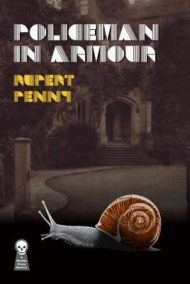 I am swiftly approaching the point where I will be reluctant to read any more Rupert Penny; he published a mere nine books, of which Policeman in Armour is the fifth I’ve read, and I don’t want to find myself in a situation where there’s no new Rupert Penny to pick up and lose myself in. I still have plenty to be getting on with — half of Carr, 10 Christies, 17 Berrows, countless undiscovered gems — but Penny holds a special significance for me because he is such a superb classicist and produced detective plots that walk the fine line between several stools without tripping and getting trapped between any of them (I apologise for any pain that mixed metaphor may have caused you).
 The setup of The Poisoned Chocolates Case is rightly very famous: a lady is killed when a box of chocolates given to her husband by another member of his gentlemen’s club — who himself received them unsolicited through the mail — turns out to have been laced with poison. The police, with no culprit in sight, allow six amateurs with a fascination for real life crimes to theorise and present their own solutions, each one appearing watertight until someone finds a flaw that brings the edifice down. For this conceit alone, and the genius way Berkeley uses his different sleuths to unpick the sparse and simple known facts, this book has passed into near-legend in detective fiction circles.
 The Invisible Event