Reviews
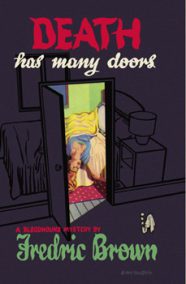 You know the score: a tough-guy PI in a business slump, sitting in his office typing out a letter using one finger (real men don’t type), when in walks a knockout redhead with “everything that should go with red hair”. She needs his help, he’s her last chance. Well of course, sweets, what seems to be the problem? She’s being hunted, y’see, someone wants to kill her. Calm down, baby doll what’s his name? Well, that’s the problem; she’s being hunted by…Martians. It’s a lovely little moment of confounded expectations early on in Brown’s pulpy tale and sets the tone for the number of conventions he refuses to conform to as things progress. And, since he’s far from smug about it, it works very well indeed.
#244: A Little Help for My Friends – Finding a Modern Locked Room Mystery for TomCat Attempt #1: Murder in the Oval Office (1989) by Elliott Roosevelt
When I first realised that impossible crime fiction was a thing — oh, happy day! — I did an internet search and came up with two priceless resources: this variety of lists on Mystery*File with an excellent introduction by John Pugmire (who went to form Locked Room International) and this list of recommended books from locked room conoisseur TomCat.
Continue reading
#243: The Case of the Surprise Locked Room Mystery – Baudolino (2000) by Umberto Eco [trans. William Weaver 2002]

 After two wonderful shin honkaku novels in The Decagon House Murders by Yukito Ayatsuji and
  I was pretty much goaded into this, you should know. Ben at The Green Capsule is diversifying his blogging to extend beyond the works of John Dickson Carr, and the first book he chose was
  An experienced pilot crashes his plane and dies, and at the inquest the jury returns a verdict of ‘death by misadventure’. They’re correct, and there’s nothing else to investigate. Nah, I’m kidding, of course — we’re deep in the Golden Age here, so it has to be more complicated than that, and before you know it there are amateur sleuths, mistaken identities, re-examination of bodies, codes, intrigue, and the threat of more murder zipping around like so many flies at a picnic. As an exemplar of what the Golden Age did so well, Death of an Airman joins
 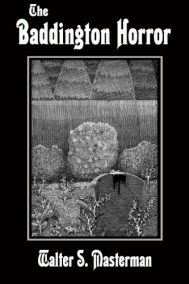 I love a country house mystery, especially those with a body on page one. So when the murder of ex-judge Sir Ernest Ferber in his private garden by man he sentenced harshly and the subsequent suicide of his assailant at the scene is communicated in the opening ten lines of The Baddington Horror, we’re off to a very good start. To my understanding, Walter S. Masterman wrote as many ‘weird tales’ as he did novels of detection, and so it was always a little uncertain what I was going to get here. But the first chapter could not be more Golden Age detection if it tried: murdered aristocrat, retired amateur detective who takes an interest, two big coincidences, and away we go…
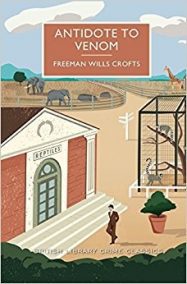 The reputation for being something of an interminable bore that still dogs Freeman Wills Crofts some 60 years after his death wants for evidence in Antidote to Venom. We’re about halfway through when the murder occurs, by which point you’ve had not only a highly sympathetic portrait of the central man in the affair, but also the convincing use of minor characters to create the situation in a way that relies on coincidence without feeling forced, an allusion to the Sherlock Holmes canon, and two — count ’em — legitimate jokes. It is spry, focussed, beautifully rich in intrigue and heartbreak, and balances its inverted and traditional elements perfectly. And when the investigation starts…oh, boy, are you in for a treat.
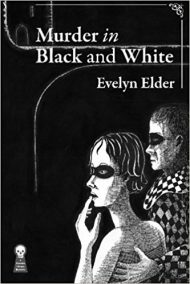 Identity and location,
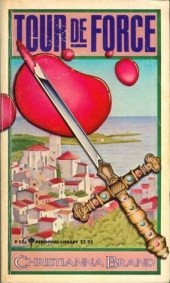
  Here’s a poser for you: a woman’s body found in a castle, but the castle was searched before it was locked up for the night and she wasn’t there, and she could not have gotten in afterwards thanks to a combination of the partially-surrounding sea, a two-ton portcullis, and CCTV coverage. If it’s suicide, how did she get in? And if it’s murder, how did the murderer get in and out? No secret passages, no hidden rooms…howdunnit? After some
  The Invisible Event