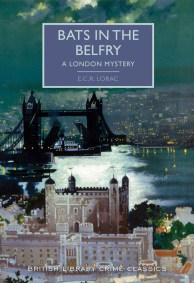
If you seek evidence of my tendency to over-commit where GAD is concerned, look no further than my reading and reviewing two E.C.R. Lorac titles and then buying a further, ahem, six before actually getting round to reading any more. For all her perceived failings — not as rigorous as Christie, not as refined as Sayers, not as dull as Marsh — I’ve found my first few books by Edith Caroline Rivett to distinguish themselves in her approaching fairly standard setups with an air of trying to do something a little uncommon. We’re not reinventing the wheel, but we are putting a different tread on the tyres.
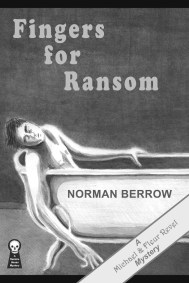
You can tell it’s been a tough couple of weeks, because I’ve reverted to my reading Happy Place — Carter Dickson, Max Afford, and now Norman Berrow (there was a traumatic Ngaio Marsh experience in there, too, but the less said about that the better). My entirely non-chronological sampling of this delightful Kiwi — probably the most purely joyous GAD author I read — continues apace, since this is the preceding title to Murder in the Melody (1940), the last Berrow I read…no, I have no idea why I’m doing it like this. I’ll make sure his debut The Smokers of Hashish (1934) is the next Berrow I pick up. Just bear with me, eh? It’s been a tough couple of weeks.
There is a lot to be said for not letting your heroes grow up. From Jonathan Creek’s middle-aged ennui to the doddery old bastard many authors have tried to tell us Sherlock Holmes became, the majority of attempts to drag these fictional wonders into ‘reality’ typically turn in a strong argument in favour of youthful literary immortality. I already know scores of middle-aged men who regret their life choices; I do not know any impossible crime-solving magician’s assistants who live in windmills — that’s why I seek escape in fiction. If want to watch a man slowly disintegrate under his own self-loathing, there are plenty of mirrors in my house.
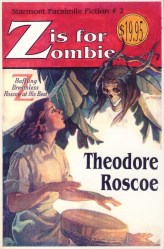
It’s just over a year since Bold Venture Press republished Theodore Roscoe’s Murder on the Way! (1935), in which I was fortunate enough to have a hand. As luck would have it, I recently acquired a copy of Roscoe’s equally zombie-centric and Haiti-set ‘Z is for Zombie’ (1937) and thought the two might bear some comparison.
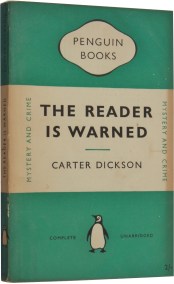
I will admit the chance that I am overrating this book slightly, but, dude, I loved it. The central premise — that Herman Pennik can both read the minds of others and kill people just by thinking about them, using a hitherto-unexplored scientific principle he calls Teleforce — has the absurdity of overwroughtness that distinguishes the Henry Merrivale books under John Dickson Carr’s Carter Dickson nom de plume (see: The Unicorn Murders (1935), The Punch and Judy Murders (1936), etc). But Carr plays it remarkably straight, keeping his phantasmagorical flourishes to a minimum and concentrating on plot and glorious atmosphere.
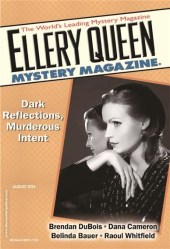
Following the hugely enjoyable and terrifyingly ingenious machinations of Szu-Yen Lin’s Death in the House of Rain (2006), published in English last year by Locked Room International, I was delighted to discover that another Lin story was available in English, ‘The Ghost of the Badminton Court’ from the August 2014 edition of Ellery Queen Mystery Magazine.
Disclosure: I proof-read this book for Locked Room International in February 2018.
There will come a time when my love of the puzzle novel will result in me having to recuse myself where reviews are concerned, I think, because my response to the machinations of the most complex of GAD is simply not that of a normal human being. Until such a time, however, I shall continue to frolic and bask in the joy of the likes of Noel Vindry and his pattern-obsessed kin because, frankly, it’s just so much fun. The Double Alibi (1934) is doubtless the most twisty yet translated into English by John Pugmire, and if anything approaching this level of ingenuity remains then, dude, I hope we get to see that as well.
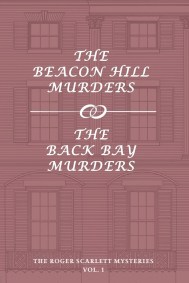
The classic GAD puzzle plot being the complex and obstreperous beast it is, we should not be surprised that sometimes it took two brains to wrestle in into readable shape (under a single name so as to simplify things) — Ellery Queen, Francis Beeding, Kelley Roos, Patrick Quentin, etc. Now, thanks to the work of Coachwhip and Curtis Evans, we can all add another collaborative nom de plume to our libraries with Dorothy Blair and Evelyn Page’s Roger Scarlett and their Boston-set country house conundra. And, as with their distinguished kin, they prove to have an equally troublesome first swing at this while also showing a huge amount of promise.
Someone who venerates plot to the extent I do should not have enjoyed this book as much as I did. There’s a Nancy Drew-esque dollop of convenience at every turn, and a series of coincidences and sudden realisations that just happen to tie these actions together far more tightly than seems possible at first glance…and I should abominate such quick answers. But, holy hell, it’s also superbly written, and rich in the pulp sensibilities that resulted in me crowning Jim Thompson one of the four most important male crime writers of all time. Classicaly constructed it isn’t, but gloriously entertaining it certainly is.





 The Invisible Event