Had I gotten round to this sooner, it may have qualified as a Modern Locked Room Mystery for TomCat attempt, but TomCat has already read this one and so really all that remained was to see if I was equally underwhelmed by it.
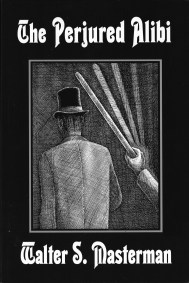
I’m on a bit of a Ramble House kick at the moment: Rupert Penny, Norman Berrow, Walter S. Masterman, with E.C.R. Lorac coming soon. The Perjured Alibi (1935) is my third Masterman title to date, and I’d intended this to be where I’d make the decision whether or not to persevere with him. But, well, I have a copy of Robert Adey’s Locked Room Murders (1991) now and that’s got me thinking that I should at least give the remaining couple of impossibilities a go — especially as it turns out Ramble House have recently republished his debut The Wrong Letter (1926), which I’ve been after for a while. So it would be churlish to stop here…
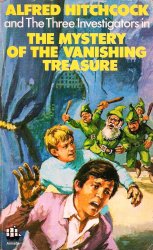
Much like last week, the intention had been to bring you another episode of the Men Who Explain Miracles podcast today, but, well, it seems we won’t get to that this month. And so let us return to the world of Jupiter Jones, Pete Crenshaw, and Bob Andrews and another mystery requiring their attentions.
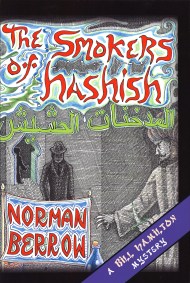
Aaaah, Norman Berrow. Such highs, such lows, so much middle ground. I can’t think of anyone else who leaves me on such a knife-edge: with a few adjustments here and there Berrow could well have written some genre classics, and it’s often an agonising fascination waiting to see which way the book falls. So now we’re back at the very beginning with his first novel The Smokers of Hashish (1934), decidedly more adventure than detection, where he applies his chameleonic tendencies to some (ahem) intrigue in Tangier. As you may expect from a book of this era with this title, the result is pulpy fun, though with two neat moments to distinguish it.
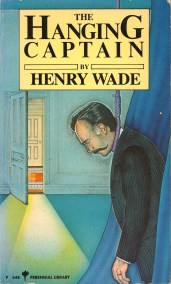
When The Murder Room, the ebook-only arm of publishing house Orion, announced a couple of years ago that they’d be releasing a bunch of Henry Wade’s novels I got quite excited and then proceeded to buy none of them. Instead, I eventually acquired three hard-to-find Wade novels in paperback — The Duke of York’s Steps (1929), The Hanging Captain (1933), and the apparent classic Heir Presumptive (1935) — and proceeded to read none of them, too. So, as I v-e-r-y-s-l-o-w-l-y make my way through these, I’m pleased to report that here it certainly seems Wade has learned a lot from that earlier book and grown significantly as an author in four short years.
For this blog alone — that is, discounting books I manage to fit in which do not feature on here — my reading has in recent weeks seen a degree of decade-hopping it doesn’t normally achieve: 1971, 1948, 2011, 1938, 2018, 1940, 1939, 2018 and now 1932. The upshot of this time travel is a reassurance that I’m still more of a fan of the legitimate 1930s style of murder mystery than I am its more modern second cousin. Even the flaws in this type of story are more enjoyable, partly I suppose because (and it bears repeating) of just how damn difficult a well-clewed puzzle plot is to write. As here, the first swing often makes up in enthusiasm for what it lacks in finesse.
The last two Saturdays on here have seen me dive into modern hardback novels, so I thought I would continue that trend and pretend once more that I’m doing this purely for TomCat’s benefit.
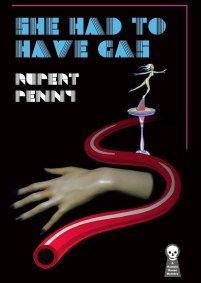
I consider Rupert Penny to be in the front rank of GAD authors I have stumbled over, and yet have somehow gone a full year without reading anything by him. So let’s get things rolling with the very un-Pennyian structuring trick that’s now de rigeur in modern crime fiction — Two Seemingly Independent Threads That Shockingly Turn Out To Be Linked: the vanishing of a possibly-dead lodger from her room and the near-simultaneous disappearance of a young woman following a financial demand from an ex-lover to not reveal compromising letters she sent him. Seriously, where would blackmailers be without the Royal Mail?
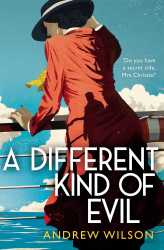
Andrew Wilson’s first novel featuring Agatha Christie, A Talent for Murder (2017), met with positive reviews but seemed rather more Highsmithian than detection in concept (perhaps unsurprising, as Wilson has written a biography of Patricia Highsmith) and so I passed it over. And then John Norris — patron saint of the obscure, the forgotten, and the damned-near impossible-to-find — posted this rave review of the follow-up, A Different Kind of Evil (2018), and definitely caught my interest.
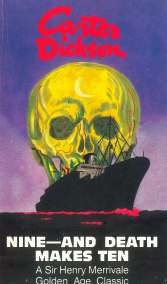
Yes, this was supposed to be The Spanish Cape Mystery (1935) by Ellery Queen in preparation for the forthcoming spoiler-filled look at Halfway House (1936). Yes, you all warned me that book was awful, and you were correct. Let’s instead board a cruise ship stuffed with munitions at the outset of the Second World War and watch the eight — or is it nine? — passengers slowly get to know each other until one of them is found murdered in their cabin, the corpse peppered with fingerprints which do not match those of anyone on board. Aaah, I feel better already — man, I love the work of John Dickson Carr; the idea of having never discovered it makes me feel a little unwell.