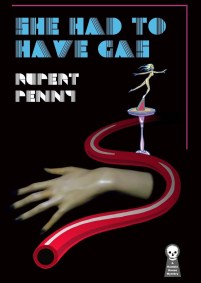
I consider Rupert Penny to be in the front rank of GAD authors I have stumbled over, and yet have somehow gone a full year without reading anything by him. So let’s get things rolling with the very un-Pennyian structuring trick that’s now de rigeur in modern crime fiction — Two Seemingly Independent Threads That Shockingly Turn Out To Be Linked: the vanishing of a possibly-dead lodger from her room and the near-simultaneous disappearance of a young woman following a financial demand from an ex-lover to not reveal compromising letters she sent him. Seriously, where would blackmailers be without the Royal Mail?
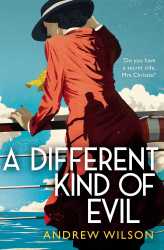
Andrew Wilson’s first novel featuring Agatha Christie, A Talent for Murder (2017), met with positive reviews but seemed rather more Highsmithian than detection in concept (perhaps unsurprising, as Wilson has written a biography of Patricia Highsmith) and so I passed it over. And then John Norris — patron saint of the obscure, the forgotten, and the damned-near impossible-to-find — posted this rave review of the follow-up, A Different Kind of Evil (2018), and definitely caught my interest.
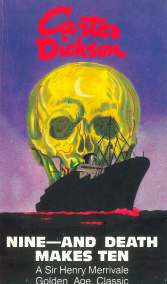
Yes, this was supposed to be The Spanish Cape Mystery (1935) by Ellery Queen in preparation for the forthcoming spoiler-filled look at Halfway House (1936). Yes, you all warned me that book was awful, and you were correct. Let’s instead board a cruise ship stuffed with munitions at the outset of the Second World War and watch the eight — or is it nine? — passengers slowly get to know each other until one of them is found murdered in their cabin, the corpse peppered with fingerprints which do not match those of anyone on board. Aaah, I feel better already — man, I love the work of John Dickson Carr; the idea of having never discovered it makes me feel a little unwell.
I shall eventually abandon any pretence that my occasional forays into post-1990 impossible crime novels are purely for the benefit of my fellow impossible crime enthusiast TomCat, but not just yet. So let’s all take a moment to bask in how selfless I am, reading books I have no interest in myself purely so that TC can find something more modern to satisfy the cravings of the Impossible Murder Phanatic (or ‘Imp’, as those people have definitely been calling themselves for years now).
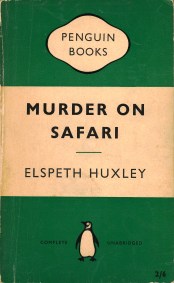
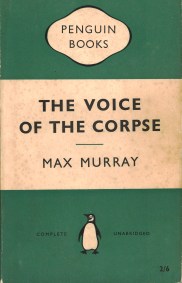
Lightning could strike twice, right? I went into Max Murray’s The Voice of the Corpse (1948) last week knowing nothing about it and that turned out rather well, and no less authorities than Xavier Lechard and Nick Fuller had enthused about this in recent weeks. Plus, in the comments on that above post, TomCat — who knows my standards pretty well, I feel — called Murder on Safari (1938) “a wonderfully written detective story with a splendid backdrop, [that] plays scrupulously fair with the reader”. So, despite (deliberately) knowing nothing about this one either, this wasn’t a risk at all. Kick back, and let the good times roll.
When unpopular spinster Angela Pewsey is killed by a blow to the head — “the first time in many years that someone had done something in her vicinity about which she was not thoroughly informed” — following a spate of poison pen letters, it is met with quite spectacular disinterest by the other denizens of the small village of Inching Round. And, indeed, the attitude which solicitor Firth Prentice must confront when brought down from London to investigate (quite against his will) by the comely Celia Sim is that, frankly, most people would rather shake the murderer’s hand than see anyone hang for such a public-spirited act.
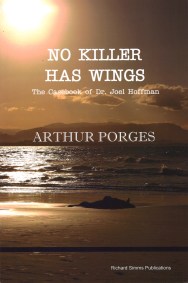
Arthur Porges is an author who seems to’ve faded somewhat from memory despite (or maybe ‘on account of’) writing in a spread of genres. To myself, he’s of most interest as the creator of fiendishly ingenious impossible crime stories, and it was with much delight that I learned of Richard Simms’ on-going project to get all Porges’ short fiction reprinted…and with much impatience that I awaited the Joel Hoffman stories, having first encountered Porges through ‘No Killer Has Wings’ in a Mike Ashley-edited collection…and with much consternation that I admit it’s taken me far too long to get round to this collection since its publication in 2017.
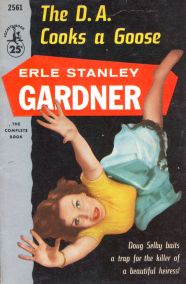
It is slightly over a year since I decided to reread the Doug Selby novels of Erle Stanley Gardner, and while I sort of imagined I’d be done by now — nine books into twelve months goes fairly easily — I had not counted on how much I enjoyed the ones I’d read first time around, and so how I would draw out this revisiting so as to enjoy them equally now. And, even more fun, it turns out that I hadn’t read this one (side note: does anyone actually read the synopses of authors they love in advance of reading the book? You’re gonna read it anyway, right, so why would it matter what it’s about?) — so it felt like a new Doug Selby novel even though, yes, no, I’m aware it isn’t.
Most people who write and publish one novel go on to complete a second, yet the second is often the one deemed ‘difficult’. I suppose it’s the not knowing whether a universe and characters previously deployed will stretch over another 100,000 words, or whether a writer used up all their good ideas on Book 1 and so Book 2 is likely to fall on drier ground.
I’m back from holiday, and would you care to guess how many books I read whilst travelling around the USA for a fortnight? Pick a number, and then click to find out if you were close…




 The Invisible Event