Reviews
#542: One Man’s Trash is Another Man’s Treasure in The Mystery of the Fiery Eye (1967) by Robert Arthur
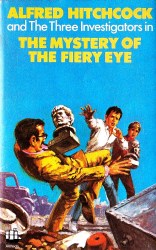
The human mind is obsessed with patterns, because by spotting them we make sense of nature; be it the golden ratio in the seed spirals in the head of a sunflower, fluid dynamics in the formation of sand dunes, or the growing box office returns of successive Fast & Furious movies, patterns are hard to resist.
Continue reading
#541: The Late Monsieur Gallet, a.k.a. Maigret Stonewalled (1931) by Georges Simenon [trans. Anthea Bell 2013]
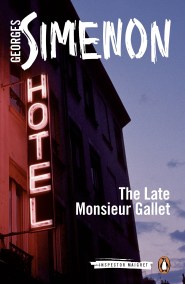


It’s been a number of years since I last read any Georges Simenon — the stark nihilism of The Stain on the Snow (1953) and the diaphanous erotic tragedy of The Blue Room (1964) left an impression if not exactly a desire to read further. Simenon is hard to ignore, however, partly because he wrote so many damn books and partly because Penguin have done such a fine job of reissuing them lately that they take up about 40% of the shelf space in most bookshops. I’ve always been of the impression that he is far more about people than plot…which is probably just as well, since on the evidence of this early effort he can’t plot for toffee.
Continue reading
#539: The Origin of Evil – Contrasting Malice Aforethought (1931) by Francis Iles with The Colour of Murder (1957) by Julian Symons

Genre is essentially the formalisation of deja vu. Those of us who return to — or avoid — particular genres do so because of the essential ingredients that recur there, whether through implicit rules or otherwise.
Continue reading
#538: The Cask (1920) by Freeman Wills Crofts
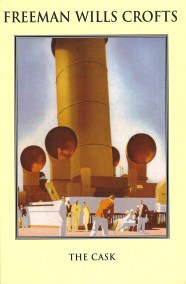
If I asked you to name the debut novel of a hugely influential detective fiction author that was originally written in 1916, published four years later, featured a character called Hastings, and had its ending rewritten at the publisher’s request to remove a courtroom/trial sequence…you’d no doubt be surprised just how much The Mysterious Affair at Styles (1920) by Agatha Christie and The Cask (1920) by Freeman Wills Crofts had in common. The intervening century has been kinder to Christie than to Crofts in both literary reputation and availability, and their divergence from these surface-level similarities is no doubt a part of that.
Continue reading
#536: The Futile Alibis – These Daisies Told: The Casebook of Professor Ulysses Price Middlebie [ss] (1962-75) by Arthur Porges

The work of Arthur Porges in the field of impossible and baffling crimes carries a salutary lesson: do not mess with mathematicians.
Continue reading
#535: The Colour of Murder (1957) by Julian Symons
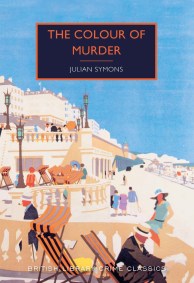
John Wilkins has never quite fitted in anywhere: not in his father’s affections, not in the Army, not at his tennis club, not even in his marriage. Even when he feels as if he acquits himself well at something, there’s still a part of his mind he closes off for fear that he’ll realise “that the whole thing is a daydream and you’re just being stupid”. And so when a chance encounter with librarian Sheila Morton stirs in Wilkins something he’s not experienced for quite some time — “I’m not attractive to women” he tells us on more than one occasion — it’s also the first step along a road that ends with murder. The question is, whose murder?
Continue reading
#532: Murder Among the Angells (1932) by Roger Scarlett
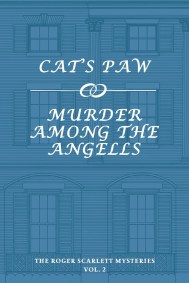
TomCat has been urging me to read this fourth novel from Dorothy Blair and Evelyn Page’s ‘Roger Scarlett’ nom de plume for a while now, not least on account of our shared enthusiasm for impossible crimes. But I’m a stickler for my Ways and so have worked my way to it chronologically, and I’ve really enjoyed seeing the first three novels improve in style, scope, scheme, and substance from book to book. Here again, then, is another murder amidst a tightly-packed coterie of suspects in one of Boston’s mansions, with again enough cross-purposes, desires, and hidden intentions to make any one of them a killer…so whodunnit?
Continue reading
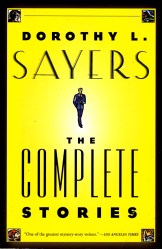
#530: Serving Up a, uhm, Verger’s, er, Breakfast – The Montague Egg Stories of Dorothy L. Sayers (1933-36)
 The Invisible Event