Author: JJ
#6: The Phantom Passage (2005) by Paul Halter [trans. John Pugmire 2015]
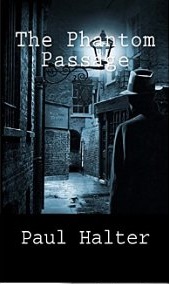 Under the guise of Locked Room International, John Pugmire has been providing English translations of (among others) Paul Halter’s impossible crime novels for a few years now, and there can be little more fitting than his latest effort as the opening salvo in my cataloguing of the undoable provably done.
It really is time we started appreciating Halter on his own terms, so let’s mention John Dickson Carr now – hey, I adore the man, so don’t think I’m being dismissive – and look at what makes Halter stand apart. Carr undoubtedly revolutionised the impossible crime/locked room genre and left a wake that it’s sill virtually impossible to sail in these waters without disturbing, but Halter is increasingly showing himself capable of the impossible. After some nice touchstones in the earlier LRI works – murderers leaving no footprints in snow or mud (The Lord of Misrule/The Seven Wonders of Crime), impossible body-swaps in locked rooms (The Fourth Door) – we’re now getting to see a greater diversity in Halter’s imagination and smoothness in his realisation. The ‘murder by genie’ in The Tiger’s Head was a lovely riff, the central idea of The Crimson Fog was superbly realised (please don’t find out what it is in advance, you really should read the book in total ignorance), and now The Phantom Passage goes even futher.
Continue reading
#5: Why I love… classic crime fiction
 I am not the most practical of men. Put me in the garden and ask me to dig you a hole of any size, I’ll do so happily. Give me an unlimited supply of timber and ask me to build a rabbit hutch, however, and you’re going to be waiting a very long time indeed. I’d theorise the hell out of it – internal height = average rabbit height + 3 standard deviations + largest recorded vertical rabbit hop from rest – but the application of saw to wood is going to go very wrong.

I remember reading an interview with Lee Child in which he likened writing mystery novels to designing a house; if you decide you want an extra window in a room then that’s going to involve moving the sockets you’ve got on the wall, possibly moving the door and so the light-switch, etc. If when writing the final chapter of your novel and suddenly decide someone else should be the killer but you change nothing in the preceding pages…well, catastrophe. My love of theory married to this appreciation of plot construction is what drew me to crime novels in the first place, and the more I read the more I liked it. I began to recognise that, the further back you went, the more of a factor the plotting became and that for sheer joyous planning you really couldn’t beat the classics. There’s a moment in Agatha Christie’s Evil Under the Sun where a bottle being thrown out a window is surprisingly significant – remove that one simple action and a lot of stuff elsewhere doesn’t make sense. Honestly, I think that’s awesome.
Continue reading
#4: The Wooden Overcoat (1951) by Pamela Branch
 The less you know about Pamela Branch’s debut novel the more you’ll get out of it, and obviously this poses a problem for my nascent blog. A few cultural touchstones, then: it falls somewhere within kicking distance of Alfred Hitchcock’s The Trouble with Harry (1954), 1980s comedy classic (one of those words should be in ironic quotation marks, surely?) Weekend at Bernie’s (1989), and the output of Kelley Roos. There is a dead body. It must be hidden. Difficulties ensue. And this undertaking (if you will) is very, very funny.

The funny is a difficult one, because I’m honestly not sure at which point it becomes funny. It starts off strange and becomes only stranger as it goes, all the while introducing a gentle absurdity that, at least for me, tips over into outright hilarity at times. It’s not consistent rolling-in-the-aisles comical, but I’d be surprised if you could read too much of this – especially in the set-pieces like the ‘picnic’ and, later, its glorious counterpoint in chapter 18 – without at least a wry smile on your face. There are a few quite lovely surprises, hence my recommendation that you know as little as possible going in, and it all stays far enough this side of zany, bawdy nonsense to remain just about believable.
Continue reading
#3: The Smiling Corpse (1935) by Philip Wylie and Bernard A. Bergman
 The use of real figures in fiction, and particularly crime fiction, usually goes one of two ways. Philip Kerr has enjoyed tremendous success with his Bernie Gunther novels set in and around Nazi Germany and tying in all manner of historical figures, but his earlier Dark Matter – utilising Isaac Newton as a detective – was less successful. And at least Kerr has the freedom of those real people being long departed (conspiracy theories aside) and so largely free to do with as he pleased. When Philip Wylie and Bernard A. Bergman originally published The Smiling Corpse, the four very real detective writers at its centre (plus sundry background artists) were still very much alive, so one can understand their caution in wanting to keep their names of the final manuscript. Imagine a novel published today in which Lee Child, Michael Connelly, Patricia Cornwell and one of James Patterson’s co-writers solved a crime and you get some idea of what we’re talking about.

Continue reading
#2: What’s in a name?
So, not to get all insecure and introspective in my first real post, but I wanted to outline choosing “The Invisible Event” as the title for my crime fiction blog. Broadly speaking there are three reasons, and they get more fanciful as they go.
The first comes from my love of impossible crimes and how in impossible crime fiction, by dint of the name, there is something that must have happened but at first glance simply can’t have – a murderer has vanished from a watched room, say. In order for that to have occurred, clearly they must have been invisible and so the “invisible event” is whatever puzzle is presented in a locked room mystery.
The second is a variation on that, the idea of a clue in a crime novel that is so well hidden you miss it completely at first reading, but when brought to your attention at the end it’s the one thing that was to all intents and purposes invisible and would have unlocked everything for you, the reader.
The third, and the phrase itself, comes from from Hamlet, (Act 4 scene 4) who is talking about Fortinbras when he says:
Witness this army of such mass and charge
Led by a delicate and tender prince,
Whose spirit with divine ambition puff’d
Makes mouths at the invisible event
 The Invisible Event