Author: JJ
 I don’t read many living authors — not intentionally, it’s just that the current trend of a lot of fiction doesn’t intersect with my tastes very often — and so I’m saved the concern of how they comport themselves on a daily basis and how this impacts my feelings about them. But following a comment by Dan at The Reader is Warned about
 #204: “I’m afraid, you know, one does enjoy a bit of malice now and then…” – Yearning for the Golden Age in Agatha Christie’s By the Pricking of My Thumbs (1968)
And so I enter the final decalogue of Agatha Christie’s works — from here to Miss Marple’s Final Cases (1979) — with a return visit to Thomas ‘Tommy’ Beresford and his wife Prudence, known (for reasons I genuinely cannot recall; someone will doubtless enlighten me in the comments) as Tuppence. The Beresfords are unique in Christie canon in that they are the only repeating characters who seem to age in real time, and in doing so they provide an overview of Dame Agatha’s writing career in just a handful of books.
Continue reading
#203: Oil Under the Window (1936) by Norman Berrow
 Norman Berrow writes great policemen. His other characters are very good — he has Agatha Christie’s ability to give you an archetype plus enough to be quietly, subtly powerful — but his policemen are superb. After reading three later Berrows featuring Inspector Lancelot Carolus Smith and his lackeys, I’m leaping back to Berrow’s second novel here, and well before the halfway point I was lamenting the fact that this seems to be the only case calling on Superintendent Mellish, Inspector Sennet, and the delightfully earnest Constable Ensor. They take a standard Country House Mystery and transform it through their cheek, cleverness, and camaraderie into something that feels like the start of a very promising career indeed. Alas, not to be.
Continue reading
#202: First Lines of First Impossible Crimes – The Answers!
If you still wish to pit your wits against my “From which novel is this the first line?” quiz of debut impossibilties, do not click to read more as the answers are below. But you probably figured that from the title of the post, eh? All the detective fiction is rubbing off on you…
Continue reading
#201: For Carr vs. Christie – Start Your Engines…

Okay, the results of the vote for your collective choice of the best individual novel by John Dickson Carr and Agatha Christie are in, and it’s now fixed which two need to be read for the head-to-head comparison that Brad and I have planned for April. So, after over 100 votes in each poll (though not a multiple of three in either case, despite having three votes per author…) counting down the top five, we have…
Continue reading
#200: Celebrating 100 Impossible Crimes with Paul Halter’s The Vampire Tree (1996) [trans. John Pugmire 2016]

This, my 200th post on this blog, will also be the 100th to be tagged with the subject ‘Impossible Crimes‘ and — since my very first was a review of Paul Halter’s The Phantom Passage — I thought I’d hold this milestone to look at the most recent Halter translation from John Pugmire’s Locked Room International, which goes by the English title The Vampire Tree. I will probably do this at some length, though without mentioning specifics past the 25% mark, and with a brief mention of only one slight spoiler, signposted in advance. So, let’s get into it…
Continue reading
#199: A Quantum Murder (1994) by Peter F. Hamilton
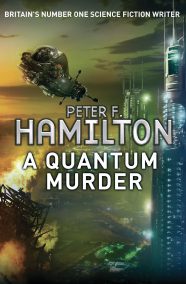 Respected, iconoclastic patriarch of an isolated group found murdered in his bedroom one night when no-one else could have entered the house? Check. All members of the household cleared from complicity in his murder? Check. Amateur detective-cum-paladin called in against his will to investigate? Check. Cantankerous police riled by this effrontery in spite of the obvious specialised knowledge this amateur brings? Check. Honestly, Peter F. Hamilton wrote such a classic detective yarn with A Quantum Murder, it’s almost a surprise to find it on the SF shelves. But when your genius amateur is also a fully-functioning enhanced psychic empath I suppose you’re not really in Agatha Christie territory any more…
Continue reading
#198: The Tuesday Night Bloggers – The First Lines of First Impossible Crimes…
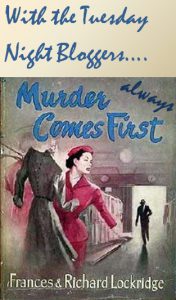
 Department D3 of Scotland Yard houses the gargantuan form of Colonel March, investigator of the absurd and apparently impossible whose “mind is so obvious that he hits it every time”. It’s a shame March never got a novel of his own, because he has a lovely and direct way of dealing with the problems brought to him, but then he’s not exactly dissimilar to the Gideon Fell chap about whom Carter Dickson wrote so much under his real name of John Dickson Carr. So, yup, it’s impossibilities ahoy as we go through ten cases of the inexplicable thoroughly laid to rest by Carr’s own brand of chicanery and misdirection; it’s true: life is good to us sometimes, and we just gotta enjoy it when it happens…
 The Invisible Event