Author: JJ
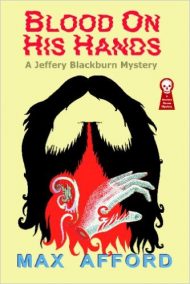 Philo Vance. ‘The Murders in the Rue Morgue’ by Edgar Allan Poe. Raspberry Jam by Carolyn Wells. ‘The Fairy Tale of Father Brown’ by G.K. Chesterton. The Clue of the New Pin by Edgar Wallace. A character who is detective novelist of some repute. Characters in a detective story discussing whether they are behaving like people in a detective story. All these references and more can be found in the opening salvo of Max Afford’s debut novel, following the discovery of a man stabbed in the back in his locked study with the only key to the specially-constructed lock in his possession, the murder weapon missing, and some subtly esoteric clews that give rise to plenty of canny evaluation and then re-evaluation. Aaah, I love the Golden Age.
#214: The Notion of Commotion, and the Demotion of The Devotion of Suspect X (2005) by Keigo Higashino [trans. Alexander O. Smith & Elye J. Alexander 2012]
Every so often, a novel is adopted by more mainstream fiction when it is in fact pure genre. Typically the result of this is that those of use who read the good stuff in our own genre have to put up with a ripple of brouhaha while we’re lectured by the broadsheet darlings as they fall over themselves to recommend something as inventive or ingenious when in fact we’ve read three books more inventive or ingenious in the last month alone (or, worse, phone someone in to explain incorrectly to others who don’t know any better). In SF, say, we’ve recently been subjected to Hugh Howey’s Wool trilogy which is…well, every single cliché you can name and about as awful as you’d expect, but it especially seems to be happening more and more in crime fiction.
Continue reading
#213: On Audacity and How to Prepare for It, via John Russell Fearn’s Thy Arm Alone (1947)

Sometimes someone is so taken with a book that you can’t help but stop and take notice yourself. So when TomCat was full of praise for this impossible crime, it hopped up my TBR pile with the effortlessness of a mountain goat on an escalator. I was promised audacity, and I love a bit of authorly audaciousness where an impossible crime is concerned — indeed, the boldness of such schemes as employed in John Dickson Carr’s The Man Who Could not Shudder (1940) or John Saldek’s Invisible Green (1977) make them firm favourites of mine, and if a book of this ilk has chutzpah enough to make TomCat and John Norris sit up and pay attention, then surely you must be onto a good thing.
Continue reading
#212: The Conjure-Man Dies (1932) by Rudolph Fisher
 I was quite excited when I discovered that this sole mystery novel from Rudolph Fisher was to be republished under the revived Detective Club imprint. To my understanding it had impossible crime overtones with a vanishing body, and GAD fiction doesn’t exactly offer up a swathe of BAME authors, so this account of 1930s Harlem promised to fulfil all sorts of fascinating niches — not least how a black author would represent the experience of being a black man in America when times were not as enlightened as we hope them to be now. But, first things first, yes we do get an impossibly-vanishing body, provided by a Red Widow Murders-esque “How could he be talking if he was dead?” impossible murder for which there was no time in which it could have been committed; so do we have a classic on our hands?
Continue reading
#211: Did The X-Files Miss a Trick?

I know, I know, it looks like I’ve forgotten my brief for this blog, but I haven’t. This is something I’ve been mulling for a little while, and I wanted to raise it here to see whether it’s been worth my time.
Continue reading
#210: The Golden Age of the Golden Age of Detective Fiction…
Okay, here goes nothing…
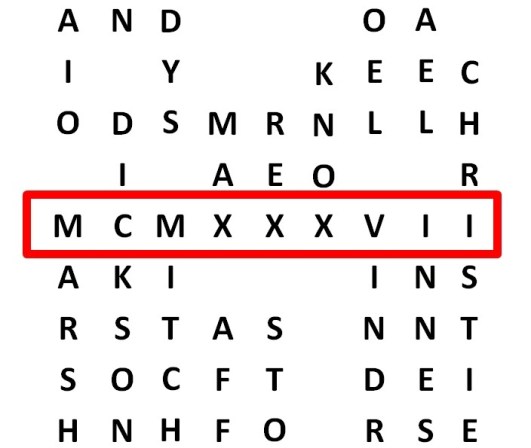
In a recent post about Agatha Christie’s By the Pricking of My Thumbs (1968) I made an off-hand reference to something I’ve come to hold as a sort of metric in my detective fiction reading, calling 1937 the “most Golden Age year”. Some of you have asked me to expand on this, and what follows shall be my attempt to explain my having said as much.
Continue reading
#209: No Coffin for the Corpse (1942) by Clayton Rawson
 I generally try to do the books I have by an author in chronological order, and so should be writing about The Footprints on the Ceiling (1939) here, but when TomCat described NCftC in the comments of my review of Rawson’s first Great Merlini novel Death from a Top Hat (1938) as “abysmal” saying that it “began very promising and then turned into one of the worst locked room mysteries I’ve ever had the misfortune of stumbling across”…well, I just had to try it out. I mean, sure, TomCat doesn’t like Rupert Penny’s Sealed Room Murder (1941) and so is immediately suspect, but I think I’ve shown myself willing enough to believe the very best of any books I try to read, and it might be interesting to go in expecting a dud. So, let’s get into it…
Continue reading
#208: The Iron Chariot (1909) by Stein Riverton is Now Republished by Abandoned Bookshop!


 If you’ve never read a classic-era novel of crime and detection, what are you waiting for? There’s that Agatha Christine lady who wrote those David Suchet books, and the British Library has been putting out affordable classics for a little while now — go ahead and dig in. Sure, some of them are better than others, but if you want a good introduction to this type of thing then Alan Melville’s circus-set Death of Anton might just be the perfect place to start: it’s very witty, written with the lightest of touches, and wastes no time in maundering on in a wannabe hard-boiled fashion while dealing with the seeming imprecations of a circus where death keeps raising its head…
 The Invisible Event