
It looks like I might be making these ‘Ten Favourite…’ lists a thing, having previously done fictional detectives and British Library reissues; today, we turn our attention to the great work done by Ramble House, publishers of an unusual mix of crime and weird fiction.
My interest being squarely in the former of those two categories, I offer for your consideration today ten crime and detection novels RH have made accessible and which I have greatly enjoyed for various reasons I’ll hopefully outline below. And so, in publication order, I give you…
1. The Devil Drives (1932) by Virgil Markham
I mean, where to start with The Devil Drives (1932)? If Lewis Carroll ever attempted to write a detective novel, he’d probably come up with something like this loosely-linked series of escapades that takes pulp cliches, literary allusions, and an impossible drowning on dry land and somehow spins them all into a compelling and electric piece of pure genre greased lightning. What’s all the more surprising is how well-plotted the thing turns out to be, with every element folding into a payoff that’s well-judged and somehow makes you want to jump right back in again and see everything in a new light. Hell, I could read this once a month and get something new out of it each time…and if that’s not a recommendation, I don’t know what is. [My review]

2. The Bloodhounds Bay (1936) by Walter S. Masterman
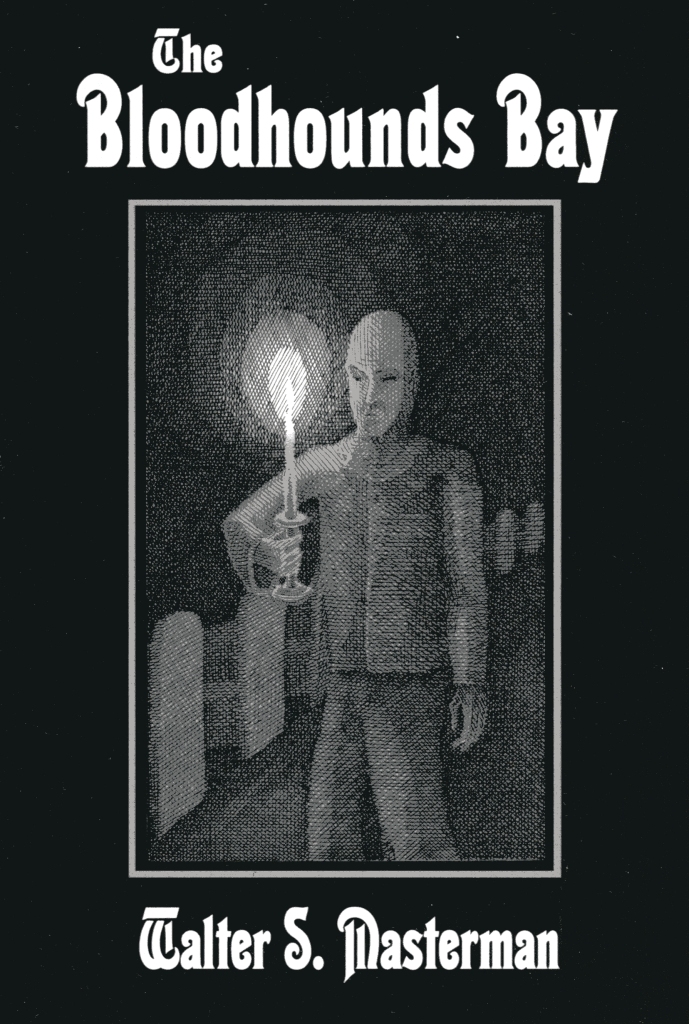
The strongest of the eight or so Masterman titles I’ve read to date, The Bloodhounds Bay (1936) has great atmospheric writing, a solid mystery, a well-hidden culprit, and some wonderful suspense to recommend it. Masterman’s late Victorian tendencies lend themselves well to this murder in a gloomy Abbey, with the associated denizens and their neighbours all going out of their ways to appear at once innocent and very, very guilty. It’s arguable that the genre had evolved beyond this sort of thing by this point, but it’s so much fun watching the tropes be deployed so neatly, why would you possibly object? [My review]
3. The Dead Are Blind (1937) by Max Afford
A murder mystery from the good ol’ days of radio, The Dead Are Blind (1937) does a great job with both its criminous plot and the milieu of a recording studio where the killing takes place. I have a fondness for Afford’s Owl of Darkness (1942) on account of its sheer weirdness, but with the benefit of hindsight I can safely say that this is his most rewarding book for the classic mystery aficionado. My understanding is that he wrote a lot for the radio, and I’d love to know if any of it was criminous — seeing how well the likes of John Dickson Carr adapted his approach for the auditory medium, I can well believe that Afford might have left some absolute gems behind which have been wrongly forgotten. [My review]
4. The Devil and the C.I.D. (1938) by E.C.R. Lorac
The four E.C.R. Lorac books published by RH vary hugely in quality, but they were keeping her in print long before the British Library made it cool. The Devil and the C.I.D. (1938) is in a three-way tie for my favourite Lorac novel, involving an unidentified man in diabolous costume appearing in the back of Inspector Macdonald’s car in the middle of a London pea-souper. It’s one of the few times Lorac gives you a hook on which a plethora of her contemporaries would love to have hung a plot, but this apparent genericness gives rise to a wonderfully complex plot that carries some genuine surprises. Lorac’s more diverse than this, but it’s still a delight from beginning to end. [My review]
5. Death Leaves No Card (1939) by Miles Burton
My first encounter with Miles Burton/John Rhode, this pleasingly straightforward case of electrocution in a house with no electricity shows the Master of Means in good form: the investigation is pleasingly humdrum, with leads chased down in a realistic manner, and the stark impossibility of the killing always front and centre. No, not a single character has remained in my memory, but when he can come up with something this compact and brilliant you can understand the compulsion that drove Burton/Rhode to write the 140-odd books he did. For pure detection, this comes highly recommended. [My review]
6. Cut and Run (1941) by Martin Tanner

Like The Devil Drives (1932) above, Cut and Run (1941) — by Rupert Penny under the nom de plume Martin Tanner — is less a novel of detection than it is a full-tilt flight from terror and into…probably just more terror. Recalling The Punch and Judy Murders (1936) by Carter Dickson, it’s exquisitely built, with its ostensible escape-only-to-be-caught-again structure hiding a deceptively cunning little plot. Perhaps that’s unsurprising given Penny’s puzzle plotting pedigree, and best forgotten while you watch our central couple do all they can to avoid the delightfully single-minded and brilliant Dr. Paul — breathlessness has rarely been so much fun — but don’t forget to give credit where it’s due when the ride eventually comes to a stop. [My review]
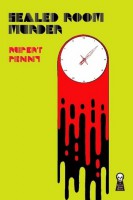
7. Sealed Room Murder (1941) by Rupert Penny
I’ve called this my second-favourite Rupert Penny novel, so by rights it shouldn’t be on this list because I still feel The Lucky Policeman (1938) is a stronger book. But I’ll always have a soft spot for Sealed Room Murder (1941) since it introduced me to Penny’s particular brand of puzzle-dense complications. I still remember reading this and being blown away by how damn good it was, and amazed that something so obscure could be so completely after my own heart. This was the book that convinced me to dig deeper into the RH archives, and that little bit of exploration has paid off very well indeed…hence, as far as favourites go, it takes some beating. [My review]
8. Rim of the Pit (1944) by Hake Talbot
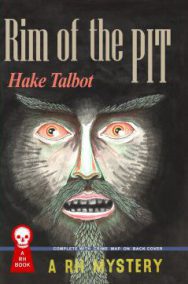
My first ever Ramble House book, Rim of the Pit (1944) obviously came to my attention as an impossible crime novel of no small repute, and it remains one of my very favourite explorations of the subgenre. Best of all, given RH’s forays into weird fiction, I wasn’t entirely certain if I was going to get a rational explanation come the closing stages, and so as the narrative madness got only deeper I found myself more and more swept up in the sheer lunacy of it all. It’s an experience I’ll not forget any time soon, and one I’m very grateful to have had the chance to encounter. Damn, Talbot really didn’t write enough.
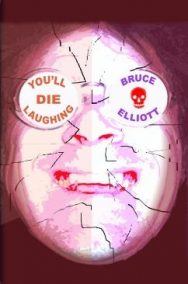
9. You’ll Die Laughing (1945) by Bruce Elliott
An unjustly-neglected gem of the impossible crime subgenre, You’ll Die Laughing (1945) gives us the vanishing of the contents of a room in a house owned by our murder victim — possibly one of the most irritating, and thus deserving, people ever to get the chop in the Golden Age. Elliott’s book is probably a paragraph away from being a minor masterpiece, and is so fast-moving and written with such an obvious love of the genre at its heart that I can’t help but love it all the more because of its flaws (plus, that swimming pool prank is pretty funny). Impossible to pick a single best title on this list, but I this does not deserve to be as neglected as it is. [My review]
10. The Three Tiers of Fantasy (1947) by Norman Berrow
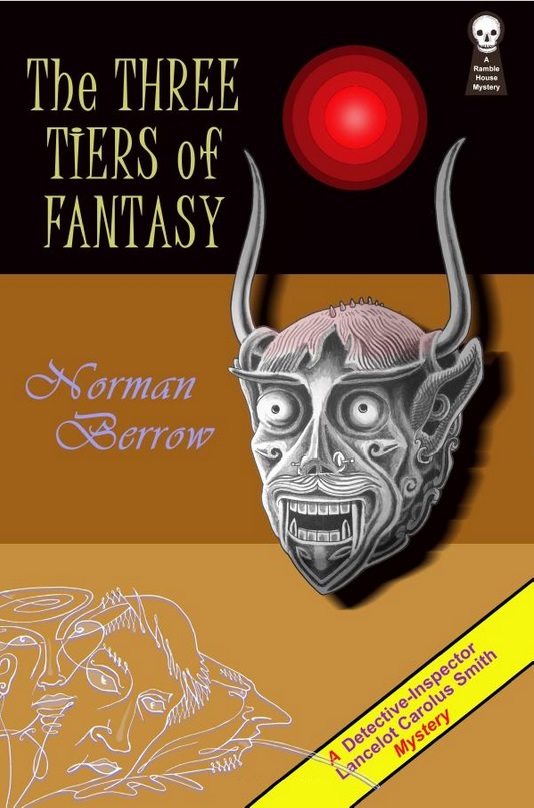
I’m fighting the urge to put The Footprints of Satan (1950) here instead, but The Three Tiers of Fantasy (1947) probably just about wins out because of how neatly Berrow builds up the escalating levels of weirdness as impossibility follows impossibility. The Lancelot Carolus Smith novels work so well because of how cleverly their bizarreness starts to feel so very likely in the settings Berrow has cultured for them, and a vanishing man, a vanishing room, and a vanishing street make for an enticing brew — sure, you’ll solve some of it, but if you can’t enjoy the game-playing and creativity on display here then you’re probably in the wrong genre. [My review]
~
Yes, I know, I know, I excluded several that you would have included, and with more Masterman in my future I could easily write a second list of this ilk before too long, I’m sure. RH’s output seems to have slowed of late, but their commitment to the forgotten, and often excellent, corners of genre fiction remains something to behold. More power to them, here’s to plenty more of their loons featuring in my future plans.
~
My Ten Favourite…
- …Literary Detectives
- …’New to Me’ British Library Crime Classics
- …Ramble House Novels
- …Impossible Crimes
- …Locked Room International Titles
- …Golden Age Reprint Covers
- …Orion Crime Masterworks
- …Mysteries of the 1930s
- …Mysteries of the 1940s
- …Paul Halter Translations
- …Juvenile Mysteries
- …Inverted Mysteries
 The Invisible Event
I was expecting 8 Rupert Penny’s and 2 others!
LikeLike
The temptation was strong…!
LikeLike
Heh, I thought the same, but with a mix of Norman Berrow.
LikeLike
Which makes me think that a list of These Are The Ramble House Books I’d Recommend might be an interesting exercise. Have to read a lot more Masterman first, but that’s hardly an unwelcome turn of events…
LikeLike
They certainly have an impressive track record so I hope they keep going for a long time – my only criticism is their choice of covers, which really don’t do it for me, but that is the only gripe I have and it’s pretty minor!
LikeLike
Considering that, as far as I know, all their covers have been designed by one guy…I think he’s done a pretty good job 🙂 But, yeah, some of them are weeeeird 😄
LikeLiked by 1 person
Purely a question of personal taste, I know nothing about the art.
LikeLike
This reminds me that I need to try more by Afford.
Also noticed that you are diving back into McGerr’s work next week. I’m intrigued to see what you make of that one.
LikeLike
Everyone needs more Max Afford in their life.
LikeLike
Ramble House deserves credit and recognition for assembling an excellent catalog of weird, but good and often original, crime-and detective fiction and forgotten writers. Not always easy to balance weird pulp with quality detective fiction, but RH has been doing it for, what, two decades now? As your list has shown, RH low-key reprinted a ton of excellent impossible crime novels. I’m not as enamored with Burton’s Death Leaves No Card (dull) and Penny’s Sealed Room Murder (time-bendingly tedious), but agree with all your other picks I’ve read. It will be interesting to see how much this list needs revising after you’ve read Johnson’s Damning Trifles, Wellman’s Devil’s Planet and Harding’s Pray for the Dawn. That last one will really give you a stiff shot of weird detective fiction.
“…I can well believe that Afford might have left some absolute gems behind which have been wrongly forgotten.”
Forgotten and lost! Afford wrote an hour-long, now lost radio play, “The Case of the Talking Fingers,” which has an intriguing premise. A murder is seen and heard by a deaf man and a blind man. You might like to know a handful of Afford’s plays, radio and stage, were published in the posthumous collection Mischief in the Air: Radio and Stage Plays, but the majority (including radio-serials) remain unpublished. So maybe something for Crippen & Landru to look into?
LikeLike
Yeah, I read and enjoyed Devil’s Planet, but didn’t get on so well with Pray for the Dawn — I’ve tried on three occasions and just can’t get into it. Either way, we can agree that RH are doing valuable work, and have introduced GAD fandom in general to a lot of good books.
And I’ve decided that I’m going to reread Sealed Room Murderto settle the issue of its quality or otherwise once and for all. Expect developments at some point!
LikeLike
“I’ve tried on three occasions and just can’t get into it.”
But of course! What else was I expecting? 😀
It would be simultaneously funny and infuriating, if you came to conclusion you might have oversold Sealed Room Murders all these years.
LikeLike
Okay, buddy, you asked for it…!
LikeLike
I’m glad The Three Tiers of Fantasy is on the list – it’s definitely my favourite of the Berrows.
I have to admit the covers are very off-putting for me. I actually got a battered, stained hardback of The Footprints of Satan because I disliked that cover… not the choice I would have made now, though.
Since finishing the Smith quintet of Berrow’s I haven’t read any other Ramble House stuff and I should get back to them. This list is probably a good place to start!
LikeLike
The Afford might be a good place to start if you enjoyed Berrow, the two have a spiritual similarity (and are equally unpredictable in quality…!) and they make great RH stablemates. And maybe the Tanner, too, though it’s a very different book — a chase thriller not unlike The Mysterious Mr. Badman as put out by the BL recently.
It’s to be hoped that RH continue to put out this mix of crime among their weird fiction, because they really have been the salvation of certain forgotten authors. Things seem to have moved away from mystery fiction in their recent publications, and I’m hoping that’s temporary…
LikeLike
Great list. Somehow I missed the Lorac and Tanner books, but the others I have read or have TBR.
The Markham and Elliott entries are fun reads and stick in my mind. The former is a wonderfully bonkers adventure going in multiple directions coupled with an impossible crime and an ending where all plot threads are brought together well. The latter also had an interesting impossible crime although I most remember laughing out loud at the practical joke of the prim, uptight house guest flushing the commode during a dinner party only to have a siren shriek through the whole house.
LikeLike
It’s a shame Elliott didn’t write more in the genre. He had a good eye for a fun tine, and could have used his magician’s knowledge well, methinks.
And someone needs to reprint Markham, I feel. Get the BL onto it, I say…
LikeLike
I forgot/didn’t realize that some of these had been published by Ramble House, especially Rim of the Pit and The Devil Drives. It’s an impressive list, especially taking into account you could have justifiably listed Berrow/Penny even more times. If only Ramble House would get back into releasing Virgil Markham, as the rest of his library is impossible to find for anything resembling a reasonable price.
LikeLike
Yes, it’s tempting to want more Markham based on The Devil Drives alone — even if nothing else is quite that wild, the guy surely has some fabulous stuff in his locker. And we’re still waiting for it…
LikeLike
We all know how dishonest this list is. If you felt you could get away with it, you’d have made a list of nothing but Penny and Berrow, I’m sure. 😛
Great list and I can’t wait to read most of these! Thanks so much for putting this together!
LikeLike
Well, as the saying goes: when they expect you to zig…zag. Or something.
LikeLike