-
Subscribe
Subscribed
Already have a WordPress.com account? Log in now.
 Do you find yourself lulled into an erudite hebetude by too many stories blethering on instead of simply getting down to the plot and relevant incidents? Well, Max Afford’s fifth novel runs to 116 pages and probably doesn’t contain a single one that does not in some way contribute to the interpretations or solutions of the central conundrums. A sea-faring mystery in the Death on the Nile (1937) school, a small group of characters are gathered on a liner heading out from Sydney, Australia to some islands because…reasons…when mysterious phone calls, mysterious passengers, mysterious relationships, and mysterious pasts all converge for a cavalcade of enigmas wrapped in queries and shrouded in deepest sinisterlyness.
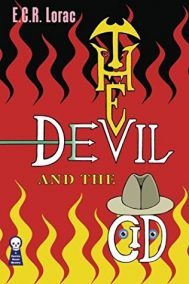 My first foray into the work of E.C.R. Lorac was long on character and setting but short on plot. This time there’s plenty of everything to go around, and I’m now very intrigued by what else Edith Caroline Rivett may have cooked up in the realms of GAD writing — am I right in saying that it was mentioned at the Bodies from the Library conference that one of her books will be a future British Library Crime Classic? On this evidence, and trusting those fine folk to continue their habit of making generally good selections, that could be something worth anticipating. She’s not quite Agatha Christie yet, but if you’d read only Destination Unknown and Third Girl then even Agatha Christie wouldn’t be Agatha Christie…
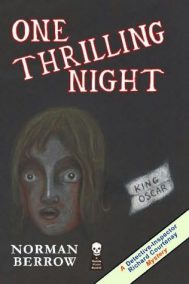 Sometimes I think it is possible to become jaded from reading too much of the same type of book. I signed up to this GAD blogging lark on my own initiative, and it’s the genre I prefer to read, but the need to get in at least one, and ideally two, a week to meet my own self-imposed deadlines can lead at times to a little disaffection creeping in. Thankfully, via the exemplary work of Fender Tucker’s Ramble House imprint, I have discovered the books of Norman Berrow, and so if my will be wandering I have the option of returning to the lightness and joy of his entertaining milieu. He’s not a plotter par excellence, but I find these books fun in a way that obviates my usual requirements in this direction. Prose before pose, dudes.
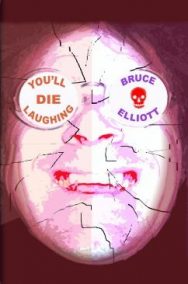 Stage magic and Golden Age detection go hand-in-hand: we go in knowing we’re being fooled in both cases, but there’s little more enjoyable than seeing it done well. Clayton Rawson and Hake Talbot were professional-level magicians who turned their minds to the dark arts of fictional (as far as we know…) murder and crafted some wonderful stories in doing so, and the name Bruce Elliott can also be added to the magician/detection-writer set with this country house mystery that benefits from his magical background by stirring in an impossible crime. This is yet another book that’s foisted an unexpected impossibility upon me, and while it’s not exactly perfect, it’s still a bloody good read.
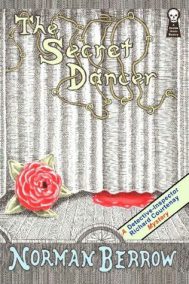 In a week that saw me start and quit three books in a row, it was a relief to open Norman Berrow’s third novel and be put immediately at ease by his nimble capturing of the pre-show backstage goings-on at the latest, most fashionable theatre in London. From the music described as “…a shamelessly stolen conglomeration of Mexican airs, assembled in Tin-Pan Alley, shipped to Europe, and played with astonishing variations” to the beautiful summation of leading lady Lili La Paz as “a miracle to watch; and hell to live with”, it’s the sort of opening salvo that reminds me why I return time and again to Berrow and his slightly disappointing impossibilities (the man does love a secret passage): simply put, he writes glorious prose.
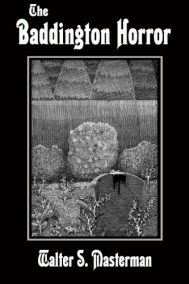 I love a country house mystery, especially those with a body on page one. So when the murder of ex-judge Sir Ernest Ferber in his private garden by man he sentenced harshly and the subsequent suicide of his assailant at the scene is communicated in the opening ten lines of The Baddington Horror, we’re off to a very good start. To my understanding, Walter S. Masterman wrote as many ‘weird tales’ as he did novels of detection, and so it was always a little uncertain what I was going to get here. But the first chapter could not be more Golden Age detection if it tried: murdered aristocrat, retired amateur detective who takes an interest, two big coincidences, and away we go…
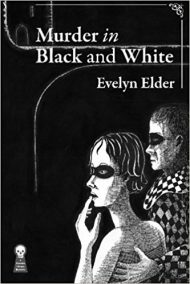 Identity and location, as I’ve said before, are really the two hooks on which a staggering majority of the detective genre hangs. And if you want to get the most out of the impossible shooting tale Murder in Black and White by Evelyn Elder — pseudonym of Detection Club alumnus Milward Kennedy — you’re going to need patience in figuring out the latter. Because while he has a good sense of character and action, as soon as anyone is required to go anywhere, or it becomes necessary to understand the internal layout of the ancient French citadel-cum-château that features so prominently, it’s as if his narrative powers desert him and he’s writing with a stick of celery.
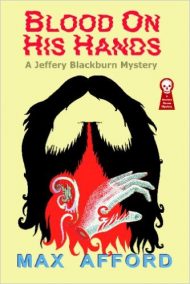 Philo Vance. ‘The Murders in the Rue Morgue’ by Edgar Allan Poe. Raspberry Jam by Carolyn Wells. ‘The Fairy Tale of Father Brown’ by G.K. Chesterton. The Clue of the New Pin by Edgar Wallace. A character who is detective novelist of some repute. Characters in a detective story discussing whether they are behaving like people in a detective story. All these references and more can be found in the opening salvo of Max Afford’s debut novel, following the discovery of a man stabbed in the back in his locked study with the only key to the specially-constructed lock in his possession, the murder weapon missing, and some subtly esoteric clews that give rise to plenty of canny evaluation and then re-evaluation. Aaah, I love the Golden Age.
 Norman Berrow writes great policemen. His other characters are very good — he has Agatha Christie’s ability to give you an archetype plus enough to be quietly, subtly powerful — but his policemen are superb. After reading three later Berrows featuring Inspector Lancelot Carolus Smith and his lackeys, I’m leaping back to Berrow’s second novel here, and well before the halfway point I was lamenting the fact that this seems to be the only case calling on Superintendent Mellish, Inspector Sennet, and the delightfully earnest Constable Ensor. They take a standard Country House Mystery and transform it through their cheek, cleverness, and camaraderie into something that feels like the start of a very promising career indeed. Alas, not to be.
 The Invisible Event