-
Subscribe
Subscribed
Have a WordPress.com account? Log in now.


 The setup of The Poisoned Chocolates Case is rightly very famous: a lady is killed when a box of chocolates given to her husband by another member of his gentlemen’s club — who himself received them unsolicited through the mail — turns out to have been laced with poison. The police, with no culprit in sight, allow six amateurs with a fascination for real life crimes to theorise and present their own solutions, each one appearing watertight until someone finds a flaw that brings the edifice down. For this conceit alone, and the genius way Berkeley uses his different sleuths to unpick the sparse and simple known facts, this book has passed into near-legend in detective fiction circles.
 Writing a decent novel of detection is difficult enough, as evinced by the fact that the form virtually died out by the 1960s, so taking the classic detective story and turning into a pastiche of itself is even harder again — it has to be both a story of crime and detection and a cunning vehicle for transcending the tropes thereof while simultaneously wallowing in them. Leo Bruce did this near-perfectly in Case for Three Detectives (1936) and a great many luminaries of the form dipped their toe into such conceits with aspects of their books, plots, or characterisation, but for a full-length novel to take this on successfully is something of a challenge that it would be beyond the abilities of most mortals.
 As a parody of the detective novel, the maverick cop genre, and the low Fantasy genre, Simon R. Green’s Hawk & Fisher takes quite some beating — it is an honestly hilarious take on the tropes of three. I don’t think I’ve laughed so much since reading…well, possibly anything; almost every page contains some wonderful joke or savage undercutting of the false sincerity of the situations encountered, not unlike William Goldman’s timeless The Princess Bride. For instance, Hawk is supposedly an expert in hand-to-hand combat with an axe, but he has only one functioning eye and therefore must lack any depth perception; it’s an absolutely genius piece of subversion, and such examples are rife. The only problem is that I have a sneaking suspicion — only a sneaking one, mind — that this book is in fact supposed to be taken seriously. Very Seriously Indeed.
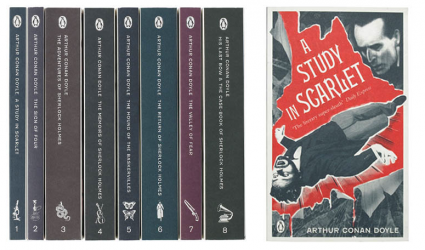 Lately I’ve read an unusually high concentration of Holmes pastiches — Caleb Carr’s The Italian Secretary (not good), Stephen King’s ‘A Doctor’s Case’ (not terrible), Colin Dexter’s ‘A Case of Mis-Identity’ (extremely good), Michael Kurland’s The Infernal Device (loadsa fun), Steve Hockensmith’s Holmes on the Range (fabulous) and a superb piece of unpublished fan fiction sent to me via email — and it’s made me realise that while Watson, and specifically the Watsonian voice, is vital in undertaking Holmes, no-one can quite agree what Watson is, how he should be written, and this makes him far and away the more interesting of the two men when it comes to analysis.
