The majority of Agatha Christie referred to on this blog has been from her later, less popular phase while I work through her canon chronologically. So it’s lovely to be able to refer to some of her early work with this collection of 18 stories originally published between 1923 and 1936.
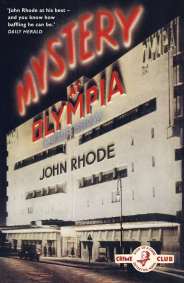
While Freeman Wills Crofts’ work has caused me much delight over the last few years, that of his fellow ‘Humdrum’ John Rhode/Miles Burton doesn’t inspire in me quite the same raptures. Rhode (as I’ll call him here) writes swift, events-focussed novels, and constructs plots with the same deliberation and consideration from multiple sides…so maybe it’s that his plots always feel like a single idea with some people bolted onto it. Here as in Death Leaves No Card (1944) or Invisible Weapons (1938) I come away with the impression that he read about a single obscure murder method and thought “Yeah, I can get 60,000 words out of that”.
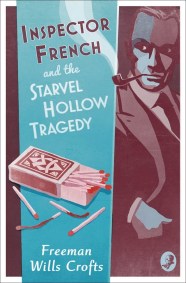
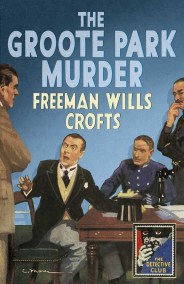
As his seventh published novel, Inspector French and the Starvel Hollow Tragedy (1927) shows Freeman Wills Crofts again subtly altering his approach to take us through the minutiae of crime and detection, introducing a structural change which addresses the issue of “whodunnit” that these early GAD trendsetters sometimes struggled with. While you may well be aware of the guilty party from about chapter 4, rest assured that Inspector Joseph French eventually cottons onto his target at around the halfway stage, and the final third of the book is then devoted to tracing the criminal. And a lot of fun is to be had along the way.
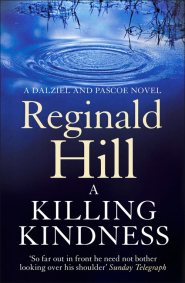
At some point in the 1980s, Britain started pumping out crime fiction by authors who literary darlings could feel smug about admitting they slum it with: Colin Dexter, P.D. James, Ruth Rendell, and today’s experiment, Reginald Hill, among others — authors I’ve sampled here and there and who generally leave me cold. My precise objection to them is difficult to pin down, but they seem to me to be forcing upon the genre a staid acceptability it neither needed nor flourishes under, and that’s something I can’t get further into without reading more of it…and, well, I’m reluctant to do that. A Killing Kindness (1980) perfectly exemplifies why.
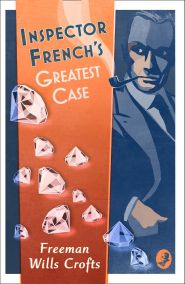
Cometh the hour, cometh the man. After a debut that laid the cornerstone of a new genre and three succeeding works exploring the principles of that genre from varying perspectives, now begins Freeman Wills Crofts’ 30-novel (plus however-many short stories) relationship with Inspector Joseph French. At this stage it’s difficult to judge how French differs from his antecedents Burnley, Lafarge, Tanner, Willis, Vandam, and Ross, but I guess we’ll never know whether French was ever initially conceived as more than a one-book man like those others. The title certainly suggests so, but history shows otherwise.
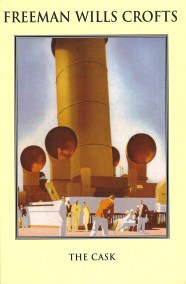
If I asked you to name the debut novel of a hugely influential detective fiction author that was originally written in 1916, published four years later, featured a character called Hastings, and had its ending rewritten at the publisher’s request to remove a courtroom/trial sequence…you’d no doubt be surprised just how much The Mysterious Affair at Styles (1920) by Agatha Christie and The Cask (1920) by Freeman Wills Crofts had in common. The intervening century has been kinder to Christie than to Crofts in both literary reputation and availability, and their divergence from these surface-level similarities is no doubt a part of that.
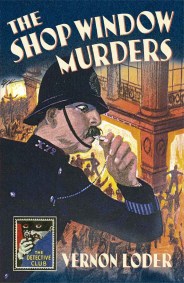
I shall refrain from pointing out the similarities between The Shop Window Murders (1930) by Vernon Loder and The French Powder Mystery (1930) by Ellery Queen — Nigel Moss does an excellent job of that in his introduction of this reprint, and you’ll want your money’s worth. In short order we get dead bodies in a display in a shop window, and after the initial surprise of revealed identity it’s not long before Detective Inspector Devenish and the avuncular Superintendent Melis are on the scene to untangle possibly the most baffling range of clues seen this side of an early-period Queen novel. Oh, er, sorry about that. No more, I promise.
A mere nine books into the 37-strong output of Freeman Wills Crofts (soon to be 38 thanks to the excellent work of Tony Medawar and Crippen & Landru), I’m going to make a bold assertion: Crofts, I suggest, went out of his way to never write the same type of book twice. Oh, I know, you’ve heard they’re all just a boring man in a boring office poring over boring train timetables and talking boringly about boring tides on the way to solving a boring murder (to be honest, the only truly boring thing about Crofts is being told how boring he’s supposed to be)…but first read nine books by the man before telling me I’m wrong.
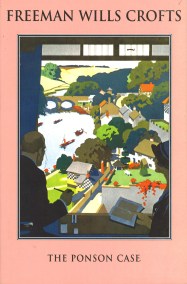
Freeman Wills Crofts’ second novel The Ponson Case (1921) recently enjoyed a reissue thanks to the superlative efforts of HarperCollins and their revived Detective Club imprint. Nevertheless, I’m not passing up the opportunity to flaunt my pristine House of Stratus edition, with a cover so fabulous that it was recently reused for Martin Edwards’ genre-sweeping study The Story of Classic Crime in 100 Books (2017). Since Crofts himself spoiled his debut The Cask (1920) in The Sea Mystery (1928), I’m skipping that for now but shall otherwise read him chronologically until I run out of books, and hope HarperCollins seize the chance for a full reprint in the meantime…






 The Invisible Event