Genius Amateur

#343: He Wouldn’t Kill Patience (1944) by Carter Dickson
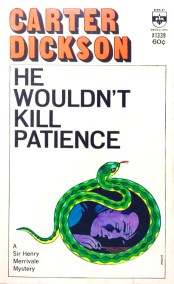


The result of a challenge between John Dickson Carr and magician-turned-author Clayton Rawson to write a murder in a room whose inaccessibility is assured by paper taped across the inner door jamb, He Wouldn’t Kill Patience (1944) also has GAD brethren in Freeman Wills Crofts’ zoo-set, poisonous-snake-centric Antidote to Venom (1938). Carr and Rawson take more puzzle-oriented routes, of course, and both happen to feature magicians, but the Reptile House subgenre is off to a good start with these two novels in it. And since you’re going to ask, in the head-to-head of this and Rawson’s ‘From Another World’ (1948), Carr wins. Boy, does Carr ever win.
Continue reading
#334: The Chinese Orange Mystery (1934) by Ellery Queen

Sure, laugh it up. Just a few short months ago I stated my intention to read the entirety of the output of Manny Lee and/or Frederic Dannay under the Ellery Queen nom de plume, and here I am — some struggles later — jumping ahead to a more warmly-perceived title. I’m not happy about it myself, I much prefer to do these things chronologically, but equally I want to want to read their books again. I’ve loved some, been unaffected by others, and abominated a handful, and as such Queen remains a problem child for me. So here I am, back on the horse in a different town, mixing metaphors with the best of ’em. And the result…?
Continue reading
#266: ‘The Problem of the Emperor’s Mushrooms’ (1945) by James Yaffe – Five and a Half Alternative Solutions
I recently acquired one of the only 175 extant editions produced by Crippen and Landru of the short story ‘The Problem of the Emperor’s Mushrooms’ by James Yaffe, itself originally published in Ellery Queen’s Mystery Magazine in 1945. And in the same manner of reflection upon Paul Halter’s ‘The Yellow Book’ (2017) from a few weeks ago, I thought I’d have another look at a short story…though this time to suggest possible alternative explanations for the impossible poisoning contained therein.
Continue reading
#264: Death in the Dark (1930) by Stacey Bishop
 “There is no suspense in a bang,” said Alfred Hitchcock, “only in the anticipation of it.” This applies to Stacey Bishop’s sole detective novel because, well, it wasn’t a book a sizeable proportion of GAD readers were aware even existed until Locked Room International conjured this reprint fittingly out of the ether — when John Norris at Pretty Sinister hasn’t read it, you know it’s rare. As such, the gleeful anticipation of its release was undercut somewhat by the fact that we hadn’t even heard of it, and so there’s no weight of expectation: we are free, in this connected age of everything being on demand and everything being remembered, to come into this entirely without preconceptions.
Continue reading
#251: Death in the Tunnel (1936) by Miles Burton
 While we can be thankful for real-life developments in forensic science that enable the speedier detection of criminals, there can be little argument that it was the death-knell of good detective fiction. Dull Inspector Arnold and his genius amateur sidekick Desmond Merrion spend so much time combing through the minutiae of the physical and mental aspect of the crime in Death in the Tunnel, and come up with such entertaining possibilities while doing so, that a crime scene tech in one of those all-over white body suits could never be a fifth as much fun. It makes me all the more appreciative of this kind of classic approach, knowing that this sort of book has seen its heyday pass.
Continue reading
#249: Is This the Real Life, Is This Just Fantasy? — GAD and ‘Reality’

A number of different factors — among them Brad’s recent discourse on the dying message, my reading of Tour de Force (1955) by Christianna Brand, and Noah’s previous post on intertextuality in detective fiction — have brought me to the point where I want to ask the question “What is reality in relation to Golden Age Detective (GAD) fiction?”. Yes, yes, I am a very nerdy man. You should have guessed this by now.
So, let’s get into it…
Continue reading
#239: Construction, Clarity, Conformity, and the Contortions of Ellery Queen in The French Powder Mystery (1930)
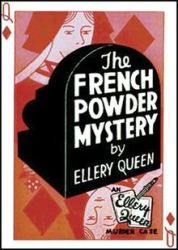
Contrary to what the books may tell us, the father of Ellery Queen, detective, is not Inspector Richard Queen but instead Philo Vance, the dilettante amateur wise-arse detective created by S.S. van Dine. I’m not claiming this is an original observation — far from it — but reading the second novel to feature the Queens and the first in which Ellery actually solves the case (he has a very small hand in their debut, The Roman Hat Mystery) it’s interesting to realise just how heavily Dannay and Lee were leaning on van Dine at this point of their careers.
Continue reading
#223: A Study in Contrasts – Case Closed (a.k.a. Detective Conan) Volumes 11 and 12 (1996) by Gosho Aoyama

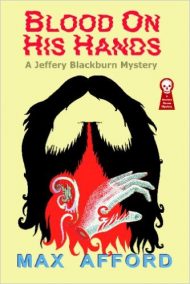 Philo Vance. ‘The Murders in the Rue Morgue’ by Edgar Allan Poe. Raspberry Jam by Carolyn Wells. ‘The Fairy Tale of Father Brown’ by G.K. Chesterton. The Clue of the New Pin by Edgar Wallace. A character who is detective novelist of some repute. Characters in a detective story discussing whether they are behaving like people in a detective story. All these references and more can be found in the opening salvo of Max Afford’s debut novel, following the discovery of a man stabbed in the back in his locked study with the only key to the specially-constructed lock in his possession, the murder weapon missing, and some subtly esoteric clews that give rise to plenty of canny evaluation and then re-evaluation. Aaah, I love the Golden Age.
 The Invisible Event