Amateur Detective
#636: Justice It Was That Moved My Great Creator – It’s About Crime [ss] (1960) by MacKinlay Kantor
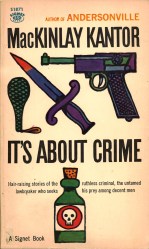
Marketing has a lot to answer for. In much the same way that Herbert Brean a couple of weeks ago found himself the centre of a tussle between competing crime fiction ideologies, and endless crime fiction authors these days end up with “as gripping as Agatha Christie” in their synopses, it’s fashion that determines how to lie to you when selling something.
Continue reading
#632: The Honjin Murders (1946) by Seishi Yokomizo [trans. Louise Heal Kawai 2019]
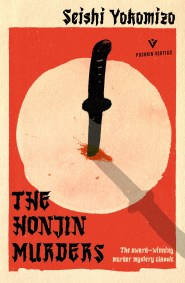


After years of occasional titles like The Tattoo Murder Case (1948) by Akimitsu Takagi trickling through the East-West translation gap, it seems English-speaking audiences might be getting more classic Eastern honkaku. The shin honkaku translations brought to us by Locked Room International have highlighted the ingenuity in works coming out of Japan, China, and surrounds during the 1980s and 1990s, an era when the Western crime novel was rather more focussed on character and procedure, and so the puzzle-rich seam of GAD-era honkaku titles might finally get more attention. And the first non-LRI novel to come across is one that was greeted with much excitement.
Continue reading
#631: Adventures in Self-Publishing – Murder Brewed at Home (2015) by Belle Knudson

It is a truth universally acknowledged that the most unpleasant character in any murder mystery typically ends up dead. The cozier the mystery, the truer this adage becomes. And the more hobby-based the mystery is, the cozier it tends to be…so welcome to Murder Brewed at Home (2015).
Continue reading
#630: The Freight Should be Proportioned to the Groove – The Sliding Scale of Poetry in Detective Fiction
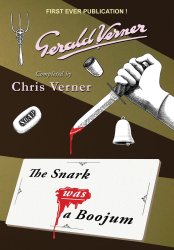
When Xavier brought to my attention that Lee Child is sharing the writing of his best-selling Jack Reacher series to his brother before handing it over in due course, I saw it as the universe nudging me towards a filial co-authoring job residing in my own TBR, The Snark Was a Boojum (1957/2015) by Gerald and Chris Verner.
Continue reading
#629: Hardly a Man is Now Alive, a.k.a. Murder Now and Then (1950) by Herbert Brean
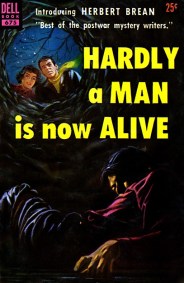
Three books into the seven-strong output of Herbert Brean, I’m going to suggest that he’s one of the most unjustly-neglected writers of the latter-GAD era — that “latter” prefix being key. Brean’s plots are dense enough for the puzzle fiends of the 1930s, and his social milieu more than matches the requirements of the post-GAD 1950s hankering after domestic suspense, but each school will be disappointed by how much of its rival is present. Thus, puzzle fans lazily insisting he’s in the same bracket as John Dickson Carr and realism fans keen to play up his HIBK credentials each sell him as writing sorts of books he never wrote, and everyone ends up disappointed.
Continue reading
#622: Adventures in Self-Publishing – The Phantom Ragdoll (2019) by DWaM

The joy of self-publishing must be the freedom to live or die solely on your own efforts. There’s most likely no-one looking over your shoulder to advise you, and while that may be the key factor that ruins a lot of SP fiction, if you can get it right on your own I imagine it’s rather thrilling.
Continue reading
#617: The Black Honeymoon (1944) by Constance and Gwenyth Little [a.p.a by Conyth Little]
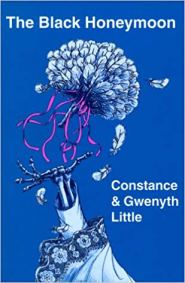
Sisters Constance and Gwenyth Little occupy an unusual place in the firmament of GAD. Together they wrote 21 novels and, thanks to the Rue Morgue Press reissuing them in the early 2000s, there’s sufficient awareness around them for the term “forgotten” to be thoroughly inappropriate…but you’d have to be a genre nerd to name more than a handful of their books. Their lack of a series character and the fact that they wrote no short stories (and a single novella, presumably harder to anthologise) doubtless play a part, but I think more telling is the fact that they’re remarkably difficult to pigeonhole. You’re never quite sure what you’re getting, and that cuts both ways.
Continue reading
#615: And the Knights are No More and the Dragons are Dead – Viewing the Detective Through a Glass, Darkly via The Hero (2019) by Lee Child

You’ve doubtless heard of Lee Child, author of the Jack Reacher books in which the gargantuan ex-serviceman does plenty of fightin’ and figurin’, and if there’s a bigger name in publishing today it’s only because James Patterson has, like, 86 co-authors.
Continue reading
#612: A Snapshot in the Family Album – Opportune Character Development in Monk Season 2, Episodes 9-16 (2003-2004)

 The Invisible Event