The companion of the fictional detective — the “stupid friend” as Ronald Knox styled them — is something I have spent far too long thinking about, mainly because the protoype is always taken to be Sherlock Holmes’ chronicler Dr. John H. Watson. Joining me this week to discuss why that might not always be a good comparison to draw is Caroline Crampton of the superb Shedunnit podcast.
Continue readingR. Austin Freeman
#806: The Red Thumb Mark (1907) by R. Austin Freeman

![]()
![]()
![]()
![]()
![]()
As a firm proponent of reading an author’s work chronologically, I’m a terrible hypocrite. I initially encountered Dr. John Evelyn Thorndyke in his eighteenth published volume, and then read his third, fifth, fourteenth, seventeenth, fourth, and sixteenth before now getting to his debut, The Red Thumb Mark (1907). Those of you following along at home will know how much enjoyment I’ve taken from Freeman’s writing, and the simple truth is that, had I started here, I may still be working up the enthusiasm to read further. Not that this is a bad book, and in many ways it’s a fascinating one, but it’s difficult from here to see the heights RAF would scale later in his career.
#790: On the Morals of Golden Age Detective Fiction, via Crime and Detection [ss] (1926) ed. E.M. Wrong
That title is doing a lot of work, isn’t it? Fair warning: this goes on a bit.
At the online Bodies from the Library conference last weekend, I gave a talk inspired in part by E.M. Wrong’s introduction to the 1926 anthology Crime and Detection. And, in addition to coining the term “Wellington of detection” that inspired the thinking I laid out last weekend, there is plenty of material in that piece of prose to get the cogs turning.
Continue reading#787: “My methods of defence are based on demonstration rather than rhetoric…” – The Magic Casket [ss] (1927) by R. Austin Freeman
At 1.30pm UK time today, the Bodies from the Library Conference starts online for the delectation of classic detection fans the world over. As my talk is due to be about detection, I thought I’d turn that into a flimsy excuse to write about one of my favourite discoveries of recent years: Dr. John Evelyn Thorndyke.
Continue readingIn GAD We Trust – Episode 20: The Dr. Thorndyke Stories of R. Austin Freeman [w’ Dolores Gordon-Smith]
In January of last year, I read my first R. Austin Freeman novel, little suspecting that it was to be the first step along a road of sheer delight. And so, to mark the end of Series 2 of In GAD We Trust, today I’m discussing Freeman and the Thorndyke stories with author and fellow R.A.F. fan Dolores Gordon-Smith.
Continue reading#773: The Mystery of 31 New Inn (1912) by R. Austin Freeman

![]()
![]()
![]()
![]()
![]()
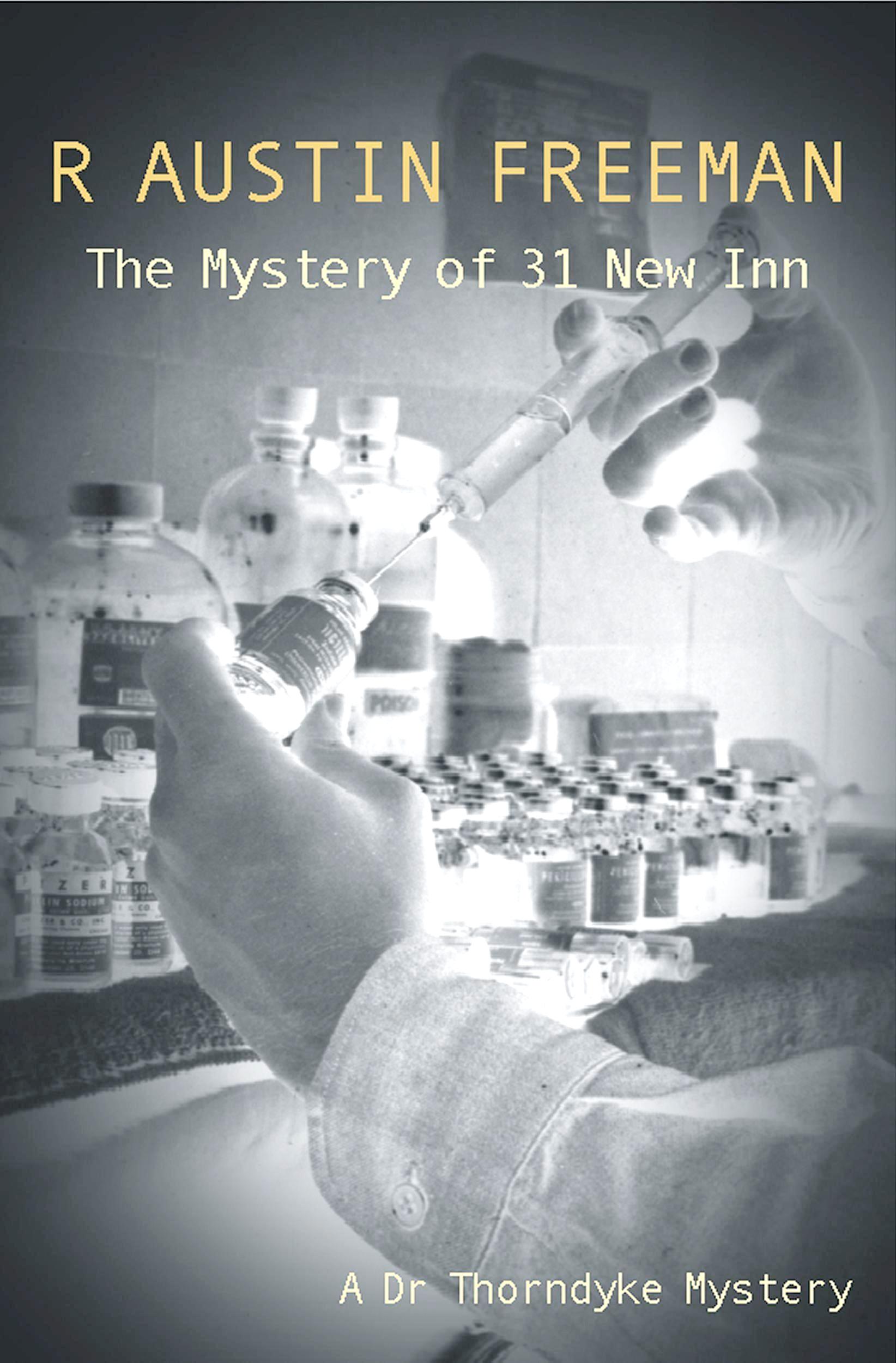
Summoned one evening to the house of a bedridden man — and taken there in a carriage with blacked-out windows to obfuscate the location — Dr. Christopher Jervis suspects poisoning but is assured by the people looking after Mr. Graves that no poison could have been administered. Some weeks later, he is summoned a second time and, after administering some treatment that sees Mr. Graves begin to revive, is dismissed and never hears of the patient or his carers again. Between these two visits, however, Jervis consulted Dr. John Thorndyke, which proves to be most fortuitous when further investigation into the matter becomes important.
#743: As a Thief in the Night (1928) by R. Austin Freeman

![]()
![]()
![]()
![]()
![]()
2020 will linger in the memory for many reasons, but I’m going to try to remember it as the year in which I discovered the joy of R. Austin Freeman’s Dr. John Thondyke. I had previously read, and entirely forgotten about, the impossible crime short story ‘The Aluminium Dagger’ (1909), but it is the novel Mr. Pottermack’s Oversight (1930) — the plot of which is proposed by Thorndyke herein, anticipating Agatha Christie’s use of the same foreshadowing in The A.B.C. Murders (1936) of Cards on the Table (1936) — that I shall consider my first bread with Freeman. And As a Thief in the Night (1928) caps an invigorating year of author-discovery.
#703: The D’Arblay Mystery (1926) by R. Austin Freeman

![]()
![]()
![]()
![]()
![]()
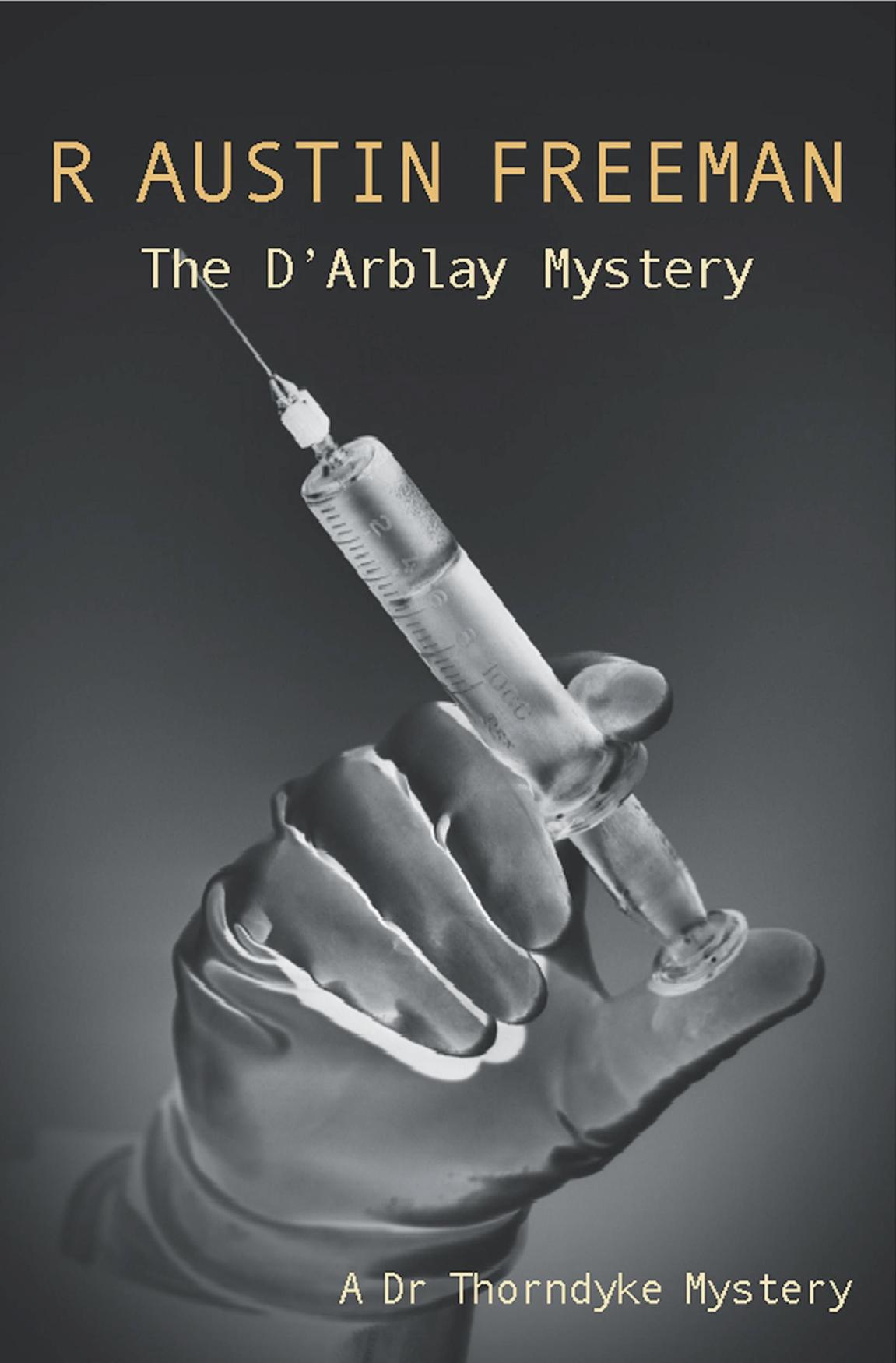
After a two month blogging hiatus in which I cleared a lot of lingering chaff from my TBR, it was wonderful to pick The D’Arblay Mystery (1926) as the first book for my return and love the absolute socks off of it. Having now acclimatised myself to the faintly pedantic verbiage of Richard Austin Freeman, I’m happy to acknowledge my parsimony in giving the masterful Mr. Pottermack’s Oversight (1930) — my first encounter with the author’s long-form work — a mere four stars and to correct that error here with the gloriously involving puzzle of Julius D’Arblay’s murder. While in many ways a thoroughly unsurprising book, in the ones that count it is joy unconfined to my GAD-happy soul.
#694: “It was a small matter but very conclusive.” – The Singing Bone, a.k.a. The Adventures of Dr. Thorndyke [ss] (1912) by R. Austin Freeman

It was my understanding that William Shakespeare invented the word “eyeball”. The noun eye was extant at the time, as was the concept of a ball being something round, but that Shakespeare was the one to take the two principles and conflate them. It turns out he didn’t [see the comments below this post], but presumably someone did, and that’s all I really need to be the case for this opening paragraph.
Continue reading
In GAD We Trust – Episode 8: Uncovering Long-Forgotten Short Stories + Bodies from the Library 3 (2020) ed. Tony Medawar [w’ Tony Medawar]