#633: Spoiler Warning – Coming in April: The Eye of Osiris, a.k.a. The Vanishing Man (1911) by R. Austin Freeman

This post serves a double purpose: firstly to reassure you that the promised spoiler-heavy discussion about The Box Office Murders, a.k.a. The Purple Sickle Murders (1929) by Freeman Wills Crofts is on the way, and secondly to let you know about the next spoiler-heavy review coming in April.
Continue reading
#632: The Honjin Murders (1946) by Seishi Yokomizo [trans. Louise Heal Kawai 2019]
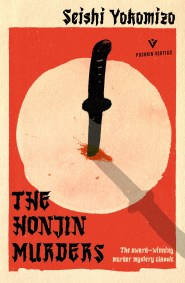


After years of occasional titles like The Tattoo Murder Case (1948) by Akimitsu Takagi trickling through the East-West translation gap, it seems English-speaking audiences might be getting more classic Eastern honkaku. The shin honkaku translations brought to us by Locked Room International have highlighted the ingenuity in works coming out of Japan, China, and surrounds during the 1980s and 1990s, an era when the Western crime novel was rather more focussed on character and procedure, and so the puzzle-rich seam of GAD-era honkaku titles might finally get more attention. And the first non-LRI novel to come across is one that was greeted with much excitement.
Continue reading
#631: Adventures in Self-Publishing – Murder Brewed at Home (2015) by Belle Knudson

It is a truth universally acknowledged that the most unpleasant character in any murder mystery typically ends up dead. The cozier the mystery, the truer this adage becomes. And the more hobby-based the mystery is, the cozier it tends to be…so welcome to Murder Brewed at Home (2015).
Continue reading
#630: The Freight Should be Proportioned to the Groove – The Sliding Scale of Poetry in Detective Fiction
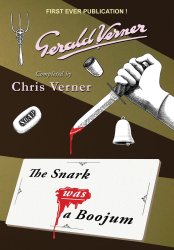
When Xavier brought to my attention that Lee Child is sharing the writing of his best-selling Jack Reacher series to his brother before handing it over in due course, I saw it as the universe nudging me towards a filial co-authoring job residing in my own TBR, The Snark Was a Boojum (1957/2015) by Gerald and Chris Verner.
Continue reading
#629: Hardly a Man is Now Alive, a.k.a. Murder Now and Then (1950) by Herbert Brean
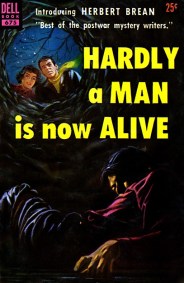
Three books into the seven-strong output of Herbert Brean, I’m going to suggest that he’s one of the most unjustly-neglected writers of the latter-GAD era — that “latter” prefix being key. Brean’s plots are dense enough for the puzzle fiends of the 1930s, and his social milieu more than matches the requirements of the post-GAD 1950s hankering after domestic suspense, but each school will be disappointed by how much of its rival is present. Thus, puzzle fans lazily insisting he’s in the same bracket as John Dickson Carr and realism fans keen to play up his HIBK credentials each sell him as writing sorts of books he never wrote, and everyone ends up disappointed.
Continue reading
#628: Adventures in Self-Publishing – Murder Most Scottish (2018) by Blake Banner

Well, well, well, 200π posts — or 100τ if you’re a weirdo. Let’s celebrate with two locked room murders…
Continue reading
#627: A Little Help for My Friends – Finding a Modern Locked Room Mystery for TomCat Attempt #14: The Darker Arts (2019) by Oscar de Muriel

A certain amount of debate continues to rage — “rage” might be too strong a word — over whether the impossible alibi qualifies as a true impossible crime. I suggest that, should it eventually be inducted into future Locked Room Murders supplements, we do so on a ‘one out, one in’ policy and retire the “death by unknown means” to make space.
Continue reading
#626: Laura (1943) by Vera Caspary
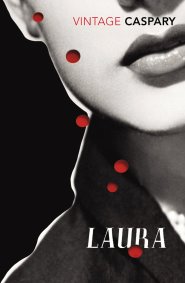
Noir — from the French, er, noir, meaning “black” — is a label adopted by, or possibly foisted upon, the end of the crime fiction genre where things get appropriately murky: we have anti-heroes, moral bankruptcy, dodgy dealings, and possibly criminals getting away with things and the social order not necessarily restored. My Vintage edition of Laura (1943) by Vera Caspary showcases the New Yorker declaring this novel “Noir in a nutshell”…and that feels like a desperate bid to invite a female author into the sausage-fest that the annals of Noir tend to be. Because, honestly, Laura couldn’t be further from that promised noirsette if it tried…and I really do think it’s trying.
Continue reading
#625: Adventures in Self-Publishing – The Matter of the Duct Tape Tuxedo [ss] (2019) by Steve Levi


