
#618: Going Home – Dark Hollow (2000) by John Connolly

I did a month of Going Home posts — looking at the contemporary fiction that had steered me onto the more classic detection path now walk — last May, and rather enjoyed revisiting some influential (for me) books and happy memories.
Continue reading
#617: The Black Honeymoon (1944) by Constance and Gwenyth Little [a.p.a by Conyth Little]
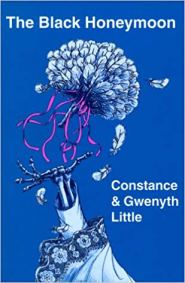


Sisters Constance and Gwenyth Little occupy an unusual place in the firmament of GAD. Together they wrote 21 novels and, thanks to the Rue Morgue Press reissuing them in the early 2000s, there’s sufficient awareness around them for the term “forgotten” to be thoroughly inappropriate…but you’d have to be a genre nerd to name more than a handful of their books. Their lack of a series character and the fact that they wrote no short stories (and a single novella, presumably harder to anthologise) doubtless play a part, but I think more telling is the fact that they’re remarkably difficult to pigeonhole. You’re never quite sure what you’re getting, and that cuts both ways.
Continue reading
#616: Adventures in Self-Publishing – Touch (2018) by Robert Innes

My exploration of self-published impossible crime fiction, which would itself have been impossible prior to the growth of the ebook market, continues apace — there are at present 21 books in my AiSP TBR alone. So let’s get on with it…
Continue reading
#615: And the Knights are No More and the Dragons are Dead – Viewing the Detective Through a Glass, Darkly via The Hero (2019) by Lee Child

You’ve doubtless heard of Lee Child, author of the Jack Reacher books in which the gargantuan ex-serviceman does plenty of fightin’ and figurin’, and if there’s a bigger name in publishing today it’s only because James Patterson has, like, 86 co-authors.
Continue reading
#614: The Silent Murders (1929) by A.G. Macdonell [a.p.a. by Neil Gordon]
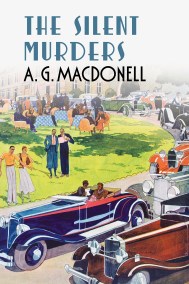
Aaah, the serial killer of yore. With a sizeable proportion of GAD ne’er-do-wells restricting themselves to one victim, and a lot of them adding a second to help out a floundering narrative, it’s often easy to overlook that classic era detective fiction produced more than a few really dedicated murderers. The Silent Murders (1929) isn’t the first, though it is quite an early one for GAD, and so while the usual punctilios are observed — and may feel a little hoary nowadays — it pays to remember where you’re walking. As an entry in an under-represented stratum of GAD, this is easily good enough to make you rue the brevity of Macdonell’s detective-esque output.
Continue reading
#613: Little Fictions/Going Home – The Crime Stories of Edgar Allan Poe: ‘The Man of the Crowd’ (1840), ‘Into the Maelstrom’ (1841), and ‘The Oblong Box’ (1844)

The accepted wisdom is that Edgar Allan Poe wrote five stories which formed the basis of the nascent detective fiction genre, and the plan for this month had originally been to look at one story each week. But that’s what you plan when you fail to account for the rigour and research of Christian, who blogs at Mysteries, Short and Sweet.
Continue reading
#612: A Snapshot in the Family Album – Opportune Character Development in Monk Season 2, Episodes 9-16 (2003-2004)

Okay, I’ve made a concerted effort to get on with the second half of this second season of Monk, so how do the cases taken on by OCD-afflicted police consultant Adrian Monk (Tony Shalhoub) and his assistant Sharona Fleming (Bitty Shram) stand up after a slightly disappointing first eight episodes?
Continue reading
#611: The Seventh Hypothesis (1991) by Paul Halter [trans. John Pugmire 2012]
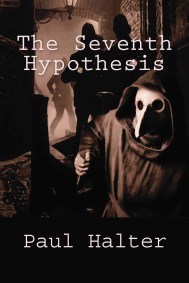
Aaah, Christmas; time to drop into the comforting arms of the ones we know and love. I tried to mix things up a bit this year, starting two Christmas mysteries to review this week…but neither really worked for me, and so I’m following my own advice and adding another pre-blogging Paul Halter title to my archives. I distinctly remembered The Seventh Hypothesis (1991, tr. 2012) to be a doozy, with less of a focus on the impossibilities — though we get two in quick succession — and more attention drawn to a complex switchback of mellifluous plotting…so how’d it stand up to a second look? Rather well, as it turns out.
Continue reading
#610: Little Fictions/Going Home – The Crime Stories of Edgar Allan Poe: ‘The Gold Bug’ (1843) and ‘Thou Art the Man’ (1844)
 The Invisible Event