#134: A Puzzle for Fools (1936) by Patrick Quentin
 You’re writing a detective novel during the most productive and creative period that the genre has ever gone through, so pay attention — the tropes aren’t tropes yet, they’re still ingredients, and the standard mix requires the following: a murder or two, an amateur detective, a closed circle of suspects, an imminent sense of threat for our hero to fret over and be dismissed by the professional police, a love interest who must fall under suspicion before our hero realises she just might be his soul-mate…any questions? Okay, off you go. Keep the dunnage to a minimum, avoid long-winded and namby-pamby descriptions — this is entertainment, remember — and for pity’s sake keep it light.
Continue reading
#133: Everything is Rather Frightening in The Black Rustle (1943) by Constance and Gwenyth Little
Over at the excellent and superbly-titled Exploring the History of Women in Mystery blog, wrangler “Unpredictable Notes” recently put up this brief summary of the EIRF school as outlined in Jacques Barzun and Wendell Hertig Taylor’s A Catalogue of Crime (1971). EIRF is a step on from HIBK (Had I But Known) and stands for Everything is Rather Frightening:
In fact, since the modern psychological novel has devoted itself to exploring the abnormal and oddly alarming, no great originality was needed to raise the emotional pitch of the murder another notch and made HIBK into EIRF – Everything is Rather Frightening.
This is a new one on me but, by the same serendipity that seems to manifest itself throughout my blogging, I was reading The Black Rustle — one of the middle period novels from the Little sisters — when I encountered this lexicon, and it struck me how perfectly all the Littles’ books fall into this categorisation.
Continue reading
#132: When Inspiration Becomes Theft

Zing!
The other day, I posted this dismissal of Raymond Knight Read’s The Third Gunman which is really nothing more than a rewriting of John Dickson Carr’s The Hollow Man, and then John Grant over at his superb Noirish blog posted this look at the 1934 film The Ninth Guest which follows rather closely the premise of Agatha Christie’s And Then There Were None…except the film predates Christie by five years, so technically ATTWN follows it closely, much to my amazement.
Continue reading
#131: This Post No Longer Exists
#130: The Invisible Event is 1 – A Thank-you

It was one year ago today — after eighteen months lurking around the blogs of Noah, Puzzle Doctor, Rich, Sergio, and TomCat — that I finally settled on a title for an undertaking of my own, registered on WordPress, put up this opening salvo, and then sat back and thought…er, so what happens now?
What has happened is that a lot of you have turned up, embraced my almost deliberately awkward corner of detective fiction — virtually no living authors, nothing after 1959 that isn’t an obscure and dense puzzle, a rejection of a great deal of the accepted classics from the era I do deign to read…seriously, it’s a wonder anyone comes here at all — and have digested my ramblings, lurked around some, commented, engaged, cajoled, and generally encouraged me to keep writing about what I love.
Continue reading
#129: Some Reflections on Editing A. Demain Grange’s ‘The Round Room Horror’ (1911)

As Ye Olde Book of Locked Room Conundrums edges ever closer — 11 of the 15 stories are now typed and ready, and TomCat is beavering away editing a twelfth — I thought I’d share my thoughts on certain aspects from the preparation, because it’s been an interesting insight into some things I’ve previously had no experience with. My apologies in advance if this seems self-aggrandising, I just think some of this will be of legitimate interest to you and have no desire to make it all “hey look how much work I’m doing”. No-one is making me do this, after all, and it’s honestly a huge amount of fun. Yes, my notion of fun is not like that of other people.
Continue reading
#128: Classic Crime Authors and Their Secret Identities – A Quiz! The Answers!
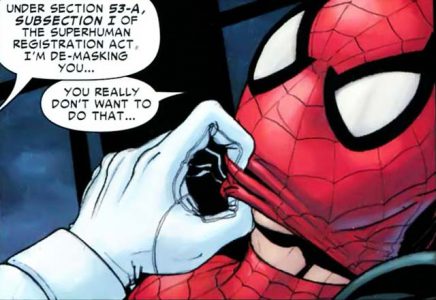
Okay, if you haven’t checked out the quiz from earlier this week then here’s your last chance before the answers spoil everything for everyone. God, just for once can’t we have a relaxing Christmas?
Er, sorry, not sure what happened there. So, on with the de-masking…
#127: ‘The Third Bullet’ and Other Stories [ss] (1954) by John Dickson Carr
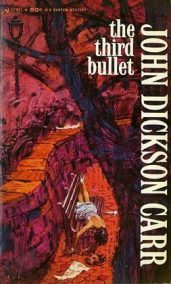 I haven’t reviewed (or read, come to that) a short story collection for a while, and it’s 1954 this month for Crimes of the Century at Past Offences meaning the time is ripe for a long-overdue (har-har) return to John Dickson Carr. I had read a couple of the stories contained herein before, but the majority were new to me, and as ever it’s a delight to see Carr’s imagination wrangle with the shorter form. Given how frequently stories of this ilk fail to conceal their workings and/or killer, it’s also great to see him do both over and over again with consummate ease, as if saying to his contemporaries “C’mon, guys, it’s simple –just do this“. We’ll take them one at a time as is my usual approach with collections — and, yes, most of these were originally published before 1954 and so might be inadmissible. Let’s just get on with it and an independent official enquiry can determine the eligibility of this at a later point.
Continue reading
#126: Classic Crime Authors and Their Secret Identities – A Quiz!
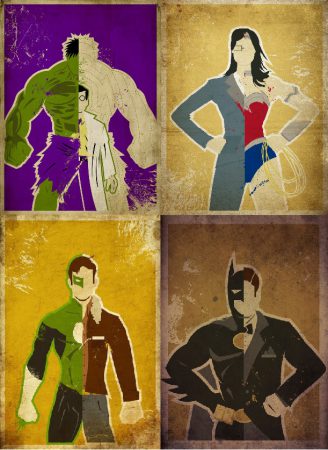
Art by Danny Haas

