
#144: The Corpse in the Waxworks, a.k.a. The Waxworks Murder (1932) by John Dickson Carr
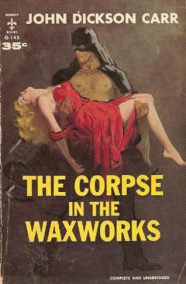 The penultimate case for John Dickson Carr’s first sleuth, Henri Bencolin, opens with a wonderful demonstration of the reputation which that juggernaut of justice enjoys among the less salubrious sections of French society: ‘Bencolin was not wearing his evening clothes, and so they knew that nobody was in danger.’ The palpable sense of relief this engenders in all who see him as he travels from tavern to tavern captures the character with a clarity that shows how much Carr grew as an author over his opening five books, and augurs well for the Fellian delights that would follow soon upon the heels of this as Carr hared his way up the detective fiction firmament and into history. And it sets the scene nicely for a deceptively complex little book that almost feels like a short story in its setup, but is wrought into something more by the expert pacing Carr has honed in the couple of short years since It Walks By Night (1930), showing here his emerging talent for taking a situation that many others would struggle to fill 20 pages with and making every nuance and moment of its 188 pages count.
Continue reading
#143: The Tuesday Night Bloggers – Cross-Dressing the Genre in Inherit the Stars (1977) by James P. Hogan

Our theme is Crime in Costume for the TNBs this month, and I’m interpreting that laterally and looking at James P. Hogan’s unabashedly scientific debut which is essentially a good old-fashioned impossible crime decorated and disguised in SF trappings.
Continue reading
#142: John Dickson Carr is Going to be 110 – Call for Submissions!

Wednesday 30th November 2016 will mark the 110th birthday of a certain Mr. John Dickson Carr, a detective novelist of some note of whom I am quite the fan. Thus, in the grand tradition of Paul Halter Day earlier this year, I am putting out a two-month notice of intent: you are cordially invited to join me in posting something Carr-related on that day in celebration of him and his contribution to the genre. It’s no secret that I think he’s the finest practitioner of detective fiction who ever lived, and it’s a bloody scandal that so much of his work is unavailable, so here’s a chance to co-ordinate some love for the man and his efforts. It is no less than he is due.
Continue reading
#141: Vintage Cover Scavenger Hunt Update
So, the halfway point of the year saw me in possession of a paltry 16 out of 75 on the Vintage Mystery Cover Scavenger Hunt set by Bev over at My Reader’s Block. So where does the three-quarter point of the year find me? If I don’t get enough of these then I’ll never be allowed into the Crime Fiction Consigliere Club, that peculiarly merciless cabal of bloodthirsty maniacs…but, well, I’ve already said too much, so they’re unlikely to let me in now anyway.
Moving on, deep breath, here goes…
#140: Death of Jezebel (1948) by Christianna Brand
 Apologies for my recent blogging absence; a combination of what I understand are referred to as ‘IRL’ circumstances and the fact that everything I picked up and tried to read was absolute dreck put something of a kibosh on things. The sensible thing seemed to be just to write off September and move on. So now I’m back with the oft-cited classic — and so inevitably hard-to-find outside of the USA, where the lovely Mysterious Press have published it — locked room mystery Death of Jezebel by Christianna Brand. Why this one? Well, it’s supposed to be awesome and I’m trying to get into Brand, having been thoroughly meh’d by Green for Danger (1944) and slightly more taken with Suddenly at His Residence (a.k.a. The Crooked Wreath) (1946). So, how did I fare?
Continue reading
#139: Hard Case Crime Publishing ‘Lost’ Erle Staney Gardner Novel!

Well, well, well, how’s this for a turn up: one of Erle Stanley Gardner’s early books from his A.A. Fair days is due to be published this December for the first time ever.
Continue reading
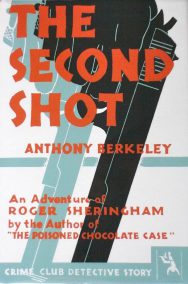
#138: The Second Shot (1930) by Anthony Berkeley
 Before Anthony Berkeley’s recurring sleuth Roger Sheringham appears at just past the halfway point of The Second Shot, we are told by narrator Cyril ‘Pinkie’ Pinkerton that we possess all the necessary information to work out who shot bounder and all-round bad apple Eric Scott-Davis. I have two problems with this: firstly it is not true, as there is sundry information revealed in the epilogue that we had no possible way of knowing, and secondly it renders the entirety of Sheringham’s investigation invalid for you, the reader, as you know there’s nothing new to be uncovered. It’s an odd decision for an author who strove hard to redefine the limits of the ‘mere’ puzzle novel, but then Berkeley has always been rather erratic in his output to my tastes.
Continue reading
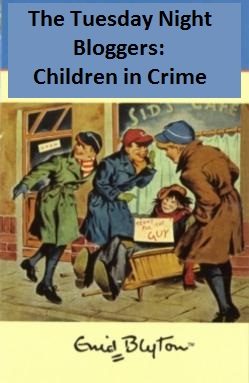
#137: The Tuesday Night Bloggers – Threat Escalation for Younger Readers in Enid Blyton’s Five Get Into a Fix (1958)
 I’d like to get a fundamental contention out of the way: T.H. White’s sole detective novel Darkness at Pemberley came to my attention for the locked room murder that opens it, but I don’t feel it qualifies an impossible crime (the room can be unlocked at will, for one…). Had White made a couple of different narrative choices — not even in the scheme itself, purely in the structure of how he presents the problem — then it could be an ‘impossible alibi’ problem. But he doesn’t. You’re told the guilty party before they’ve had a chance to really fall under suspicion or even mention the alibi they’ve given themself, and so you have a well-that-would-have-been-impossible-if-they’d-been-given-a-chance-to-deny-it crime. Which I’m pretty sure is a new sub-sub-genre, though perhaps not one that we’ll get many further books in…
