#164: On Failing to Engage with “the Swedish John Dickson Carr” – Deadly Reunion (1975) by Jan Ekström [trans. Joan Tate 1983]
Given that John Dickson Carr — who would have been 110 at the end of the month, folks — published seventy-eight books over a 41 year career that encompassed such joys as Till Death Do Us Part and such nadirs as Papa La-Bas, there’s probably no-one who couldn’t be compared to him at some point in his career. So when Swedish writer Jan Ekström’s 1975 novel Ättestupan is translated into English and the synopsis opens with the tantalising promise ‘Often called the Swedish John Dickson Carr…’ well, you’re going to get a lot of peoples’ attentions even though it doesn’t at first glance really tell you anything.
Continue reading
#163: The Spaniard’s Thumb (1949) by Norman Berrow
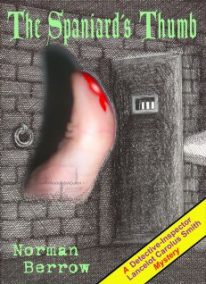 We should be thankful that Norman Berrow left behind him such wonderful novels as these that make it almost possible to get a glimpse into the workings of his mind. I mean, who else would predicate a novel on the grounds of a giant disembodied thumb vengefully crushing to death anyone who ventures into its lair? It’s a setup too barmy for John Dickson Carr’s fertile impossibilities, too outré for the straight-laced world of Agatha Christie, Miles Burton, Christianna Brand, and their ilk, and doesn’t have enough train journeys for Freeman Wills Crofts. It’s too comedic and explicit for the standard horror get-up of M.R. James or those who followed him…honestly, had Berrow not written this there’s really no-one else who could have.
Continue reading
#162: The Tuesday Night Bloggers – Meta-Fictional Historical Deconstruction in Magpie Murders (2016) by Anthony Horowitz
Anthony Horowitz is probably my favourite contemporary author of detective fiction, as his superb Sherlock Holmes novel The House of Silk (2011) and its genuinely exceptional follow-up Moriarty (2014) displayed an affinity for both the milieu of Holmes and the necessary misdirection and construction of a blistering plot that blindsides you at will which seems to elude many who try to walk this path these days. His earlier novel The Killing Joke (2004) isn’t really detective fiction per se, but shows a playfulness with narrative that is aware of many of the tropes of genre fiction and is worth mentioning here precisely because of how much it foreshadowed the work he does in Magpie Murders when it comes to deconstructing the classical detective and his ilk.
Continue reading
#161: Hawk & Fisher (1990) by Simon R. Green
 As a parody of the detective novel, the maverick cop genre, and the low Fantasy genre, Simon R. Green’s Hawk & Fisher takes quite some beating — it is an honestly hilarious take on the tropes of three. I don’t think I’ve laughed so much since reading…well, possibly anything; almost every page contains some wonderful joke or savage undercutting of the false sincerity of the situations encountered, not unlike William Goldman’s timeless The Princess Bride. For instance, Hawk is supposedly an expert in hand-to-hand combat with an axe, but he has only one functioning eye and therefore must lack any depth perception; it’s an absolutely genius piece of subversion, and such examples are rife. The only problem is that I have a sneaking suspicion — only a sneaking one, mind — that this book is in fact supposed to be taken seriously. Very Seriously Indeed.
Continue reading
#160: The Tuesday Night Bloggers – Who Can You Trust? Verisimilitude in Paul Doherty’s A Murder in Thebes (1998)
When you stop to think about it, the notion of ‘within living memory’ is a fascinating concept. Very few of us possess the peremptory nature required to call someone a liar to their face, but the idea that something is more accurately recalled when it is within living memory is somewhat false — yes it is recalled, but the precise accuracy of any memory is subject to all sorts of caveats, not least of which are situational bias, subsequent events, personal investment, personal protection, personal interpretation, and the situation that recalled the memory in the first place. Nevertheless, as any historian will tell you, a straw poll of enough people will reproduce a fairly unbiased picture of any event within living memory, and so a range of sources often gives the clearest picture.
Continue reading
#159: John Dickson Carr-ossword
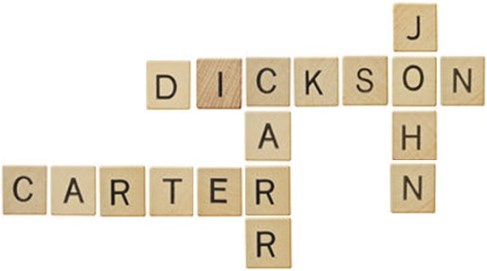
Well, we’ve already had John Dingbats Carr, now it’s time for another word puzzle to, er, honour the finest detective novelist of all time!
As part of my month of occasional Carr-related shenanigans in the build-up to #Carr110 on 30th November, I’ve created a crossword around the titles of novels published under Carr’s various pseudonyms over his career. Yes, I am that…cool?
Continue reading
#158: The Tattoo Murder Case, a.k.a. The Tattoo Murder (1948) by Akimitsu Takagi [trans. Deborah Boehm 1998]
 Since Soji Shimada’s The Tokyo Zodiac Murders was republished by Pushkin Vertigo, I’ve found myself reading increasing amounts of Japanese detective fiction: the shin honkaku of The Decagon House Murders by Yukito Ayatsuji and The Moai Island Puzzle by Alice Arisugawa from Locked Room International, The Salvation of a Saint by Keigo Higashino (yes, The Devotion of Suspect X will follow in due course…), and I’ve recently started Gosho Aoyama’s Case Closed (a.k.a. Detective Conan) manga. And authors such as Seicho Matsumoto and Kyotaro Nishimura are climbing ever-higher up by TBB list as I encounter more of the high-quality work that has been translated for our pleasure. And, of course, the proliferation of impossible crimes in these stories doesn’t hurt, with the added cross-cultural glimpses also offered simply making them an even more attractive proposition.
Continue reading
#157: The Tuesday Night Bloggers — A Background of History in The Red Widow Murders (1935) by Carter Dickson

“The story of the Widow’s Room…begins in the month of August, and in the city of Paris, and in the year 1792. It begins with the Terror, but it has not ended yet.”
Upon reflection, it’s fairly astounding that John Dickson Carr published novels for 20 years before finally writing his first ‘true’ historical tale with The Bride of Newgate in 1950. Throughout so much of his early work there is a miasma of the past pushing through, and a revelling in the detail of such times that threatens to overload the present story as Carr seems far more interested in dumping as much detail as possible from, say, the French Revolution upon you so that the Weight of History can be added to the press of his peculiarly heady tales of mystery and imagination.
Continue reading
#156: A Reminder — #Carr110 — One Month to Go!


