The Tuesday Night Bloggers
#339: Highs & Lows – Tall Tales and Subterranean Shenanigans
Okay, after three weeks of opinion, and with Tyline Perry’s murder-in-a-coalmine-centred The Owner Lies Dead (1930) up for review this Thursday, let’s have some much-needed objectivity: here is a selection of crimes where altitude plays a part.
Disclaimer: All heights are approximate. And fictional.
Continue reading
#336: Highs & Lows – Agatha Christie from The Mysterious Affair at Styles (1920) to Hallowe’en Party (1969)

Wow, those seems like arbitrary dates, hey? Well, I am up to Hallowe’en Party in my reading of Christie (mostly in order, too…), and will more than likely read the final four novels she wrote — Passenger to Frankfurt (1970), Nemesis (1971), Elephants Can Remember (1972), and Postern of Fate (1973) — this year, and they’re near-universally agreed to be terrible. So this seems a good point to do some reflecting.
Continue reading
#333: Highs & Lows – Five Reading Lowlights of 2017
Last week, the good; this week, the ugly: five of the low points from my reading in 2017. No further introduction necessary.
Continue reading
#330: Highs & Lows – Five Reading Highlights of 2017

January, month of rebirth and self-recrimination. For every resolution to improve there must be some frank assessment of what debilitated you in the first place, and so the month can take on a curiously Jekyll-and-Hyde aspect for some. So my Tuesday posts for this month will be a mixture of what is good and bad in my reading, and where better to start than a celebration of the previous 12 months?
Continue reading
#326: Reflections on Detection – ‘Decline of the English Murder’ (1946) by George Orwell and the End of the Golden Age
George Orwell’s essay ‘Decline of the English Murder’ (1946) is focussed not on the quality of said fictional undertakings but rather the attitudes of a society suffering the “brutalising effects of war” and thus immune to the horror of murder the perspectives of both commission and punishment. Citing the case of the Cleft Chin Murder, in which three people were killed with no meaningful motivation and the opprobrium of the public was vented upon the couple responsible, the sentiment of the final line is easily the most powerful; “crimes as serious as murder should have strong emotions behind them”.
Continue reading
#323: Reflections on Detection – ‘Why Do People Read Detective Stories?’ (1944) and ‘Who Cares Who Killed Roger Ackroyd?’ (1945) by Edmund Wilson [feat. Gladys Mitchell]
In October 1944 and January 1945, the American newspaper columnist, writer, and critic Edmund Wilson published two essays entitled, respectively, ‘Why Do People Read Detective Stories?’ and ‘Who Cares Who Killed Roger Ackroyd?’. The second was in response to the exhortations from readers who, appalled by the first, sent him recommendations to improve his outlook…recommendations which, by all accounts, failed miserably.
Continue reading
#320: Reflections on Detection – The Golden Age of Murder (2015) by Martin Edwards
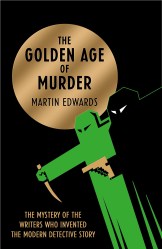
We live in a world where the 80 novels and collections of short stories by Agatha Christie are in no doubt — she wrote them, they were published, and they will doubtless be available in perpetuity. This is equally true of the work of John Dickson Carr, though less readily available, or Miles Burton or Christianna Brand; the work is closed, finished, and while an occasional unknown one may appear at some point, it’s reasonable to assume that there’s nothing meaningful to be added to these bibliographies.
Continue reading
#316: Stand Back, Detective Novelist at Work in The Mystery of the Invisible Thief (1950) by Enid Blyton
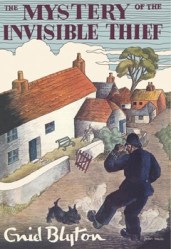
No discussion of children’s literature is complete without at least a passing reference to the 14,762 books Enid Blyton wrote in her career. Somehow I’d heard of this one and its implied impossible disappearance, and it seemed perfect for my Tuesday posts in November on precisely this type of book. Generally you know what to expect from Blyton — a poorly-dated whiff of imperialism, comfortable middle-class adventures, ginger beer — but prepare for a bit of a shock: the rigour of the detection in this is something to behold.
Continue reading
#313: All the Feels and I Just Can’t Even About The Mysterious Disappearance of Leon (I Mean Noel) (1971) by Ellen Raskin
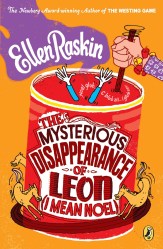
 The Invisible Event