The Tuesday Night Bloggers
#390: Minor Felonies – Feel the Fear (2014) by Lauren Child
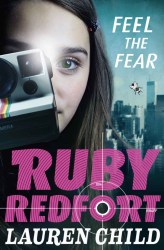
I apologise if I appear to be giving some import to my own fevered speculations here, but a few weeks ago I wrote that “I absolutely commend the role literature plays in helping people, young or otherwise, make sense of the world around them, but it’s also nice that sometimes a novel about a couple of 11 year-olds solving a murder can just be about a couple of 11 year-olds solving a murder”. I referenced it once already, and now I’m doing it again. Yeesh, my ego.
Continue reading
#387: Minor Felonies – Alice Jones: The Ghost Light (2017) by Sarah Rubin
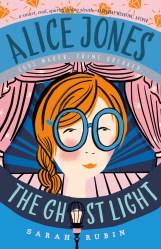
I am aware that some (many/most/all?) of my readers do not share my fascination with the current Young Adult detective fiction scene, and to a certain extent I sympathise. But in an age where detection is eschewed in grown-up circles — with unreliable narrators prevailing, and amnesia conveniently repealed at the 85% mark to hurry in a conclusion because clewing has failed — it heartens me to know that younger generations are being raised with access to the rigorous principles that delight so many of us.
Continue reading
#384: Minor Felonies – Smart (2014) by Kim Slater
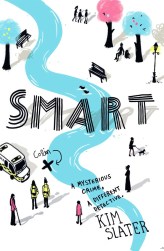
Reviewing two murder mysteries by Tanya Landman last week, I wrote that “I absolutely commend the role literature plays in helping people, young or otherwise, make sense of the world around them, but it’s also nice that sometimes a novel about a couple of 11 year-olds solving a murder can just be about a couple of 11 year-olds solving a murder”.
Continue reading
#381: Minor Felonies – Mondays Are Murder (2009) and Dead Funny (2009) by Tanya Landman
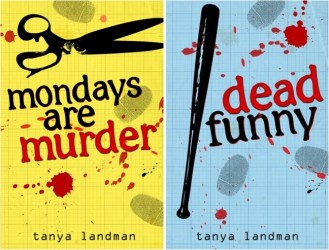
Tuesdays in March were dedicated to YA detective fiction from the Golden Age — just here on this blog, I mean, you didn’t miss a memo or anything — and Tuesdays in May will be YA detective fiction from the 21st century. First up are Tanya Landman’s first two Poppy Fields novels, Mondays Are Murder and Dead Funny (both 2009).
Continue reading
#378: The Tuesday Night Bloggers – The Great Detectives – Week 4
Good heavens, it’s practically the end of the month already, and so this is the final week of the reforming Tuesday Night Bloggers (we’ll be back, I’m sure) in their exploration of the great detectives of fiction.
Continue reading
#375: The Tuesday Night Bloggers – The Great Detectives – Week 3
Another week– where does the time go, eh? — another serving of reflections on the Great Detectives of Fiction from the blogosphere…
Continue reading
#372: The Tuesday Night Bloggers – The Great Detectives – Week 2
Another week, another set of posts from our GAD blogging collective, running down their own personal favourites of the great detectives of fiction.
Continue reading
#369: The Tuesday Night Bloggers – The Great Detectives – Week 1


 The Invisible Event