Reviews
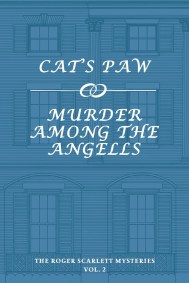
#498: Little Fictions – The Uncollected Paul Halter: ‘The Gong of Doom’ (2010) and ‘The Man With the Face of Clay’ (2011) [trans. John Pugmire 2010/2012]

With Paul Halter’s debut novel The Fourth Door (1987) being the subject of my 500th post this coming weekend, it’s time to dive into two more of his short stories from the pages of Ellery Queen Mystery Magazine.
Continue reading
#497: Plus ça Change, Plus c’est la Même Chose dans L’onzieme Petit Negre (1977) de Jacquemard-Sénécal [trans. Gordon Latta 1979]

For a book set against the backdrop of a play based on one of Agatha Christie’s most famous works, and featuring a detective the front flap tells us is “unparalleled even by Hercule Poirot”, there’s more than a passing whiff of Ngaio Marsh about this one.
Continue reading
#496: The Beast Must Die (1938) by Nicholas Blake
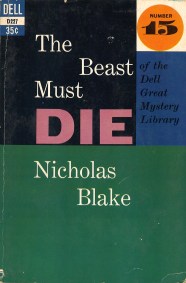


“I am going to kill a man” — it must surely be the most famous opening line in the whole firmament of Golden Age detective fiction, and but for Sherlock Holmes and “the” woman I’d suggest the famousest opening line in all detection ever. When Aidan at Mysteries Ahoy! and I realised we were reading this near-contemporaneously, he kindly agreed to delay his review by a week that we might publish our thoughts as simultaneously as possible — I’ve not read his review as I write this, but I will by the time you’re reading it, and I am fascinated to find out how successfully he feels the game is played after that wonderful opening serve.
Continue reading
#495: Little Fictions – The Uncollected Paul Halter: ‘Nausicaa’s Ball’ (2004) and ‘The Robber’s Grave’ (2007) [trans. John Pugmire & Robert Adey 2008/2007]
My five-hundredth post approacheth — a reread and re-evaluation of The Fourth Door (1987), the debut novel of M. Paul Halter, of whom I am quite the fan — and so Tuesdays in February will focus on the six translated Halter stories featured in Ellery Queen Mystery Magazine that have yet to be collected into a second English-language anthology.
Continue reading
#493: The Groote Park Murder (1923) by Freeman Wills Crofts
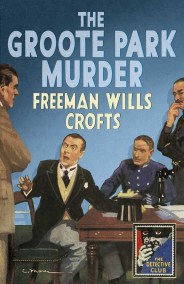
A mere nine books into the 37-strong output of Freeman Wills Crofts (soon to be 38 thanks to the excellent work of Tony Medawar and Crippen & Landru), I’m going to make a bold assertion: Crofts, I suggest, went out of his way to never write the same type of book twice. Oh, I know, you’ve heard they’re all just a boring man in a boring office poring over boring train timetables and talking boringly about boring tides on the way to solving a boring murder (to be honest, the only truly boring thing about Crofts is being told how boring he’s supposed to be)…but first read nine books by the man before telling me I’m wrong.
Continue reading
#490: It Howls at Night (1937) by Norman Berrow
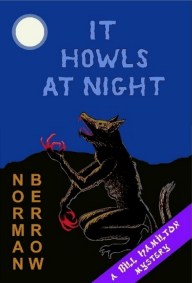
The detective novel often requests that you, the reader, swallow some fairly difficult concepts in order to fully engage with it — that someone can organically devise the methods of murder and misdirection depicted within, for instance, or that the mechanical solutions sometimes put froward do actually work in the manner described. However, the delightfully creative Norman Berrow, in his werewolf-on-the-prowl novel It Howls at Night (1937), demands of you the greatest degree of forbearance I’ve yet encountered, a hurdle some may struggle to overcome, in requiring you to believe that a man would actually go by the name of ‘Pongo Slazenger’.
Continue reading
#488: A Murder is Announced – Case for Eight Detectives in The Seven Deaths of Evelyn Hardcastle (2018) by Stuart Turton
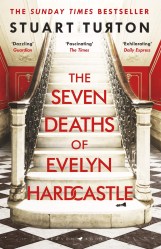
For once, I, on my blog typically concerned with titles from some 60 to 80 years ago, am allowing external factors to influence me here. Not just in looking at a book published during my own lifetime (that happens not infrequently) but one that’s been in the news of late, too.
Continue reading
#487: The Polferry Riddle, a.k.a. The Choice (1931) by Philip MacDonald

For now, like, the fourth time in my experience — and the second involving a book by Philip MacDonald — the Roland Lacourbe-curated list of 100 excellent impossible crime novels has disgorged a title which is not in any way an impossible crime. I’m still fully capab- (hang on, carry the one…then minus…yup, you’re good) fully capable of enjoying a book which is sans-impossibility, but I find it weird that a list compiled by such eminent heads includes so many books that don’t qualify. The simplicity of MacDonald’s own narratives should be a giveaway anyway, since he’s really not about the complexities or misdirection, sticking more to a simpler, thriller-tinged path.
Continue reading
#485: “What I say is, is it wise or necessary to rake up things?” – Memory as Evidence in Elephants Can Remember (1972) by Agatha Christie

 The Invisible Event