Reviews
#676: The Heel of Achilles (1950) by E. & M.A. Radford
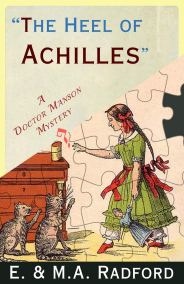


When a man wrongly implicated in criminous deeds finds himself at the mercy of a blackmailer, is pushed to the limit by the blackmailer’s avarice, kills said blackmailer and goes to great lengths to cover up the crime only to find himself pursued by a highly-observant criminologist…you’re not the only one getting Mr. Pottermack’s Oversight (1930) vibes. And, Pottermack being one of my most delighted discoveries of the last couple of years, you’d expect The Heel of Achilles (1950) by E. & M.A. Radford to suffer by comparison, but it is in fact simply proof of how much richness the Golden Age was able to find in the same material.
Continue reading
#673: Cut and Run (1941) by Martin Tanner
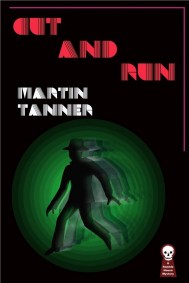
We tend to take it for granted that authors like John Dickson Carr and John Rhode created noms de plume effectively to enable them to produce double the amount of their usual fiction. Central character names aside, Rhode’s works don’t really differ from ‘Miles Burton’s nor Carr’s from that of ‘Carter Dickson’. You’d think they’d want a day off every now and then (and their critics might suggest they could have used one). One would expect a new identity to be quite freeing — see Agatha Christie occasionally escaping into the social concerns of ‘Mary Westmacott’, or Anthony Berkeley rearranging his palette as ‘Francis Iles’ — a chance to experiment in private, as it were.
Continue reading
#671: “At this point, everything seems too far-fetched to be taken seriously…” – The Invisible Circle (1996) by Paul Halter [trans. John Pugmire 2014]
A triptych of needs are being met here: firstly a last-minute replacement for the Modern Locked Room Mystery for TomCat I’d intended to write about, secondly the addressing of a Paul Halter book not yet reviewed on this blog, and thirdly some tangential research for next Saturday’s In GAD We Trust episode.
Continue reading
#670: Sleeping Murder (1976) by Agatha Christie
Agatha Christie famously wrote the final novels to feature her two biggest sleuths well ahead of their publication, and where Hercule Poirot’s swansong Curtain (1975) was a joyous return to the heights for a character she had grown weary of, Sleeping Murder (1976) — the last hurrah for Miss Jane Marple, a character you can’t help but feel Christie had a growing respect for as she aged — is…fine. Yes, it had a cogency and precision that At Bertram’s Hotel (1965) and Nemesis (1971) sorely needed, but in all honesty the sound and fury on display here signifies something that doesn’t even add up to a hill o’ beans, if you’ll forgive my mixing of classics.
Continue reading
#667: A Kiss Before Dying (1953) by Ira Levin
In our recent discussion about inverted mysteries, Aidan made Ira Levin’s debut A Kiss Before Dying (1953) sound simply fabulous: the first part of the novel follows a nameless man as he commits a murder, the second part is then concerned with unpicking his identity, and the third is the fallout. Much like Antidote to Venom (1938) by Freeman Wills Crofts, then, you get both an inverted and a traditional detective story, knowing who the killer is and watching characters who aren’t aware of his identity coming to that awareness, with the additional kick of only finding out yourself with about 100 pages remaining in the book.
Continue reading
#664: The D.A. Breaks an Egg (1949) by Erle Stanley Gardner

Well, it’s taken me about twice as long as I thought it would, but we’re finally at the end of Doug Selby. This is the ninth and final novel to feature Erle Stanley Gardner’s District Attorney of Madison County — a place where “they roll up the sidewalks and put them in mothballs at nine or ten o’clock at night” and that in the words of P.L. Paden, new owner of the Blade newspaper, “has been small time [and is] about to grow up”. Certainly one change is in evidence here: events of the preceding novel carry over in a way that spoils one of the best surprises of that book, so make sure you’ve read The D.A. Takes a Chance (1948) before picking this up.
Continue reading
#663: Minor Felonies – The Mystery of the Hidden House (1948) by Enid Blyton
I was recently moved to suggest that The Secret of Hangman’s Inn (1956), the sixth title in the Ken Holt series by husband-and-wife team Bruce Campbell, was the point at which that series found its feet and jumped to life. Today I’m going to promulgate that The Mystery of the Hidden House (1948), the sixth title in the Five Find-Outers series by one-woman publishing sensation Enid Blyton, is the point where this series finds its feet and jumps to life. Coincidence? Yes, undoubtedly.
Continue reading
#661: The Mystery of the Yellow Room (1907) by Gaston Leroux [trans. ???? 1909]

Can a book still be a masterpiece if it’s not brilliant? In the case of Gaston Leroux’s debut The Mystery of the Yellow Room (1907) — which plays up to and anticipates so many of the established and forthcoming trappings of detective fiction — I’d say yes. The focus on propelling the plot at a time when even those who were focussed on plot weren’t exactly propulsive is both admirable and impressive, and the creativity Leroux brings to a subgenre that would utilise the secret passage for another 60+ years is staggering. But it would be folly to claim that age has not caught up with it and that this was in the same class as the genre’s genuine masterpieces of the 1930s.
Continue reading
#660: Minor Felonies – Mic Drop (2020) by Sharna Jackson

 The Invisible Event