Author: JJ

#26: British Library Crime Classics republishing Murder of a Lady (1931) by Anthony Wynne!

I don’t really do news, but am very excited to learn that one of the forthcoming titles the British Library will be including in its increasingly excellent Crime Classics collection is Anthony Wynne’s 1931 impossible crime novel Murder of a Lady (a.k.a. The Silver Scale Mystery). It’s a locked room of some repute, and has been preposterously hard to find for many a year now – I’ve not read it myself, and so am doubly excited that it’s being brought back. Everyone’s favourite rainforest-named internet retailer has the following synopsis:
Duchlan Castle is a gloomy, forbidding place in the Scottish Highlands. Late one night the body of Mary Gregor, sister of the laird of Duchlan, is found in the castle. She has been stabbed to death in her bedroom – but the room is locked from within and the windows are barred. The only tiny clue to the culprit is a silver fish’s scale, left on the floor next to Mary’s body. Inspector Dundas is dispatched to Duchlan to investigate the case. The Gregor family and their servants are quick – perhaps too quick – to explain that Mary was a kind and charitable woman. Dundas uncovers a more complex truth, and the cruel character of the dead woman continues to pervade the house after her death. Soon further deaths, equally impossible, occur, and the atmosphere grows ever darker. Superstitious locals believe that fish creatures from the nearby waters are responsible; but luckily for Inspector Dundas, the gifted amateur sleuth Eustace Hailey is on the scene, and unravels a more logical solution to this most fiendish of plots.Anthony Wynne wrote some of the best locked-room mysteries from the golden age of British crime fiction.This cunningly plotted novel – one of Wynne’s finest – has never been reprinted since 1931, and is long overdue for rediscovery.
This is the first locked room/imposible crime that the British Library have republished, so here’s hoping it’s a sign of more to come as the series grows in popularity. Series editor and current Crime Writers’ Association president Martin Edwards will doubtless have more to say about this on his blog, so keep an eye on that for further information.
Publication is cited for January 2016…can’t come soon enough!
See also:
http://moonlight-detective.blogspot.co.uk/2011/08/hassle-in-castle.html
#25: Modern ‘Cozy’ Crime Fiction & Me – A Non-Love Story
 Crime blogger Kate Jackson – whose fantastic work over at Cross-Examining Crime puts my own pale attempts at getting my thoughts online to shame – reviewed Kel Richards’ The Corpse in the Cellar a little while ago, which was serendipitous at the time because literally two or three days before I’d seen it in my local Waterstones. The bland and slightly innocent-looking cover – intentionally or otherwise calling to mind the recent and deservedly successful British Library Crime Classics – and its billing as ‘A 1930s Murder Mystery’ got me excited for another resuscitated classic and forgotten author whose work was enjoying a reprint for the first time in 80 years on the back of the revival of interest in our beloved Golden Age. Except that, upon inspection, Richards turns out to be a contemporary novelist and the book was in fact originally published earlier this year.

Continue reading
#24: Our First Murder (1940) by Torrey Chanslor
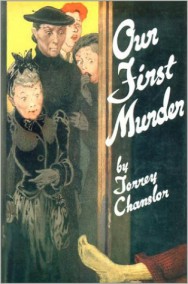 I’m not really a fan of the adjective ‘cosy’ (actually, being an Americanism, technically it’s ‘cozy’) when applied to classic detective fiction, but I appreciate that it serves a purpose. It paints a picture of a land far from sadistic serial killers and pulse-pounding races against time, a land inhabited by little old ladies and bloodless death where everything is resolved, or at least halted, for scones and cream at 3pm, where the unpleasant never prosper and where thuggery and what little violence is allowed are perpetrated at the severe risk of extradition. A great many classic crime authors couldn’t actually be any further from ‘cosy’ if they tried, hence my opposition to the term, but right now that’s beside the point.
Continue reading
#23: Death Leaves No Card (1939) by Miles Burton
 A door is broken down, a dead body is found behind it; there is no other exit from the room, but equally no sign of a weapon nor any evidence of suicide…these classic staples of the archetypal impossible murder are put on page one of Miles Burton’s Death Leaves No Card. Added to this is the puzzle of precisely how the deceased came to decease, as there is sign of neither violence nor harm on the body, no evidence of poison or gassing, and, this being the late 1930s, the house is not yet fitted with electricity so it can’t have been electrocution. It may or may not be a locked room, since the window might or might not have been open, but the unclear nature of the death definitely makes it an impossible crime in my eyes. Either way, cue sensible Inspector Henry Arnold.

Continue reading
#22: The Nine Wrong Answers – Popular Authors Who Fail to Impress
Much like you – well, exactly like you, I’d imagine – there are authors I love and authors I don’t. Almost as a counter-point to last week’s My Blog Name in Books, here is my list of nine ‘classic’ crime authors whose work I’m unlikely to ever touch again and – in some cases – whose continued popularity is, in all honesty, a complete mystery to me. I cast no aspersions by this, it’s just interesting to throw some ideas around and get a sense of people’s tastes and preferences.
As ever, there are rules: they must be dead (I’m not one for trolling), I must have read at least four of their books (to give them a fair chance) and they must fall into my self-imposed 1920 to 1950 envelope. Presented alphabetically by surname, too.
#21: Buy Books for Syria @ Waterstones

I promise I’m not soapboxing and I promise I’m not going to shove down your throat every good cause that I come across, but I wanted to highlight that Waterstones’ Buy Books for Syria initiative starts in the UK today. Effectively, you buy a qualifying book from a Waterstones store and the full price goes to Oxfam for them to put to use in their efforts to help those people fleeing the conflict in Syria.
Having seen first-hand some of those affected while in Greece this summer, the sheer scale of this crisis really does dwarf any attempt at a rational or an intelligent response. It is tempting and entirely understandable to feel helpless and ineffective in the face of such magnitudes of pain and sorrow, and to therefore not feel that anything you can do – puny old you, all on your own – will make any difference at all. If something like this will help give people a way to feel less bewildered, and so incentivise them into contributing, surely it must be a good thing.
That is all.
#20: Policeman’s Evidence (1938) by Rupert Penny
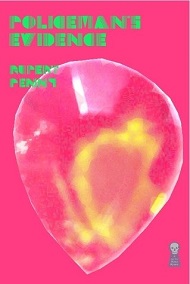 If you’ve never bought a house on the questionable basis of a 300-year-old document implying the miserly, hunchbacked previous owner might possibly have hidden a marvellous treasure trove somewhere thereabouts, well, you must not be independently wealthy. You’ll also, then, have never invited various family and hangers-on down to said house to engage in a search invoking the types of ciphers that would give Dan Brown’s Robert Langdon a damp counterpane and – consequently – never had to deal with the aftermath of a suicide-that’s-probably-murder in a locked, treble-bolted and exitless room.

Thankfully for you, however, all these things happened to Major Francis Adair, and Tony Purdon and Chief-Inspector Edward Beale were on hand to relay it, albeit through the pen of Rupert Penny, the pseudonym of Ernest Basil Charles Thornett (who would go on to publish one book under another nom de plume, Martin Tanner – are you keeping up?). Policeman’s Evidence is the third of Penny’s novels, available thanks to the continued superlative efforts of Fender Tucker’s Ramble House, and it’s probably the most classically-constructed of his books that I’ve read, as involved and well-planned a puzzle as you’ll find from this era. An attack on a member of the household hints that a disgruntled ex-employee might be lurking suspiciously and with harmful intent, plenty of possibly-blameless-but-possibly-significant interactions occur, and everything is laid out with scrupulous fairness in time for the challenge to the reader to solve the puzzle before Beale lays his hand on the perpetrator.
Continue reading
#19: Five to Try – Starting John Dickson Carr
John Dickson Carr wrote just shy of 80 books and, since he is the finest practitioner of detective fiction the world has ever seen, you would like to know where to start in this cavalcade of brilliance (because some of them are bound to be, er, unbrilliant). I am here to help.
Just to be clear on the rules: novels that are readily available, as always, restricted to impossible crimes because that’s why we love him, and presented in order of recommended reading (so, start with the first one). That is all, here we go…
 The Case of the Constant Suicides (1941) Hey, you; yes, you, with the cup of tea. I want you to write a book about people inexplicably hurling themselves out of a window when sleeping alone in a room at the top of a tower. I want it to be creepy, I want it to be fast-moving, I want it to have an undertone of threat; it also has to be fairly-clued, the culprit responsible must be a complete surprise and you can kill as many characters as you like. Oh, and make it funny. Make it laugh out loud, technicolour funny, but light enough to take up residence in your brain without leaving so much as a shadow and without undoing the threat mentioned above. What’s that? It’s already been done? Oh, forget it, then I’ll just read that book instead. [Available from Rue Morgue Press in print only, the recommended version as some other publishers inexplicably and unforgivably give away key points in their cover art]

Continue reading
#18: My Blog Name in Books
Puzzle Doctor, curator of In Search of the Classic Mystery Novel, put this up the other day:
Well, you can blame Cleopatra Loves Books for this one…
Apparently My Name In Books was a meme that went around over the summer (and over my head as well – never noticed it) but I thought I’d give it a go – namely spelling out my name in the titles of my favourite books. Now, there’s an obvious problem with a name like The Puzzle Doctor – can you spot it? But nevertheless, I thought it was worth a go. But try as I might, the only thing I could come up with for Z was Zzzz for any of the Brother Cadfael books. But this is a friendly blog, so I couldn’t possibly say that. Instead, I thought I’d do My Blog Name In Books.
It got me thinking; I’m sticking to a self-imposed crime focus on this blog, but it might be nice to acknowledge the SF and others that have played significant roles in my reading life. And so I give you…My Blog Name in Books:
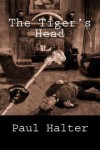
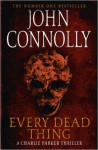
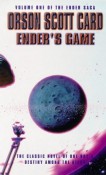

 The Invisible Event