
Orion’s digital crime arm The Murder Room will apparently be ceasing operations in the near future, meaning to those of us in the UK the loss of high-quality e-books from classic Golden Age authors like Anthony Boucher, Pamela Branch, John Dickson Carr, J.J. Connington, Stanley Ellin, Erle Stanley Gardner, Geoffrey Household, Ronald Knox, John D. Macdonald, Helen McCloy, and E. L. White, and more contemporary fare such as Charles Willeford and many others.
They have excelled in the high standards of their output, the range of authors they promoted, the fact that they made these books available to the widest possible market, and their commitment to the Golden Age long before it was fashionable again. Goddammit, this has really spoiled my day.




 Death Invites You, the third novel published by Paul Halter – who is swiftly gaining a deserved reputation as a deviser of baffling locked room puzzles – is based around the murder of man found dead in his study with the door bolted from the inside, seated at a table set for a meal. The victim, Harold Vickers, is an author who has gained a deserved reputation as a deviser of baffling locked room puzzles and whose next novel – Death Invites You – was due to feature a victim found dead in his study with the door bolted from the inside, seated at a table set for a meal. It is unfortunately never revealed whether Vickers’ victim was an author of some repute working in the field of locked rooms and whose next novel was due to feature such a crime, but, given the hall of mirrors that you enter at the beginning of any Halter narrative, it frankly wouldn’t surprise me…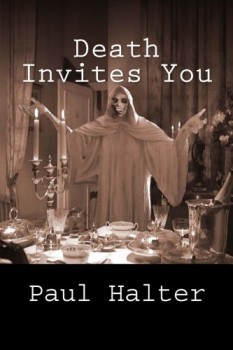



 The Invisible Event