The Tuesday Night Bloggers — an autonomous collective of GAD bloggers who unite around a common theme — have returned! To tie in with the release of The 100 Greatest Literary Detectives in a few weeks, a compendium to which our very own Kate Jackson has contributed an entry, everyone is picking and writing about their own favourite sleuths this month.
Something a little different today: ahead of the UK publication of his superb biography of forgotten Australian authors, Ryan O’Neill has kindly agreed to share some information about one of the authors featured therein — the neglected detective fiction great Dame Claudia Gunn…
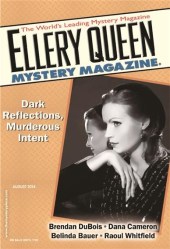
Following the hugely enjoyable and terrifyingly ingenious machinations of Szu-Yen Lin’s Death in the House of Rain (2006), published in English last year by Locked Room International, I was delighted to discover that another Lin story was available in English, ‘The Ghost of the Badminton Court’ from the August 2014 edition of Ellery Queen Mystery Magazine.
Disclosure: I proof-read this book for Locked Room International in February 2018.
There will come a time when my love of the puzzle novel will result in me having to recuse myself where reviews are concerned, I think, because my response to the machinations of the most complex of GAD is simply not that of a normal human being. Until such a time, however, I shall continue to frolic and bask in the joy of the likes of Noel Vindry and his pattern-obsessed kin because, frankly, it’s just so much fun. The Double Alibi (1934) is doubtless the most twisty yet translated into English by John Pugmire, and if anything approaching this level of ingenuity remains then, dude, I hope we get to see that as well.
Every so often someone will email me to let me know of books that may pique my interest: Kate at CrossExaminingCrime has brought several Freeman Wills Croftses to my attention, and Ben of The Green Capsule has also informed me of some bargains, including today’s title that, it’s fair to say, we’re still not sure who was most excited to discover existed.
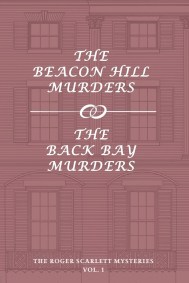
The classic GAD puzzle plot being the complex and obstreperous beast it is, we should not be surprised that sometimes it took two brains to wrestle in into readable shape (under a single name so as to simplify things) — Ellery Queen, Francis Beeding, Kelley Roos, Patrick Quentin, etc. Now, thanks to the work of Coachwhip and Curtis Evans, we can all add another collaborative nom de plume to our libraries with Dorothy Blair and Evelyn Page’s Roger Scarlett and their Boston-set country house conundra. And, as with their distinguished kin, they prove to have an equally troublesome first swing at this while also showing a huge amount of promise.
An orphaned young man who lives with his red-haired best friend’s family, all the while having adventures…yeah, okay, no, the Harry Potter similarities stop (and indeed, don’t even start — he’s not an orphan, his father’s just away a lot) there. But it’s interesting to reflect, as these YAGAD novels are making me do, on the format that adventures for younger readers take and how little the classic tropes have needed to change in the intervening decades.
A recent post by Noah on the topic of book-scouting came hard upon the back of an experience of mine that really brought home the frequent futility of buying second-hand books. And, since the timing was rather too apt to ignore, I thought I’d share my frustrations. But I’m not ranting; be sure to note at the simplicity of the ensuing vocabulary, indicative as it is of me in a reflective (rather than bad) mood.
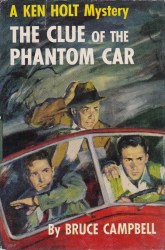
Someone who venerates plot to the extent I do should not have enjoyed this book as much as I did. There’s a Nancy Drew-esque dollop of convenience at every turn, and a series of coincidences and sudden realisations that just happen to tie these actions together far more tightly than seems possible at first glance…and I should abominate such quick answers. But, holy hell, it’s also superbly written, and rich in the pulp sensibilities that resulted in me crowning Jim Thompson one of the four most important male crime writers of all time. Classicaly constructed it isn’t, but gloriously entertaining it certainly is.